
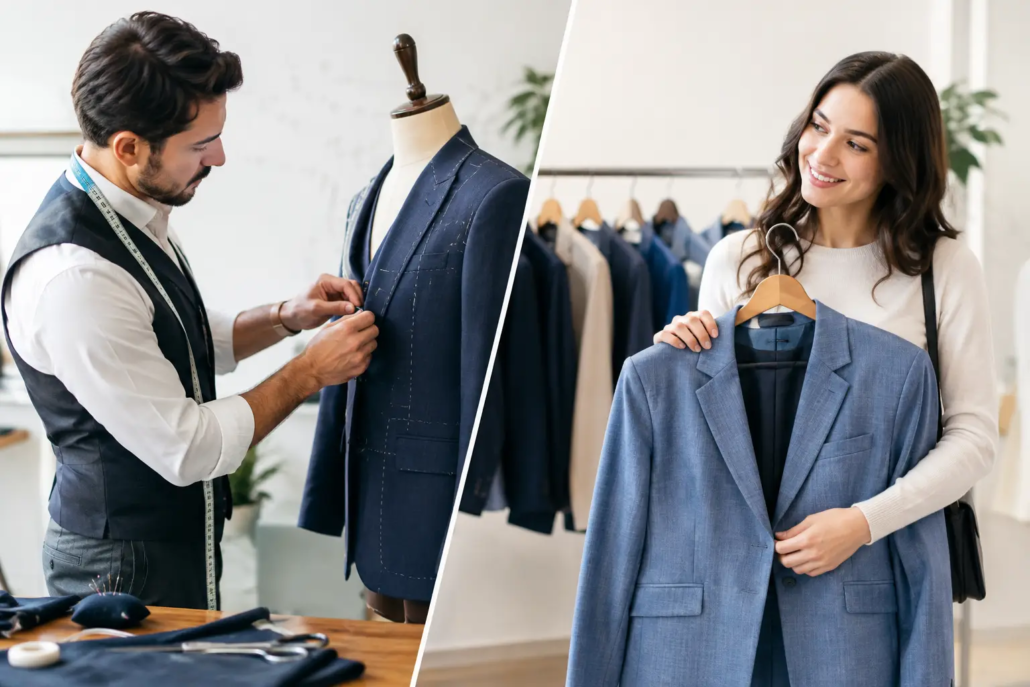
Tailoring vs Buying New: Which Is Worth It?
A jacket that fits beautifully through the shoulders but pulls at the waist is not necessarily a bad purchase. A favorite pair of pants with a loose hem is not ready for the donation pile, either. When weighing tailoring vs buying new, the best choice often comes down to three practical questions: Does the garment have good bones, can the fit be corrected, and will you wear it often enough to justify the work?
For busy households, professionals, and anyone getting ready for an event, that decision can prevent wasted money and a closet full of clothes that are almost right. Tailoring can turn a good garment into one you reach for regularly. But some alterations cost more than the item is worth, or cannot solve the problem at all.
When tailoring is the smarter investment
Tailoring is usually worthwhile when the fabric, construction, and overall condition are still strong. A quality suit, blazer, dress, coat, uniform, or formal outfit may last for years when the fit is updated instead of replaced. The same is true for well-made everyday pieces that only need a modest adjustment.
The most valuable alterations tend to address common fit issues without changing the garment’s entire structure. Hemming pants, skirts, dresses, and sleeves can make an immediate difference. Taking in a waist, refining a shirt or blouse, replacing a zipper, repairing a seam, or adjusting a simple strap can restore comfort and polish at a reasonable cost.
Fit has a larger effect on appearance than many shoppers expect. Pants that break correctly at the shoe look cleaner. Shirt sleeves that end in the right place look intentional. A dress that follows the body comfortably, rather than hanging too loosely or pulling too tightly, is easier to wear with confidence. These are small changes, but they can make an existing wardrobe work much harder.
Tailoring is particularly sensible for garments that are difficult to replace. Perhaps a blazer has the right shoulder shape, a wedding guest dress has the color you love, or a work uniform needs to meet a specific standard. Specialty items, including formalwear and occasion clothing, may also need professional pressing or fabric-conscious cleaning alongside alterations to look their best.
Tailoring vs buying new: Start with the fit that cannot be fixed
Not every fit problem is an alteration problem. The shoulders, neckline, armholes, and overall proportions of a garment are often the deciding factors. These areas are complex to reconstruct, and major changes may be expensive or affect how the garment hangs.
For jackets and blazers, the shoulders should generally fit well from the start. If they are too narrow, too wide, or heavily padded in the wrong place, buying new may be the better value. With dresses and shirts, an awkward neckline or armhole can be harder to correct than a loose side seam or an overly long hem.
Fabric also matters. Tailoring works best when there is enough material in the seams to let a garment out, and when the fabric can handle the adjustment without showing old stitch lines, fading, or damage. Heavily worn fabric, thin knits, brittle faux leather, and garments with extensive beading or complicated lining can require more careful evaluation.
A professional tailor can explain what is realistic before work begins. That conversation is useful because an item can look simple to alter from the outside while having linings, pockets, zippers, pleats, or structural details that add time and cost.
Consider cost, but consider cost per wear too
It is reasonable to compare an alteration quote with the price of replacing the garment. If a basic item was inexpensive and has several fit problems, purchasing a better-fitting replacement may make more sense. But the sticker price alone does not tell the whole story.
Think about how often you will wear the piece and how hard it is to replace. Spending on alterations for a suit worn weekly, a winter coat you rely on, or a dress for an important family event can be a sound decision. A modest repair on a frequently worn pair of pants can cost far less than repeatedly replacing similar pairs that never fit quite as well.
There is also the cost of shopping: time spent visiting stores, trying on options, returning online orders, and settling for an item that still needs work. Many ready-to-wear clothes are designed to fit a broad range of body types. Finding something that fits perfectly off the rack is less common than it seems.
Buying new is often the right move when the item has reached the end of its useful life. Permanent stains, extensive thinning, repeated fabric pilling, broken elastic throughout a garment, or multiple worn areas can signal that replacement is more practical. A tailor can repair many issues, but repair does not always restore the strength of tired fabric.
The pieces most worth altering
Workwear is one of the strongest cases for tailoring. A well-fitted suit, blazer, button-down shirt, or pair of trousers supports a professional appearance without requiring an entirely new wardrobe. Common adjustments such as sleeve shortening, trouser hemming, waist refinement, and minor seam repairs can keep business clothing ready for meetings, interviews, and travel.
Formalwear is another category where alterations matter. A gown, tuxedo, bridesmaid dress, or special-event outfit should allow comfortable movement while looking polished in photos. Event clothing is often purchased with a specific date in mind, so it is wise to schedule fitting work early rather than waiting until the week of the occasion.
Children’s school clothes, uniforms, and family staples can also benefit from practical repairs. Reinforcing a seam, replacing a zipper, fixing a hem, or adjusting a waistband may help a garment last through a busy season. For growing children, alterations are not always the answer, but repairs can still stretch the usefulness of clothing that otherwise fits well.
How cleaning and tailoring work together
A garment should be clean before tailoring whenever possible. Dirt, body oils, and old stains can affect fabric and make it harder to see its true condition. Cleaning first also helps ensure that any natural shrinkage or changes in shape happen before measurements are finalized.
This is especially relevant for structured or delicate pieces. Suits, blazers, formal dresses, and lined garments may need professional care to preserve their shape. A fabric-conscious cleaning method and careful finishing can prepare the garment for alterations and help it look polished once the work is complete.
At Joe’s Organic Dry Cleaning & Tailoring, having cleaning, pressing, repairs, and fit corrections handled in one place can simplify wardrobe maintenance. It is helpful for customers who need a work shirt pressed, a hem adjusted, or formalwear cleaned and prepared without making separate stops.
Make the decision before the garment becomes urgent
The easiest time to evaluate an item is not the morning of a wedding, interview, business trip, or holiday gathering. Try on seasonal clothing ahead of time. Check whether hems are dragging, waistbands feel uncomfortable, buttons are loose, or sleeves have become too long or short. Small problems are usually easier to address before they become last-minute emergencies.
Bring the shoes, belt, undergarments, or shapewear you expect to use with the garment when a precise fitting matters. These details affect hem length and how clothing sits on the body. Be honest about how you want to wear the item, too. A comfortable work pant may need a different fit than a formal trouser worn only for a few hours.
A good rule is simple: tailor the pieces you already like, trust, and expect to wear again. Buy new when the structure, condition, or original fit gives you little to work with. The right adjustment can keep a dependable garment in rotation and make getting dressed one less thing to think about.
