
Business Suit Maintenance That Protects Your Wardrobe
A suit can look tired long before it is actually worn out. Shiny elbows, flattened lapels, loose buttons, and trousers that have lost their crease usually come from missed care between cleanings, not from the age of the garment. A smart business suit maintenance routine protects the investment you made in looking polished for work, interviews, meetings, and special events.
The goal is not to clean your suit after every wear. Too much cleaning can be as hard on fine wool and structured tailoring as too little. The better approach is to air it out, handle small issues early, store it correctly, and bring it to a professional cleaner when the fabric, lining, or shape needs attention.
Start Business Suit Maintenance the Moment You Take It Off
What happens in the first few minutes after you come home affects how your suit wears over time. Do not leave a jacket draped over a chair, folded in the back seat, or tossed onto a bed. Hang both pieces as soon as possible so wrinkles can relax and the fabric can release moisture from a commute, warm office, or long day of wear.
Use a sturdy, shaped hanger for the jacket. A thin wire hanger can distort the shoulders over time, especially on heavier wool jackets. Trousers should be hung by the cuffs or across a proper trouser bar, with the creases aligned. This helps preserve the line of the pants without creating sharp folds in the fabric.
Give the suit room in the closet. A packed closet presses garments together, traps moisture, and crushes the shoulders and lapels that give a suit its tailored shape. A breathable garment bag is useful for long-term storage or travel, but plastic dry cleaning bags should be removed once you get home. Plastic can hold in humidity and odors.
Brush, Air, and Spot Check Between Wears
Most suits do not need immediate cleaning after one ordinary office day. In fact, allowing a suit to rest for at least a day between wears is one of the simplest ways to extend its life. Rotating between two or three suits gives fibers time to recover and reduces stress at the knees, seat, elbows, and pockets.
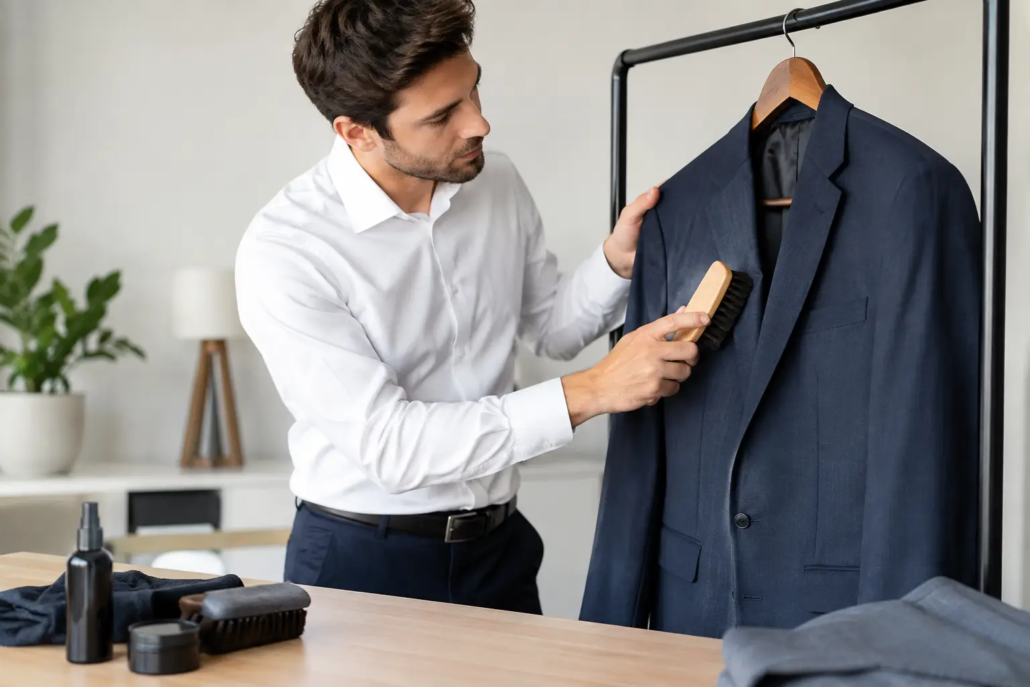
A soft clothes brush is a worthwhile tool for anyone who wears suits regularly. Brush gently from the top of the garment downward after wearing it, paying attention to the collar, shoulders, sleeves, and trouser legs. This removes dust, lint, hair, and surface debris before it settles into the weave. A lint roller is fine for a quick touch-up, but use it lightly on delicate fabrics and avoid repeatedly pressing adhesive over the same area.
If your suit has picked up a mild odor from a restaurant, train, or crowded event, hang it in a well-ventilated area overnight. Keep it away from direct sunlight, radiators, and damp basements. Fresh air can help with ordinary odors, while heat and moisture can set stains, fade color, or affect the garment’s shape.
Spot check the suit under good light before putting it away. Look for spills on the lapel or front panels, makeup near the collar, and marks around cuffs and pockets. Check the trousers for stains at the knees and seat. Catching a mark early gives a professional cleaner a better chance of removing it safely.
Know When a Suit Needs Professional Cleaning
A suit needs cleaning when it is visibly soiled, has a noticeable odor that airing cannot resolve, or has had contact with food, beverages, perspiration, body oils, or rainwater that left a mark. Collar and cuff discoloration, greasy spots, and a dull overall appearance are also signs that it is time.
There is no universal schedule. A suit worn once a week in a climate-controlled office may only need professional cleaning a few times per season. A suit worn several days a week, used for client-facing work, or exposed to commuting and frequent meals out may need attention more often. The fabric matters, too. Lightweight summer wool, linen blends, silk blends, and delicate linings may show soil sooner than a darker, heavier wool suit.
Always clean matching pieces together when possible. A jacket and trousers can fade or change slightly with use and cleaning. Cleaning only one piece repeatedly may eventually create a noticeable difference in color. If you wear the trousers much more often than the jacket, consider buying a second pair when purchasing the suit.
Professional care is especially valuable for structured garments because the jacket contains more than outer fabric. It may have a canvas or fused interior, shoulder padding, sleeve lining, and carefully pressed lapels. Home washing, aggressive spot treatment, or improper pressing can cause bubbling, distortion, water rings, or permanent shine.
At Joe’s Organic Dry Cleaning & Tailoring, garments can be assessed for the appropriate cleaning method, including fabric-conscious organic K4 dry cleaning and professional wet cleaning where suitable. Let the cleaner know what caused a stain and how long it has been there. That simple detail helps guide treatment.
Pressing Is Not the Same as Ironing
A crisp suit looks professional, but high heat can create the glossy patches that make dark wool trousers and jacket sleeves look worn. This often happens when an iron touches the fabric directly, especially over seams, pockets, and elbows.
For a minor wrinkle, steam is usually safer than direct ironing. Hang the jacket and use a garment steamer from a short distance, allowing the steam to relax the fibers without soaking them. Let the suit dry completely before wearing or returning it to the closet. Never press a damp wool suit into shape with heavy heat.
If you must use an iron at home, use a low setting appropriate for the fabric and place a clean pressing cloth between the iron and the suit. Lift and press rather than sliding the iron back and forth. Still, a professional press is often the better choice for lapels, trouser creases, and jackets that need their original shape restored. Proper finishing is about more than removing wrinkles. It keeps the garment looking balanced and intentional.
Handle Repairs and Fit Issues Before They Grow
Small repairs are easier and less expensive when handled promptly. A loose button can pull against the fabric and leave a permanent strain mark. A split trouser seam can widen quickly. A frayed hem can catch on shoes or escalators, turning a simple repair into a more involved one.
Inspect your suit every few wears. Check buttons, lining seams, pocket edges, trouser hems, and the inside thigh area. Also look at the seat and knees in natural light, since thinning fabric often appears before a hole develops. If you notice a problem, set the suit aside until it can be repaired rather than hoping it will hold through another workday.
Fit is part of maintenance, too. Bodies change, styles shift, and a suit that technically still fits may no longer sit correctly at the waist, sleeve, or trouser break. Tailoring can often improve comfort and appearance without replacing the suit. Waist adjustments, hem changes, sleeve refinishing, and minor seam work can give a reliable garment several more years of use. Some alterations have limits, particularly with very tight seams or complex jacket construction, so an in-house assessment is the right first step.
Travel Without Crushing Your Suit
For business travel, use a breathable garment bag and hang the suit as soon as you reach your destination. If you need to pack it in luggage, fold it carefully with tissue paper or a clean dry-cleaning-style insert between layers to reduce hard creases. Put heavier items around it, not on top of it.
Once unpacked, hang the suit in the bathroom while you take a warm shower, but keep it far enough from the shower that it does not get wet. The gentle humidity may help release light wrinkles. For deeper creases or a presentation-ready finish, arrange professional pressing rather than trying to force the fabric flat in a hotel room.
Build a Routine That Works on Busy Weeks
The best suit care routine is one you can repeat without adding another chore to an already full schedule. Keep a clothes brush near your closet, use quality hangers, and make a quick inspection part of putting your suit away. Set aside garments needing cleaning or repairs so they do not disappear back into the rotation.
For professionals and households balancing work, commuting, and family schedules, pickup and delivery can make that routine much easier. In Westbury and nearby Long Island communities, sending out suits for cleaning, pressing, and alterations together means less time spent making separate stops and fewer last-minute wardrobe problems.
A well-cared-for suit should be ready when the calendar calls for it. Give it a place to air out, address stains and repairs early, and choose professional cleaning and finishing when the garment needs more than a quick refresh. Your next important meeting will feel easier when the suit in your closet is already prepared.
