
Alterations for Weight Changes That Preserve Fit
A suit that fit perfectly last year can start pulling at the buttons after a few pounds gained. A favorite dress may suddenly hang loose after weight loss. Rather than leaving good clothing unworn in the back of the closet, alterations for weight changes can often bring it back into regular rotation. The key is knowing which garments are worth adjusting, what a tailor can realistically change, and when a different solution makes more sense.
For busy Long Island households and professionals, this is more than a style issue. Well-fitted clothing looks sharper at work, feels better at family events, and helps expensive pieces last longer. A thoughtful alteration can be far more practical than replacing a quality blazer, formal dress, uniform, or pair of tailored pants.
Why Weight Changes Affect Fit Differently
Weight rarely changes evenly across the body. One person may notice a tighter waist while the shoulders and chest still fit well. Another may lose weight through the hips and thighs while a jacket continues to fit properly through the upper body. That is why a garment should be assessed as a whole rather than judged by the number on its size label.
Fabric, construction, and the original fit also matter. A structured wool suit with seam allowance can often be adjusted more successfully than a closely fitted garment made from delicate stretch fabric. Clothing that was already very snug has less room to be let out. Clothing that is several sizes too large may be possible to take in, but the work can become complex enough that replacement is the better value.
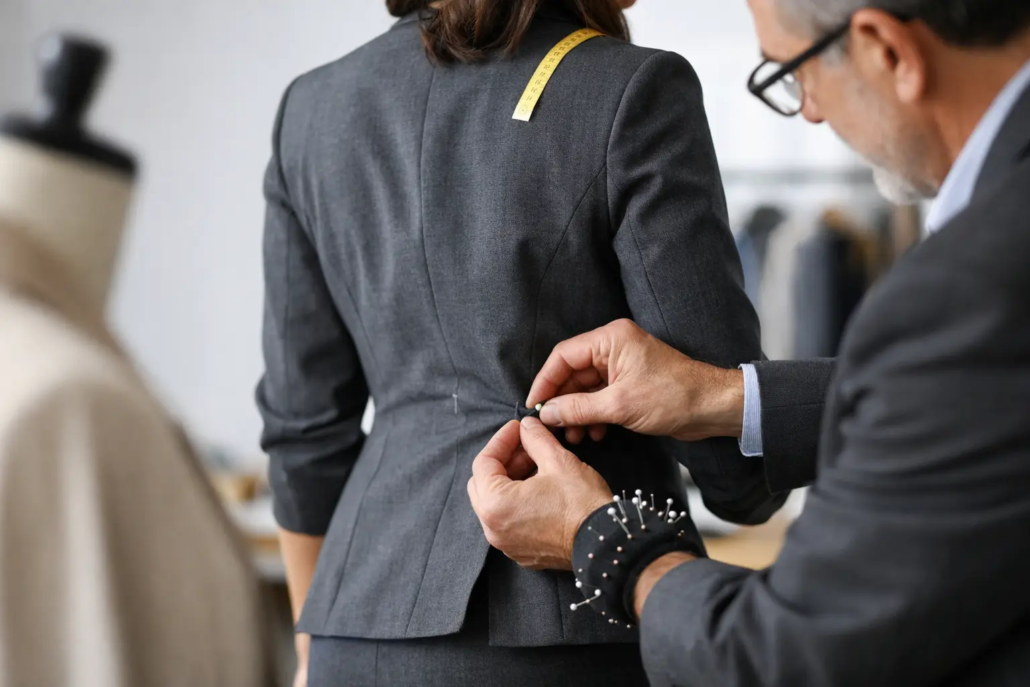
A professional fitting looks beyond the waistline. The tailor considers shoulder placement, balance, sleeve length, neckline, pocket position, lining, and how the garment moves when you sit or raise your arms. Those details are what separate a garment that merely closes from one that actually looks and feels right.
Alterations for Weight Changes: What Usually Works
Many common fit concerns are very manageable when the garment is well made and the size change is moderate. Pants and skirts are often among the most adaptable pieces because the waist, seat, and side seams may offer room for adjustment. Dresses can sometimes be reshaped through side seams, darts, waist seams, or back seams. Shirts may be taken in through the sides or body, and sleeves can be narrowed when excess fabric makes the shirt look oversized.
Jackets and blazers are also worth evaluating, especially if they are made from quality fabric and fit well in the shoulders. Taking in the torso, adjusting the sleeves, or refining the waist can restore a polished shape. Letting out a jacket is possible in some cases, but it depends on whether enough seam allowance was included when it was made.
For formalwear, the decision often comes down to the cost of the garment and the occasion. A wedding dress, bridesmaid dress, tuxedo, or evening gown may justify detailed alterations because replacing it is costly or impractical. These garments often have linings, boning, beading, lace, or multiple layers, so they should be inspected early rather than saved for the week of the event.
Taking Garments In After Weight Loss
Taking a garment in is typically more flexible than letting one out, but it still has limits. A dress that is slightly loose at the waist may need a straightforward adjustment. If it is loose at the bust, shoulders, hips, and neckline, the alteration becomes more involved because every change affects the garment’s proportions.
A shirt or dress that is too big can also lose its original shape if it is simply narrowed at the sides. The tailor may need to adjust darts, sleeves, or the armhole to keep the garment balanced. This is particularly true with tailored clothing, where the goal is a natural fit rather than a pinched or boxy look.
Letting Garments Out After Weight Gain
Letting out clothing depends almost entirely on hidden fabric inside the seams. Tailored trousers often have some extra material at the center back waist, while dresses and skirts may have seam allowance along the sides. Sometimes a waistband extension, added panel, or repositioned closure can provide additional room.
Not every garment has enough fabric to make this possible. Modern ready-to-wear clothing can have narrow seam allowances, especially in lower-priced or lightweight pieces. A skilled tailor can explain whether the adjustment will blend naturally or whether it will leave visible changes in the fabric, stitching, or shape.
Garments That Deserve a Professional Assessment
It is usually worth bringing in quality pieces before deciding they are no longer wearable. This includes business suits, sport coats, wool trousers, leather garments, uniforms, formal dresses, coats, and well-made jeans. Even everyday items can be worth altering when the fabric is in good condition and the fit issue is concentrated in one area.
Consider the garment’s replacement cost, sentimental value, and frequency of use. Altering a dependable work blazer may save money over buying a new one and reduces the time spent shopping for the right fit. Adjusting a special-occasion outfit can prevent the stress of starting over before an important event.
On the other hand, some items are poor candidates for extensive work. Very thin knits, heavily worn fabric, badly stretched elastic, and low-cost garments with multiple fit problems may not provide enough value for a major alteration. An honest assessment should account for both the result you want and the amount of work required to achieve it.
Timing Matters When Your Size Is Still Changing
If your weight is actively changing, avoid making major, permanent alterations too early unless you need the garment for a near-term occasion. A temporary solution, such as a small waist adjustment or a simple hem, may get you through the season without committing to extensive changes.
For clothing you wear weekly, it can make sense to alter a few core pieces first. Focus on the items that support your work, school, worship, travel, or event schedule: a pair of pants that fits comfortably, a polished shirt, a jacket, or a dress you can rely on. This approach keeps your closet functional while giving your size time to stabilize.
It also helps to bring the shoes and undergarments you expect to wear with the garment. Heels change the ideal hem length. Shapewear, a supportive bra, or a belt can affect how a dress, skirt, or pair of pants sits on the body. These small details lead to a more accurate fitting and fewer surprises when it is time to wear the piece.
Cleaning Before and After Alterations
Clean clothing gives a tailor a clearer view of the fabric, stains, wear, and true drape. Dirt or body oils can become more noticeable when seams are moved, and old marks may be revealed when a hem is lowered or a waistband is let out. Cleaning first is especially helpful for suits, coats, formalwear, and garments that have been stored between seasons.
After the alteration, proper pressing and fabric-appropriate cleaning help the finished work look its best. Crisp creases, smooth seams, and a clean surface are part of the final fit. Joe’s Organic Dry Cleaning & Tailoring can coordinate garment care and in-house alterations, which is convenient when a busy week leaves little room for separate errands.
Plan Ahead for Important Dates
Alterations should not be a last-minute task, particularly for formalwear or garments with linings, embellishments, and detailed construction. A fitting may reveal that more than one adjustment is needed, and a second fitting is sometimes the best way to confirm the final result. Give yourself extra time before weddings, interviews, graduations, religious celebrations, or travel.
Bring the garment in with a clear idea of how you want it to feel. Point out where it feels tight, loose, too long, or restrictive. If comfort is your main concern, say so. If you need a clean, tailored look for a presentation or event, mention that as well. A good alteration is built around how you will actually wear the clothing, not just how it looks on a hanger.
The best next step is simple: choose one garment you miss wearing, have it evaluated honestly, and let its condition, construction, and future use guide the decision. A small adjustment can make getting dressed feel easy again.

