
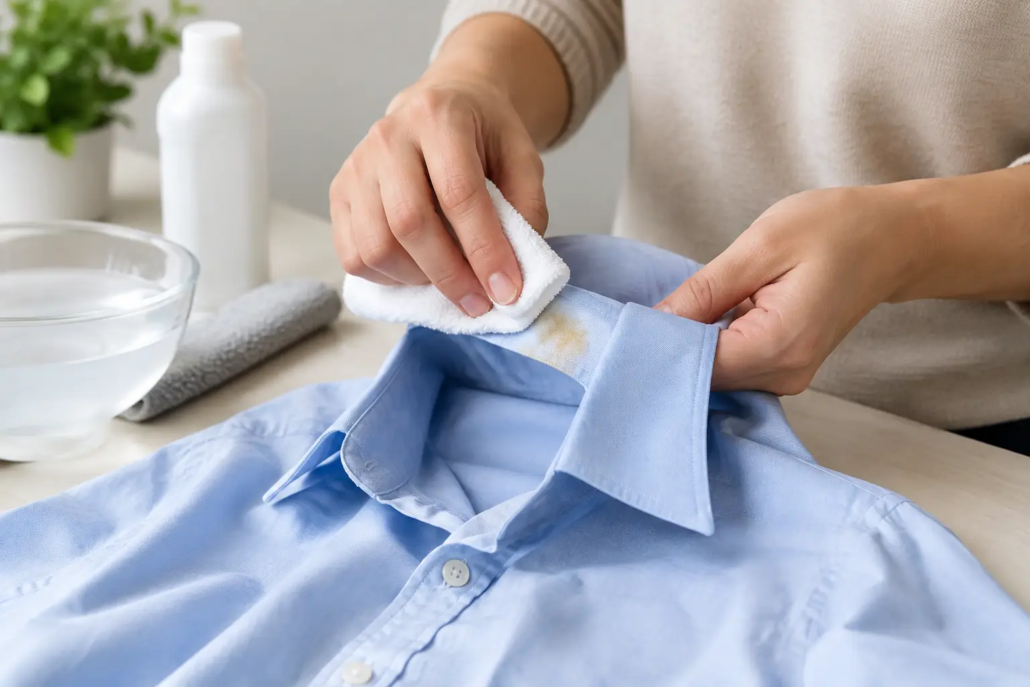
How to Treat Collar Stains Without Damaging Shirts
A collar can look dingy long before the rest of a shirt needs washing. That faint gray or yellow ring is usually a mix of body oil, sweat, skin-care products, hair products, and everyday dust. Knowing how to treat collar stains early can help keep favorite work shirts, school uniforms, polos, and blouses looking sharp instead of permanently worn.
The key is matching the treatment to the fabric and the stain. A sturdy cotton button-down can often handle careful pre-treatment at home. A silk blouse, structured dress shirt, jacket, or garment marked dry clean only needs a more cautious approach. Rubbing harder is rarely the answer, and it can create faded spots, weaken fibers, or leave the collar looking different from the rest of the garment.
Why Collar Stains Become So Stubborn
Collar stains build gradually. Natural oils from the neck transfer into the fabric each time a shirt is worn, then hold onto sweat, fragrance, makeup, and airborne soil. Heat from a dryer or iron can set that buildup deeper into the fibers, which is why a collar that looked slightly discolored after washing may become much harder to clean after pressing.
White and light-colored shirts tend to show the problem first, but dark collars can also develop a dull, greasy-looking band. Shirts worn for long commutes, outdoor work, school activities, or busy days around the house are especially likely to collect buildup.
The best treatment is usually prompt treatment. If a collar has been washed and dried several times with residue still present, it may need professional attention rather than another round of aggressive home remedies.
How to Treat Collar Stains at Home
Start by reading the care label. This small step matters because cotton, linen, polyester, rayon, silk, wool, and blended fabrics do not all respond the same way to water, stain removers, or agitation. If the label says dry clean only, do not assume a quick spot treatment is risk-free. Some fabrics can develop water rings, lose their finish, or change color.
For washable cotton, cotton blends, and many polos, pre-treat the collar before the shirt goes into the wash. Lay the garment flat and unbutton the collar so you can reach the fold and the inside band, where oils often collect most heavily.
Apply a small amount of a gentle liquid laundry detergent or a stain treatment made for washable fabrics. Work it in lightly with clean fingers or a soft laundry brush. A soft toothbrush can work in a pinch, but use minimal pressure. The goal is to loosen oils from the fibers, not scrub the collar until it looks fuzzy.
Let the product sit for about 10 to 15 minutes, unless its instructions say otherwise. Then wash the shirt according to its label. Warm water can be helpful for many white and light cotton shirts, but hot water may shrink fabric, affect color, or set protein-based stains. When in doubt, use cool or warm water and follow the garment’s care instructions.
Before placing the shirt in the dryer, check the collar in good light. If the stain remains, repeat the pre-treatment and wash it again. Avoid high dryer heat until the collar is clean. Air-drying the shirt after the first wash gives you a chance to inspect it without setting the remaining discoloration.
A Cautious Option for White Cotton Shirts
For a white cotton dress shirt with persistent yellowing, an oxygen-based laundry booster may help when used as directed. It is generally a safer choice than chlorine bleach for routine collar care, but it is still worth testing on an inconspicuous area first. Chlorine bleach can weaken fibers over time and may cause yellowing on some finishes, blends, or fabrics exposed to body oils.
Never mix cleaning products. Combining bleach with ammonia, vinegar, or other cleaners can create dangerous fumes. More product is not necessarily better, either. Leftover detergent can attract more soil and make a collar feel stiff.
What Not to Do With a Stained Collar
A few common shortcuts create bigger problems than the stain itself. Do not use hot water just because a collar looks heavily soiled. Do not rub with a rough sponge, abrasive powder, or stiff brush. And do not pour bleach directly onto a collar without checking the label and product instructions.
Be careful with online stain-removal recipes, particularly on colored shirts. Vinegar, baking soda, dish soap, peroxide, and alcohol are often presented as universal solutions, but they are not universal. They can alter dye, leave rings, affect wrinkle-resistant finishes, or damage delicate fibers. A treatment that works on an old white T-shirt may be a poor choice for a blue oxford, performance polo, or silk blouse.
Ironing also deserves attention. Pressing a shirt with a still-visible stain can make the problem more permanent. If the collar needs to look presentable for the next morning but the stain has not lifted, professional cleaning and pressing is usually the better choice than trying to hide it with extra heat.
When Collar Stains Need Professional Cleaning
At-home care is useful for fresh, washable stains, but some garments are worth taking in sooner. This includes dry-clean-only shirts, silk or wool garments, tailored blouses, formalwear, and shirts with specialty finishes. It also includes collars with old yellowing, dark oil buildup, makeup transfer, hair dye, self-tanner, or discoloration that has survived multiple wash-and-dry cycles.
Professional cleaners can assess the fabric, dye stability, construction, and type of residue before choosing a cleaning method. That matters with dress shirts because the collar is structured. Heavy home scrubbing can break down interlining, soften the collar shape, or leave uneven wear at the edge.
For customers who rely on clean shirts every week, shirt laundry and professional pressing also remove some of the guesswork. A properly finished collar sits smoothly, looks polished under a jacket or sweater, and is ready for the next workday, service, meeting, or family event.
If you point out the stain when dropping off a garment, the cleaner has a better chance to address it before routine processing. Mention anything that may be on the collar, such as sunscreen, makeup, fragrance, hair gel, or a treatment you already tried at home. That information helps avoid incompatible cleaning methods.
Prevent Collar Stains Before They Start
Prevention is less about doing more laundry and more about reducing the oil and product transfer that causes buildup. Give moisturizer, sunscreen, fragrance, and hair products a few minutes to dry before getting dressed. If you wear makeup, be mindful when pulling a shirt over your head or taking it off.
Wash or clean shirts after wearing them, especially in warm weather. Letting a worn shirt sit in a hamper for several days gives oils time to oxidize and settle into the collar. Rotating through enough work shirts can also reduce repeated wear before cleaning.
For white dress shirts, frequent proper laundering is often better than waiting until the collar visibly yellows. For darker garments, inspect the inside collar band occasionally. Catching a slight dullness early is far easier than trying to remove a dark ring later.
A well-cared-for collar changes the whole impression of a shirt. When home treatment is no longer giving you the result you want, Joe’s Organic Dry Cleaning & Tailoring can help keep the shirts you depend on clean, pressed, and ready to wear.
