
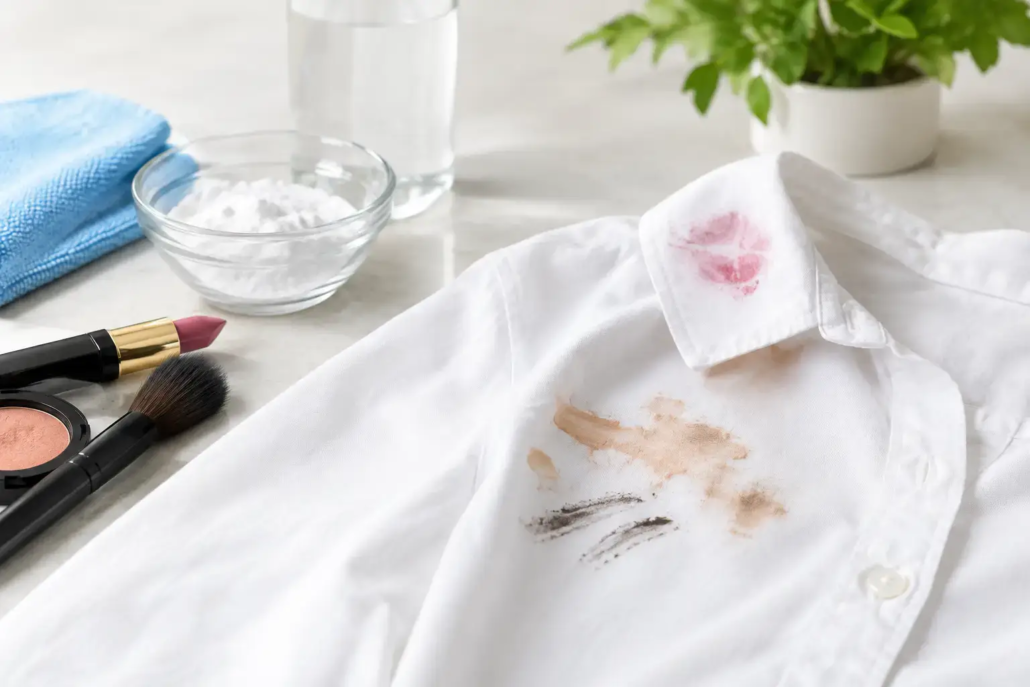
How to Remove Makeup Stains From Clothes Safely
A quick touch-up before work, a hug after an event, or pulling a shirt over your head can leave foundation, lipstick, or mascara exactly where you do not want it. Knowing how to remove makeup stains without spreading them or setting them with heat can save a favorite blouse, dress shirt, or special-occasion outfit.
The best approach depends on the makeup formula and the fabric. Oil-based foundation needs a different treatment than powder blush, and a washable cotton T-shirt can handle more than silk, wool, or a lined formal dress. The rule that applies to nearly every stain is simple: act gently, work from the outside inward, and do not put the item in the dryer until the mark is completely gone.
Start With the Garment Label
Before applying anything to the stain, check the care label. If the item is labeled dry clean only, is made of silk, wool, velvet, leather, suede, or has delicate embellishments, avoid experimenting with household cleaners. Blot away any excess makeup with a clean white cloth, then set the garment aside for professional care.
For washable fabrics, test your chosen cleaning product on an inside seam or hidden area first. This small step is especially useful for dark colors, bright garments, stretch fabrics, and anything with a printed finish. A cleaner that removes the makeup but fades the fabric is not much of a win.
Also, skip hot water at the start. Heat can set oily cosmetics, pigments, and waxes into fibers. Use cool or lukewarm water unless the care label says otherwise.
How to Remove Makeup Stains by Type
Makeup is not one kind of stain. It can contain oils, waxes, dyes, powders, and waterproof ingredients. Identifying what landed on the fabric helps you choose the safest treatment.
Foundation, concealer, and tinted moisturizer
Liquid foundation and concealer often combine pigment with oil or silicone, so they need a little degreasing action. First, lift off any excess product with the edge of a spoon, a dull knife, or a dry cloth. Do not scrape aggressively, especially on knitwear.
Apply a small amount of mild liquid dish soap or liquid laundry detergent directly to the stain. Gently work it in with your fingertips or a soft toothbrush, using light pressure. Let it sit for about 10 minutes, then rinse from the back of the stain with cool water. Rinsing from the back helps push the makeup out of the fibers instead of driving it farther in.
If a shadow remains, repeat the process before washing. Wash according to the garment label, then air-dry and inspect the area in good light. A dryer can make a faint foundation ring much harder to remove later.
Powder blush, bronzer, eyeshadow, and setting powder
Dry powder makeup is usually easiest to handle, provided you do not rub it in. Shake the garment gently outdoors if possible, or use a clean, soft brush to lift away loose particles. A lint roller can help with fine powder on sturdy fabrics, but press lightly so you do not grind pigment into the material.
Once the loose powder is gone, dab the remaining mark with a cloth lightly moistened with cool water and a drop of mild detergent. Blot rather than scrub. For washable white or light-colored cotton, a stain remover designed for laundry may help with lingering pigment, but always follow the product instructions and test it first.
Lipstick and lip gloss
Lipstick is one of the trickier stains because many formulas contain wax, oil, and strong color. Start by lifting excess product with a spoon or the edge of a credit card. Avoid wiping across the stain, which can create a larger smear.
Place a white towel or several paper towels behind the stained area. Dab a small amount of liquid laundry detergent or dish soap onto the lipstick mark, then blot with a clean white cloth. Change the towel beneath the fabric as color transfers. Continue patiently until little or no color comes off, then rinse with cool water and wash as directed.
For long-wear lipstick, stains may need repeated treatment. Do not reach immediately for hairspray, nail polish remover, or bleach. These products can discolor fabric, damage fibers, and leave their own residue behind.
Mascara and eyeliner
Mascara and eyeliner can be water-based, oil-based, or waterproof. Waterproof formulas are particularly stubborn because they are designed not to move with water alone. Begin by blotting with a dry cloth to remove surface product.
For washable items, apply a small amount of liquid detergent to the spot and let it sit briefly. Blot with a damp cloth, working from the outside edge toward the center. Repeat as needed, then rinse and launder. If the garment is delicate, structured, or dry clean only, stop after blotting and bring it in rather than risking a water ring or damaged finish.
Self-tanner and makeup with strong dyes
Self-tanner, tinted serums, and highly pigmented makeup can leave orange, brown, red, or purple staining. Treat these as soon as possible with a laundry stain remover that is appropriate for the garment’s color and fiber content. Allow the product to work for the recommended time, then wash according to the label.
Do not assume that a stain is gone just because it looks lighter when wet. Let the fabric air-dry before deciding whether another treatment is needed. Some dyes become more visible as the garment dries.
The Mistakes That Set Makeup Stains
Most makeup stains become difficult because of what happens after the spill, not because the original mark was impossible to treat. Rubbing hard is a common problem. It pushes oils and pigments deeper into the weave and can roughen delicate fibers.
Using a colored towel is another avoidable mistake. Dyes from the towel can transfer to damp fabric, particularly on white shirts and light dresses. Keep clean white cloths or paper towels on hand for stain emergencies.
Heat is the other major concern. Do not use hot water, iron over the stain, or tumble-dry the garment until you are certain the stain is gone. If you are rushing out the door, it is better to treat the area lightly, let the garment air-dry, and finish the process later than to permanently set the mark.
When to Leave Makeup Stain Removal to a Professional
At-home treatment makes sense for a fresh, small stain on a washable everyday item. Professional care is the safer choice when makeup lands on a suit, blazer, silk blouse, wool coat, evening gown, wedding dress, uniform, or an item with beading, sequins, lace, or bonded layers.
It is also wise to seek help if you have already washed and dried the stain, or if the garment has a visible water ring after spot cleaning. Let the cleaner know what caused the mark and whether you applied any product at home. That information helps determine the right treatment and reduces the chance of an unwanted reaction.
For busy households and professionals, putting a stained garment aside in a clean bag and arranging care promptly is often the practical choice. Joe’s Organic Dry Cleaning & Tailoring can assess delicate and structured items with fabric-conscious methods, so you do not have to guess at a high-risk fix.
Keep a Simple Stain Kit at Home
You do not need a cabinet full of specialty products to handle most fresh makeup marks. A few clean white cloths, mild liquid detergent, a soft brush, paper towels, and a basic laundry stain remover will cover many situations. Store them together where you get dressed or do laundry, especially if your household gets ready for work, school, events, or travel in a hurry.
The goal is not to attack every stain with the strongest product available. It is to remove as much makeup as possible while protecting the fabric, color, shape, and finish of the garment. A calm, gentle response gives everyday clothes their best chance, while knowing when to bring in a delicate piece protects the items you cannot easily replace.
