
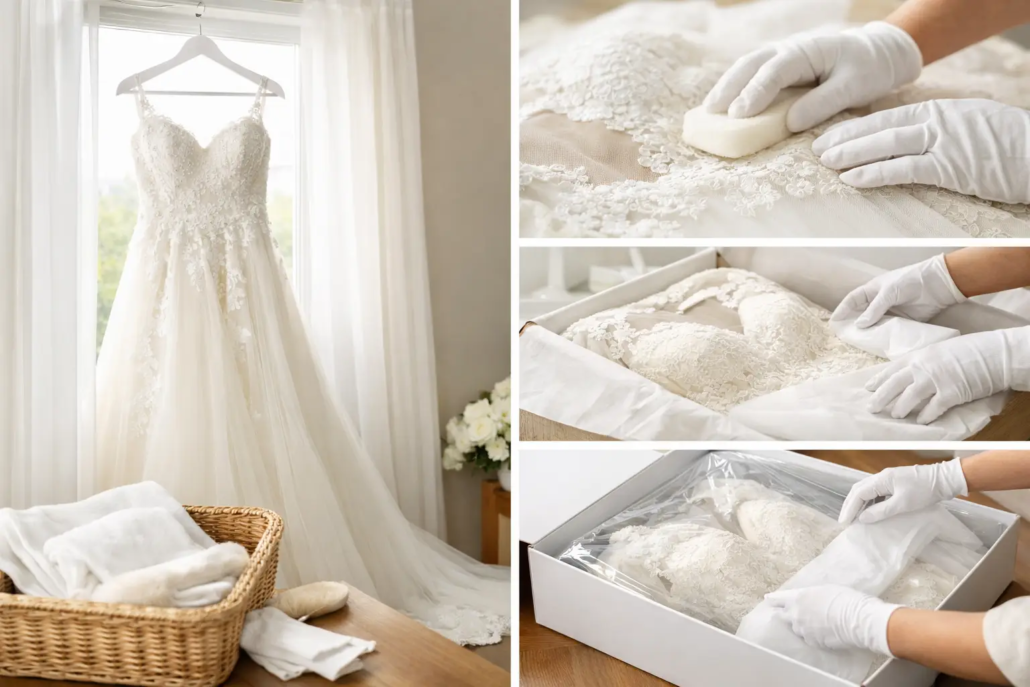
A Bridal Gown Preservation Example, Step by Step
A wedding gown can look perfectly clean at the end of the reception and still carry the evidence of a very full day: clear drink spills, makeup at the neckline, dust along the hem, perspiration in the bodice, and invisible sugar or body oils. This bridal gown preservation example shows what professional care looks like from the moment a dress arrives through the way it is packed for long-term storage.
For many Long Island brides and families, preservation is not about making a dress look brand-new at any cost. It is about treating the fabric, trim, construction, and sentimental value with the care they deserve. The right approach depends on the gown itself, its age, the stains present, and whether the goal is to keep it as a keepsake, pass it along, or possibly wear it again.
A bridal gown preservation example from inspection to storage
Consider a modern ivory A-line gown with a satin underlayer, a tulle overlay, lace appliqués, beading at the waist, and a chapel-length train. After an outdoor ceremony and a lively reception, the bride notices a grayish hem, a small red mark near the skirt, makeup inside the bust, and a few loose beads.
The gown should not be placed in a plastic closet bag and forgotten. A professional begins by inspecting it in good light, documenting visible spots and identifying the fibers, embellishments, seams, and areas that need special attention. Care professionals also check the bustle, zipper or buttons, lining, train, and any delicate attachment points. This step helps prevent a cleaning method that is safe for the satin but too aggressive for the lace or beading.
The red mark may be wine, fruit, lipstick, or a combination of materials. The gray hem may contain soil, grass, pavement dust, and traces of makeup. Each calls for a different stain-removal strategy. Treating everything as one generic stain can set discoloration or damage a sensitive fabric.
Cleaning is chosen for the dress, not the label alone
A care label offers useful direction, but it does not tell the whole story. A gown’s layers, trim, dyes, and past alterations all affect how it should be cleaned. Some dresses respond best to professional dry cleaning, while others need controlled wet cleaning or carefully targeted hand treatment. A trained cleaner evaluates the complete garment before selecting the process.
For the example gown, the cleaner may pre-treat the hem and bodice by hand, protecting the lace and beads while addressing soil and makeup. The dress is then cleaned using the method that best suits its fabric and decoration, followed by careful finishing. The goal is not simply to remove what is visible. It is to reduce residues that can oxidize over time and turn yellow or brown months or years later.
This is why waiting can be risky. Champagne, cake icing, perspiration, and clear beverages may not show immediately. As they age, they can become much harder to remove. Ideally, bring the gown in within a few weeks of the wedding. If that is not possible, hang it safely in a dry, climate-controlled area and avoid trying household stain treatments before a professional inspection.
Repairs come before final packaging
Once cleaned, the gown is checked again. In this example, two loose beads and a small opening in the tulle near the hem are found. Those details may seem minor, but a loose bead can snag during handling and a small tear can grow when the dress is folded.
Minor repairs should be completed before preservation packaging. A gown with significant damage, a broken zipper, or structural changes may need a more involved assessment. This is where an experienced tailoring team is useful. The person cleaning the dress should understand how a repair affects the gown’s shape and how the gown will rest in storage.
At Joe’s Organic Dry Cleaning & Tailoring, garment care and in-house alterations make it easier to coordinate cleaning, small repairs, and final preparation through one local service. That can be especially helpful after a wedding, when the dress may be one of many items needing attention alongside suits, formal shirts, and bridesmaid dresses.
What preservation packaging should look like
Cleaning alone is not preservation. The storage materials and storage location matter just as much. Once the gown is dry, inspected, and repaired, it should be prepared with acid-free materials designed to limit contact with substances that can contribute to discoloration or fabric breakdown.
In our bridal gown preservation example, the dress is gently layered in an archival-quality storage box. Acid-free tissue is placed between folds, through sleeves or straps when appropriate, and around decorated areas so beads, lace, and embroidery do not rub against neighboring fabric. The train is folded with broad, supported turns rather than sharp creases. The box protects the gown from light, dust, and routine handling without compressing it unnecessarily.
A preservation box is usually a better long-term choice than a standard plastic bag. Plastic can hold moisture and may expose fabrics to materials that are not intended for archival storage. Ordinary cardboard is also not ideal because it can contain acids that transfer to fabric over time. A dress may look fine in either option for a while, but preservation is about reducing avoidable risks over decades.
Not every gown should be folded the same way. A lightweight, unstructured chiffon dress may store comfortably with gentle folds, while a heavily beaded ball gown needs more support and space. Some gowns are better stored hanging in a suitable garment bag, particularly if their construction makes folding unsafe. The best solution is based on the gown’s condition and materials, not a one-size-fits-all package.
Where to keep a preserved wedding gown
The safest place for a boxed gown is inside the home, in a dry area with relatively stable temperatures. A bedroom closet shelf is often more suitable than an attic, garage, basement, or storage unit. Extreme heat, humidity, dampness, and temperature swings can all affect delicate fibers and encourage yellowing, mildew, or weakened embellishments.
Keep the box flat when possible, away from direct sunlight and high shelves where it could fall. Do not stack heavy objects on top of it. If the box is moved during a renovation or a household move, support it from the bottom instead of carrying it by the lid.
It is also wise to inspect the gown periodically, perhaps every year or two. Open the box with clean, dry hands in a clean area. Look for unexpected spots, crushed embellishments, or signs of moisture. There is no need to repeatedly unfold and refold the entire dress, which can create unnecessary handling, but a thoughtful check provides reassurance.
Common mistakes this example helps avoid
The most common mistake is treating preservation as something that can wait indefinitely. Another is using a home remedy on an unknown stain. Club soda, soap, bleach, stain pens, and vigorous rubbing can permanently change the color or texture of bridal fabrics, particularly silk, satin, lace, and tulle.
People also sometimes store the gown in a damp basement because it is out of the way, or leave it in the original plastic bag from the bridal salon. Neither is a reliable long-term plan. The original bag is useful for transport, but it is rarely intended to protect a gown for years.
Finally, do not assume every yellowed vintage dress is beyond help. Older gowns can often benefit from a professional evaluation, though complete stain removal cannot be guaranteed. Fragile fibers, old adhesives, prior cleaning attempts, and existing damage may limit the available options. Honest garment care means explaining those trade-offs before work begins.
A preserved gown is more than an item on a closet shelf. It holds the movement of the day, the people who celebrated with you, and a piece of family history. Give it a clean, stable place to rest, and it will be far more likely to remain ready for the next person who wants to open the box and remember.

