
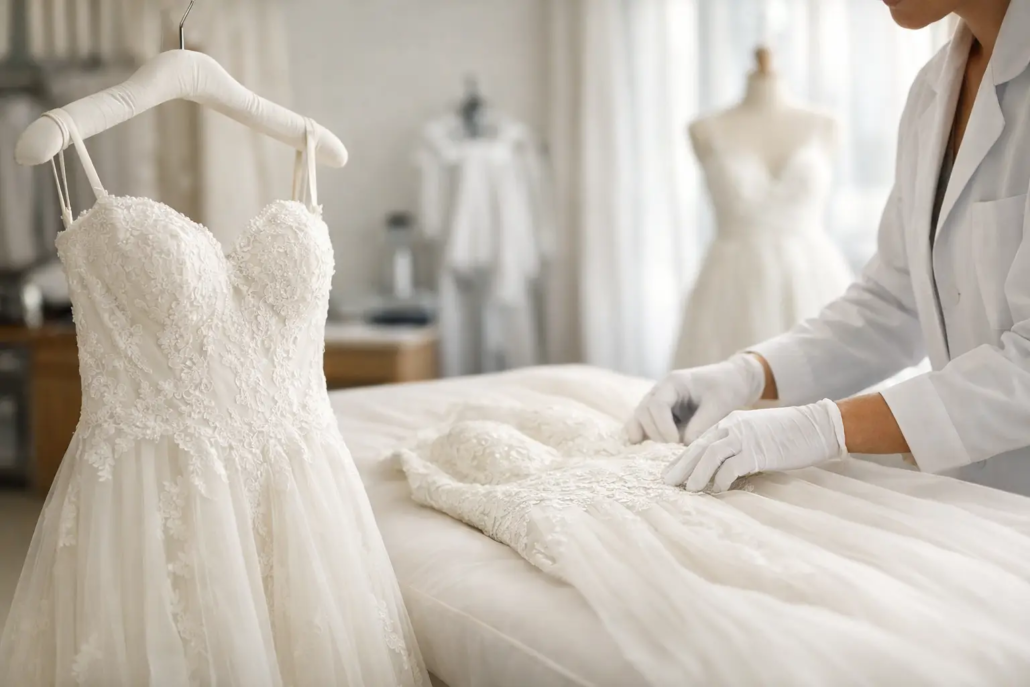
Roslyn Wedding Gown Cleaning That Protects Fit
A wedding dress rarely looks dirty when you first hang it up after the reception. Then the daylight hits. There is makeup along the neckline, a little champagne near the bodice, and a gray-beige ring around the hem from photos, sidewalks, and dance floors. That is usually when Roslyn wedding gown cleaning moves from a someday task to something worth handling properly.
A gown is not just another formal dress. It often combines delicate lace, layered tulle, structured bodices, hand beading, horsehair trim, and fabrics that react differently to moisture, heat, and agitation. Cleaning it well means more than removing visible marks. It means protecting shape, trim, color, and finish so the dress still looks like your dress when it comes back.
Why Roslyn wedding gown cleaning needs special handling
The biggest misconception about wedding dress care is that “gentle” means simple. In reality, a gown usually needs a more deliberate process than everyday dry cleaning. One section may need spot treatment for protein stains like perspiration, another may need care for sugar-based spills, and the hem often carries ground-in soil that cannot be rushed.
Construction matters just as much as fabric. A fitted gown may include boning, hidden cups, stitched-in support, or multiple linings. A ball gown may have layers that trap dirt between fabrics you cannot see from the outside. Beaded areas can be especially tricky because some embellishments tolerate professional cleaning well, while others may loosen, crack, or bleed if handled the wrong way.
That is why professional gown care starts with inspection, not guesswork. Before any cleaning begins, the cleaner should evaluate stains, fabric type, trim, age of the stains, and whether any repairs or loose details need attention first. It is slower than standard garment processing, but that extra care is what protects the dress.
What stains matter most after the wedding
Some stains are obvious. Others develop over time and become harder to remove if the gown sits in a closet for months. Sugar, perspiration, clear drinks, and body oils can oxidize and darken, leaving yellow or brown discoloration that was not visible right away.
Hem stains are another common issue. Even when the rest of the gown looks clean, the bottom edge may carry dust, grass, street residue, and oils from flooring. On a long white dress, those marks can migrate or set deeper if they are left untreated.
Makeup is also more complex than it looks. Foundation, setting spray, self-tanner, lipstick, and deodorant residue each respond differently to treatment. A good cleaner does not use a one-solution approach. The right method depends on what caused the stain and where it sits on the gown.
When to bring in a gown for cleaning
Sooner is usually better. Fresh stains are more responsive, and invisible residue is less likely to discolor. If you know you want to preserve the gown, clean it before long-term storage. If you plan to sell it, donate it, repurpose it, or save it for a family member, cleaning first gives you the best chance of keeping the fabric in strong condition.
There are a few exceptions where timing may depend on repairs or post-wedding plans. If the gown needs alterations for a second event, photo session, or cultural celebration, talk through that first so cleaning and tailoring happen in the right order. But in general, waiting does not help a wedding dress.
Roslyn wedding gown cleaning and the question of method
Not every wedding gown should be treated the same way. Some dresses respond well to dry cleaning, while others benefit from professional wet cleaning or a combination approach based on fiber content and trim. Silk, satin, lace, organza, chiffon, polyester blends, and decorative appliques all have different tolerances.
This is one area where experience matters more than assumptions. People sometimes think dry cleaning is automatically best for every gown, or that water-based care is always too risky. Neither is true across the board. The safer option depends on the dress itself, the stains involved, and the finishing details.
A fabric-conscious cleaner will choose the method that gives the best chance of stain removal without flattening texture, distorting structure, or stressing embellishments. That is especially important for modern gowns that mix multiple materials in one design.
Fit, finish, and why pressing matters
Cleaning is only half the job. Afterward, the gown needs careful finishing so the silhouette looks right again. Pressing a wedding dress is not the same as pressing a shirt or even a standard evening gown. Steam, temperature, and pressure need to be controlled section by section.
The goal is not to make the dress look overly stiff or overworked. It is to restore smooth lines while respecting the shape the designer intended. Pleats, layered skirts, structured bodices, sleeves, trains, and veils each need different handling.
This is also where close attention pays off. If a cleaner rushes the finishing stage, the dress may come back technically clean but still look tired. A properly finished gown should look refreshed, balanced, and ready for storage, photos, resale, or keepsake preservation.
What to ask before trusting a cleaner with your gown
If you are comparing options for Roslyn wedding gown cleaning, ask practical questions. Does the cleaner inspect the dress before cleaning? Do they handle delicate trim and layered construction regularly? Can they address minor repairs or coordinate alterations if needed? Is the gown finished and packed with long-term care in mind?
You do not need a dramatic sales pitch. You need clear answers and a process that sounds careful, not rushed. A dependable cleaner should be comfortable explaining how they approach stain treatment, method selection, and finishing.
Convenience matters too, especially after a wedding when your schedule is full and the dress keeps getting pushed from one room to another. For Roslyn customers, pickup and delivery can make it easier to get the gown handled before stains have time to settle in.
Storage mistakes that can undo good cleaning
A freshly cleaned dress can still run into trouble if it is stored poorly. Plastic bags are one common mistake. They may trap moisture and create conditions that are not ideal for delicate fabrics over time. Wire hangers can also distort the shoulders or strain heavier gowns.
Attics and basements are another risk. Heat, humidity, and temperature swings are hard on fabric, especially on lighter shades and detailed trim. Even a clean dress can yellow, crease deeply, or develop odor issues in the wrong environment.
If you plan to keep the gown, store it in a cool, dry place and use appropriate protective packaging. If the dress is heavily beaded or has substantial weight, hanging may not be best for long-term storage. In those cases, folded support with acid-free materials is often the better route.
Cleaning before resale, donation, or redesign
Not every bride wants to box up her dress forever. Some want to sell it, donate it, shorten it, or remake part of it into another garment or keepsake. Professional cleaning still matters in those cases, but the goal changes a little.
For resale, cleaning improves presentation and buyer confidence. For donation, it helps ensure the next person receives a gown in wearable condition. For redesign, it gives the tailor a cleaner starting point and makes it easier to assess the true condition of seams, fabric, and trim.
If you are planning alterations after the wedding, it can help to choose a provider that understands both garment care and fit correction. In some cases, having cleaning and tailoring coordinated through one trusted local business simplifies the process and reduces extra handling.
A practical local option for busy schedules
After a wedding, most people are not looking for a complicated project. They want a clear plan, careful handling, and a dress that comes back clean, properly finished, and ready for whatever comes next. That is what good wedding gown care should feel like.
For households around Roslyn that already rely on pickup and delivery for regular garment care, it makes sense to work with a cleaner who treats special occasion wear with the same dependable attention. Joe’s Organic Dry Cleaning & Tailoring serves Roslyn on its Wednesday and Saturday pickup and delivery schedule, which can make post-wedding gown care a lot easier to fit into real life.
The smartest time to take care of a wedding dress is before it becomes a bigger problem. If your gown is still hanging with last weekend’s celebration on the hem, this is a good moment to give it the level of care it deserves.

