
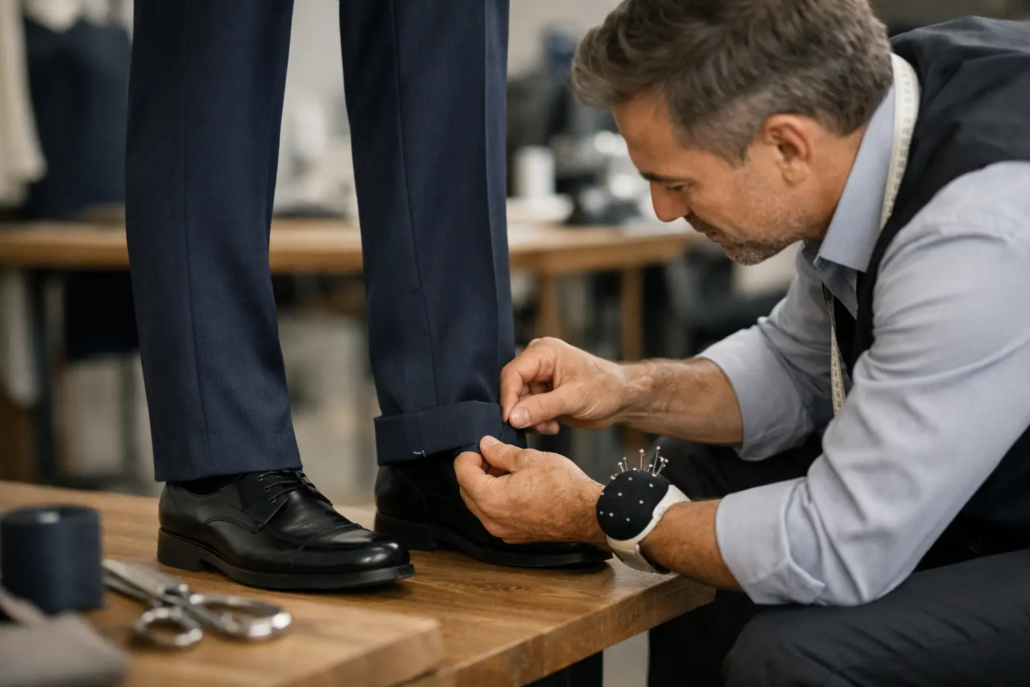
Professional Pants Hemming for a Better Fit
A great pair of pants can look completely wrong when the hem is off by even an inch. Trousers that pool around the ankles can make a sharp outfit feel unfinished, while pants cut too short can look accidental rather than tailored. Professional pants hemming brings the length into proportion with your height, your shoes, and the way you actually wear the garment.
For busy professionals, families, and anyone preparing for an event, hemming is one of the simplest ways to make an existing wardrobe work harder. The right length helps pants hang cleanly, protects the fabric from dragging on the ground, and gives you a more polished appearance without replacing a garment that already fits well everywhere else.
Why Pant Length Changes the Whole Outfit
Pants are meant to create a clean line from the waist to the shoe. When that line is interrupted by excess fabric at the ankle, the entire silhouette can look less put together. This matters with dress pants and suits, but it also applies to jeans, chinos, school uniforms, workwear, and wide-leg styles.
A proper hem does more than remove fabric. A tailor considers the pants’ cut, the weight of the material, the opening at the bottom of the leg, and how the fabric falls when you stand and walk. The goal is a length that looks intentional from every angle.
The shoes you plan to wear matter just as much. Pants hemmed for low-profile loafers may sit differently over boots or heels. If you rotate between very different shoe heights, it may be best to hem the pants for the pair you wear most often, or keep separate pairs of trousers for different occasions.
What Is the Right Length for Your Pants?
There is no single correct hem length. The best choice depends on the garment and your preferred style, but there are a few reliable guidelines.
For traditional men’s dress trousers, a slight break is often the most versatile option. The front of the hem rests lightly on the shoe, creating one small crease in the fabric. This works well for office attire, interviews, weddings, and formal gatherings because it looks neat without appearing too short.
No-break or minimal-break trousers sit just above the shoe with very little folding. This is a more modern, trim look that is especially common with slim-cut pants. It can look excellent, but it leaves less room for error. A hem that is too short becomes noticeable quickly when sitting down or walking.
Full-break trousers have more fabric resting on the shoe. Some people prefer this traditional style, particularly with fuller-cut pants, but too much break can create a rumpled appearance. If your pants bunch at the ankle or catch under your heel, they are likely longer than they need to be.
Women’s pants offer even more variation. Straight-leg and ankle pants are often intentionally cropped, while wide-leg trousers may be designed to skim the top of the shoe. Full-length dress pants should generally clear the floor, even when worn with heels. A hem that touches the ground may pick up dirt, wear through at the back, and lose its shape faster.
Professional Pants Hemming Starts With a Proper Fitting
The most dependable hemming process begins with trying on the pants. Bring the shoes you expect to wear with them, especially if they are dress shoes, boots, or heels. A small change in sole thickness or heel height can alter where the hem lands.
During a fitting, the pants should be worn at their normal waist position. Pulling them higher or lower than usual can change the measurement and lead to a result that feels wrong later. Stand naturally, then take a few steps. A skilled alterations professional will look at the front, back, and sides to make sure the length is balanced.
It also helps to mention how you use the garment. Pants for a daily commute have different needs than tuxedo trousers for one evening. Uniform pants may need to meet workplace standards. Jeans may be worn with sneakers most days but boots on weekends. These details help determine a hem that fits your life, not just a quick measurement.
The Original Hem Matters on Jeans
Jeans deserve special attention because the factory hem often has fading, texture, and stitching that new stitching cannot fully duplicate. An original hem alteration can preserve that finished bottom edge while shortening the inseam above it.
This method is a good choice when you want your jeans to keep their familiar look. It may not be ideal for every pair, however. Very wide hems, heavily distressed denim, or major length reductions can affect how naturally the finished jeans hang. A tailor can explain whether preserving the original hem makes sense for your specific pair.
Cuffs, Blind Hems, and Other Finishes
Dress pants can be finished in several ways. A plain hem is clean and versatile. Cuffed trousers have a folded band at the bottom and are usually best suited to fuller-cut or more traditional pants. Adding cuffs requires enough extra fabric, so it is not always possible after a garment has already been shortened.
Some formal trousers use a nearly invisible blind hem, while casual pants may use visible topstitching that matches the original construction. The correct finish should respect the garment’s design. A careful hem should look like it belonged there from the start.
When a Hem Is More Than a Hem
Sometimes the length is not the only issue. If pants twist around the leg, one side hangs lower than the other, or the back of the hem wears out much faster than the front, the problem may involve the overall fit. The waist, seat, inseam, or leg shape can affect how the pants fall.
This is especially common with trousers that have been passed along, purchased off the rack, or worn for years. A quick shortening may improve them, but it will not always solve a fit issue higher on the garment. Professional advice can save you from spending money on an alteration that will not produce the result you want.
There is also a limit to what hemming can do. Pants can usually be shortened more easily than lengthened. If a previous hem was let down, there may be a visible crease, fading, or a line of stitching where the old hem sat. Tailors can often minimize these signs, but the fabric’s history may still show, particularly on denim or dark trousers.
Protecting Your Pants Between Alterations
A well-finished hem lasts longer when the pants are cared for properly. Avoid stepping on the back edge of the legs, which can fray fabric and weaken stitching. Hang dress trousers by the cuffs or over a wide hanger to help them keep their line between wears.
Cleaning also plays a role. Dirt and moisture collected along a dragging hem can cause premature wear, especially during wet Long Island weather. For suits, wool trousers, and structured garments, professional cleaning and pressing help maintain the crease and drape that make a tailored hem look its best.
If you notice loose stitches, a frayed edge, or a hem beginning to drop, bring the pants in before the damage spreads. A small repair is often straightforward. Waiting until the fabric is torn or worn thin can make the repair more limited.
A Simple Way to Keep Your Wardrobe Ready
Professional pants hemming is one of those practical services that can make getting dressed easier every week. Instead of avoiding pants that are too long, too worn at the bottom, or saved for a future repair, have them adjusted to fit the way you live now.
At Joe’s Organic Dry Cleaning & Tailoring, pants can be cleaned, pressed, and altered in one place, which is useful when work clothes, uniforms, and event outfits all need attention at once. Bring the shoes you wear most, explain the look you prefer, and let a properly finished hem give your favorite pants the clean, comfortable fit they deserve.

