
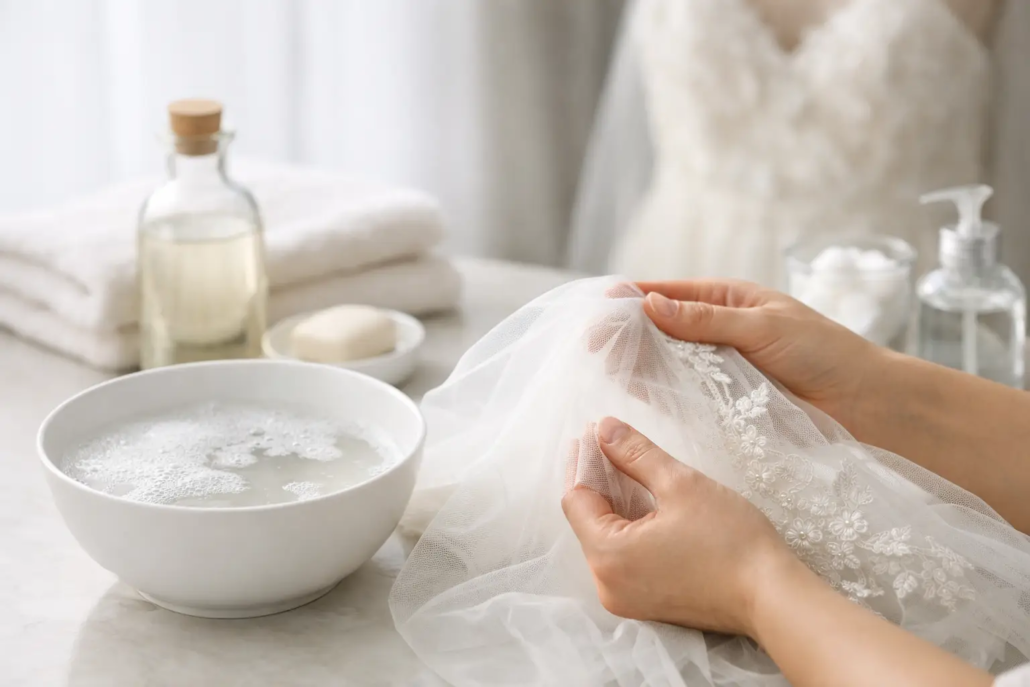
How to Clean Wedding Veil Without Damage
A wedding veil can look perfectly fine in the box until you pull it out and notice makeup at the edge, dust along the hem, or yellowing from storage. If you are wondering how to clean wedding veil fabric without ruining the shape, trim, or softness, the safest approach is to slow down and treat it like the delicate piece it is.
Most veils are made from tulle, illusion, lace, silk blends, or netting, and each reacts differently to water, soap, heat, and handling. That is why a quick soak in the sink works for some veils and causes permanent damage to others. Before you do anything, check the material, look for embellishments, and decide whether the veil needs light freshening, stain removal, or professional care.
How to clean wedding veil safely
Start with a close inspection in good light. Look at the comb area, the edges, and anywhere that may have brushed against makeup, hairspray, perfume, grass, or floor dust. If the veil has beads, sequins, pearls, embroidery, or glued appliques, cleaning gets more delicate because trims can loosen, dyes can bleed, and adhesives can weaken in water.
If the veil is simply wrinkled or has a light musty smell from storage, it may not need full cleaning at all. Gentle steaming from a safe distance or airing it out in a clean, dry room may be enough. Washing should be reserved for actual soil, staining, or visible discoloration.
Check the care label first
Some veils come with care instructions from the designer or bridal shop. If the label says dry clean only, take that seriously. It does not always mean traditional dry cleaning solvent is the only option, but it does mean the fabric or trim may not respond well to home washing.
If there is no label, think through the construction. Plain tulle with no trim is usually the most forgiving. Silk veils, vintage veils, cathedral veils with detailed edging, and anything with glued embellishments carry more risk.
Test before you wash
Even when the veil looks washable, test a hidden area first. Dampen a cotton swab with cool water and a tiny drop of mild detergent, then touch an inconspicuous section. Watch for dye transfer, texture change, shrinkage, or distortion. This small step can save a lot of regret.
When at-home cleaning makes sense
At-home cleaning can work well for a modern veil made of plain tulle or illusion with light soil and no complicated trim. The key is gentle handling. Rubbing, twisting, wringing, and high heat cause most of the damage people see after DIY cleaning.
Use a clean sink, tub, or large basin. Fill it with cool water, not warm or hot. Add a very small amount of mild detergent meant for delicate fabrics. Too much soap makes rinsing harder and can leave residue that dulls the fabric.
Lay the veil in the water and move it slowly with your hands. Do not scrub the fabric against itself. Let it soak for several minutes if needed, then gently lift and lower it through the water. If there is dirt along the hem, use your fingertips very lightly to loosen it.
Drain the basin and refill with cool clean water for rinsing. You may need to rinse twice to remove all soap. Lift the veil carefully with both hands, supporting its length so the fabric does not stretch under its own weight.
How to treat small stains
Spot cleaning is often better than washing the whole veil, especially for isolated makeup or dirt marks. Mix cool water with a drop of gentle detergent and use a white cloth or cotton swab to blot, not rub, the stain. Work from the outside toward the center so it does not spread.
Makeup stains can be stubborn because they often contain oils and pigment. Hairspray and perfume can also leave residue that yellows over time. If the stain does not lift quickly, do not keep working it aggressively. Delicate netting can snag, and stitched edging can pucker.
For vintage discoloration or yellowing, home remedies are risky. Bleach, whitening products, and brightening agents can weaken fibers and create uneven color. In those cases, professional evaluation is usually the better choice.
How to dry a wedding veil properly
Drying matters just as much as washing. Never put a wedding veil in the dryer. Heat can shrink netting, distort trim, and set wrinkles in place.
Instead, lay the veil flat on a clean white towel. Roll the towel gently to absorb excess water, then unroll and move the veil to a fresh dry towel or a flat drying surface. You can also hang it to air dry if the veil is lightweight and evenly supported, but heavy or embellished veils are better dried flat to prevent stretching.
Keep it out of direct sunlight, which can fade trim and make some fabrics brittle over time. Once it is nearly dry, you can smooth it gently with clean hands.
What about wrinkles?
Wrinkles are common after storage and cleaning. The safest fix is steam, but with distance and patience. Hang the veil in a bathroom while a hot shower runs, or use a garment steamer on the lowest appropriate setting while keeping the steamer several inches away. Never press the steamer head directly onto the fabric.
If the veil includes lace or embellishments, test a small section first. Too much steam or moisture in one spot can leave water marks or soften glue holding decorative pieces in place.
When professional cleaning is the safer call
There are times when learning how to clean wedding veil items at home is useful, and there are times when the better answer is not to do it yourself. If the veil is heirloom quality, vintage, silk, heavily beaded, visibly yellowed, or stained with makeup and outdoor soil from a full wedding day, professional care reduces the chance of permanent damage.
A cleaner who handles bridal pieces can assess the fabric, trim, and stain type before choosing a method. In some cases, professional wet cleaning is safer than standard dry cleaning. In others, careful hand treatment and finishing are needed to preserve shape and detail. It depends on the veil, which is exactly why a one-size-fits-all approach can go wrong.
This is also true if the veil will be worn again. Brides often save veils for vow renewals, family keepsakes, or future generations. The cleaner goal is not just making it look fresh today. It is protecting the condition of the fabric for years.
Storage after cleaning matters just as much
A freshly cleaned veil can yellow again if it goes back into poor storage. Skip plastic bags and plastic bins for long-term keeping. Plastic traps moisture and can contribute to odor, creasing, or discoloration.
Instead, store the veil in acid-free tissue and an acid-free preservation box if possible. Fold it loosely, cushioning the folds with tissue to reduce hard creases. Keep it in a cool, dry closet away from direct light, heat vents, and damp basements or attics.
If you plan to wear it again soon, hanging can be fine for a shorter period, especially if the veil is light. Just make sure it is protected from dust and not crushed between other garments.
Common mistakes to avoid
The biggest mistakes are usually done with good intentions. People reach for bleach to fix yellowing, rub a spot too hard, use hot water because it feels more effective, or iron the veil directly to remove wrinkles fast. Those shortcuts can leave the fabric stretched, shiny, melted, or permanently puckered.
Another common issue is waiting too long. Fresh dirt and makeup are usually easier to remove than stains that have sat in storage for months or years. If the veil has sentimental or resale value, prompt care gives you better odds of a good result.
For local families juggling work, events, and household routines, this is one of those items where convenience and caution often go hand in hand. If the veil is simple and lightly soiled, careful hand cleaning may be enough. If it is delicate, detailed, or meaningful, professional garment care is often the more practical choice.
A wedding veil is light in weight, but not in value. Treat it gently, avoid shortcuts, and when you are unsure, choose the method that protects the fabric rather than the one that feels fastest.

