
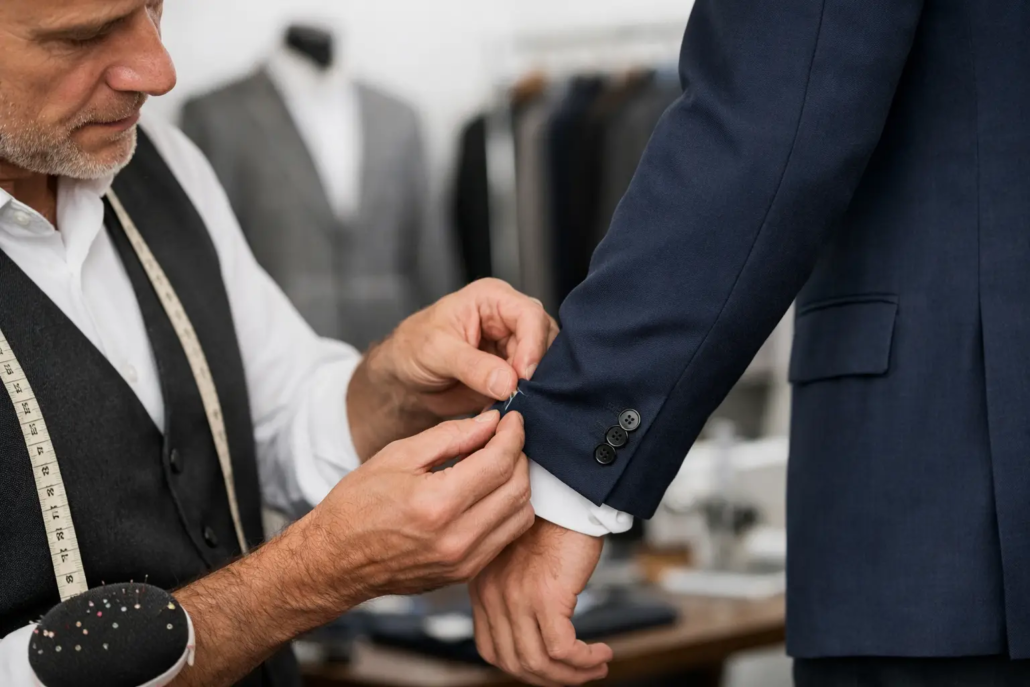
Can Tailors Fix Jacket Sleeves? Yes – Usually
A jacket can look almost right on the hanger and still feel wrong the second you put it on. Usually, the giveaway is in the sleeves. They bunch at the wrist, cover too much shirt cuff, twist oddly when you move, or feel too wide for the rest of the coat. So, can tailors fix jacket sleeves? In many cases, yes – and sleeve work is one of the most common ways to make a jacket look cleaner, sharper, and more comfortable.
The catch is that not every sleeve problem has the same fix. Some adjustments are straightforward. Others depend on the jacket’s construction, fabric, lining, buttons, and how much extra material is available. A good tailor can usually tell very quickly what is possible, what will look natural, and what is not worth the cost.
Can tailors fix jacket sleeves by shortening them?
This is the question most people mean when they ask about jacket sleeves, and the answer is often yes. Sleeve shortening is one of the most requested jacket alterations because ready-to-wear sizing rarely matches arm length perfectly.
Most sleeves can be shortened from the cuff. On a simpler jacket, that is a clean and efficient repair. The tailor removes the cuff area, adjusts the length, and rebuilds the edge so it looks original. If the sleeve has working buttonholes, decorative buttons placed close to the edge, contrast trim, or other design details, the job becomes more involved.
In some jackets, shortening from the shoulder is the better method. That is a more advanced alteration and usually more expensive because the sleeve has to be removed and reshaped where it meets the armhole. Tailors typically recommend this when the cuff design cannot be disturbed or when too much length needs to come off.
The goal is not just making the sleeve shorter. It is keeping the jacket balanced. If the sleeve ends in the right spot and still hangs naturally, the whole jacket looks better.
What about lengthening jacket sleeves?
Lengthening is possible sometimes, but it depends on whether there is enough extra fabric hidden inside the sleeve hem. Some manufacturers leave a decent allowance. Others leave very little.
That is why two jackets that look similar can have very different alteration options. A tailor has to open the sleeve and check the inside before promising anything. Even when extra length exists, there may be signs of the old fold line, wear at the edge, or limitations caused by lining and button placement.
This is one of those situations where expectations matter. Getting an extra half inch is much more realistic than expecting a full redesign. If a sleeve is far too short, replacing the jacket may make more sense than forcing an alteration that looks strained.
Can tailors fix jacket sleeves that are too wide?
Yes, sleeve tapering is another common alteration. If the upper arm or forearm looks bulky, a tailor can often narrow the sleeve so it better matches your build and the cut of the jacket.
This sounds simple, but it has to be done carefully. A sleeve that is too slim can restrict movement, pull across the elbow, or make the jacket feel tight when layered over a dress shirt or sweater. The best result is not the smallest sleeve possible. It is a sleeve shape that looks neat while still letting you move comfortably.
Tailoring also has to respect the proportions of the shoulder and chest. If the body of the jacket is roomy and only the sleeves are taken in aggressively, the coat can start to look mismatched. Good sleeve work should blend into the whole garment rather than call attention to itself.
Repairs vs. alterations
Sometimes the issue is not fit at all. It is damage. Jacket sleeves often show wear first because cuffs rub against desks, car interiors, counters, and everyday use. Elbows can thin out, seams can split, and lining can tear near the wrist.
A tailor may be able to repair sleeve damage by restitching open seams, replacing worn lining sections, reinforcing weak areas, or patching from the inside. If the outer fabric is badly frayed or torn in a visible spot, the repair may be limited by the fabric itself. Some damage can be made secure without becoming invisible.
That is an important distinction. A fix can restore wearability even if it cannot make the jacket look brand new. For workwear, uniforms, or favorite everyday blazers, that can still be worthwhile.
When sleeve alterations get complicated
The more structured the jacket, the more careful the sleeve alteration has to be. Suit jackets, blazers, and formalwear often have padding, canvas, sleeve heads, linings, vents, and button details that all interact with one another. Changing one part affects the look of the whole sleeve.
Fabric also matters. Wool usually alters well. Linen can show old stitch marks more easily. Velvet, silk blends, and delicate formal fabrics require a lighter touch. Patterned jackets add another layer because stripes, plaids, and textured weaves need to line up after the work is done.
There is also a cost question. A basic sleeve shortening job may be very reasonable. A shoulder-based alteration on a fully lined suit jacket with functioning cuff buttons is a different level of labor. If the jacket was inexpensive to begin with, the alteration cost may surprise you. If it is a quality suit you wear often, the repair is usually easier to justify.
How to tell if your jacket sleeves need attention
You do not need to be a tailoring expert to spot a sleeve problem. If your jacket sleeve covers most of your hand, it is too long. If no shirt cuff shows with a dress jacket, it may be too long for a polished look. If the sleeve catches at the forearm or pulls at the elbow, it may be too narrow. If it looks floppy or oversized compared with the shoulder, tapering may help.
Another clue is how the sleeve behaves when you move. A well-fitted sleeve should hang cleanly when your arms are relaxed and still feel natural when you sit, drive, or reach forward lightly. Some wrinkling is normal. Constant twisting or pulling usually means the fit is off or the sleeve was never shaped well to begin with.
If you are already having a jacket cleaned or pressed, that is often a smart time to have the sleeves evaluated. Freshly cleaned garments are easier to inspect, and combining care and alterations helps keep the piece ready to wear instead of sitting in your closet waiting for the next errand.
Can tailors fix jacket sleeves on every type of jacket?
Not every jacket, and not every issue. Casual jackets, sport coats, suit jackets, school blazers, and uniforms are often good candidates for sleeve alterations. Leather, heavily coated fabrics, or highly technical outerwear may need a specialist. Some very low-cost garments are constructed in ways that make clean alteration difficult.
There are also cases where the sleeve problem is really a shoulder or armhole problem. If the shoulder is too wide, the armhole sits too low, or the jacket balance is off through the upper body, fixing only the sleeve length may not solve the real issue. That is why an in-person fitting matters. What looks like a cuff problem may actually start higher up.
A trustworthy tailor will tell you when an alteration is a smart investment and when it is better to leave the garment as is. That honesty saves time and prevents disappointment.
What to expect at a fitting
Bring the shirt or layer you plan to wear with the jacket most often. Sleeve length should be judged in context, not in isolation. For a business jacket, that usually means trying it on over a dress shirt. For cooler weather, if you regularly wear a lightweight sweater under it, mention that too.
During the fitting, stand naturally. Do not force your arms stiff at your sides or pull the sleeves down with your hands. A tailor needs to see how the jacket sits on your actual frame. You may be pinned at the cuff, along the sleeve seam, or near the shoulder depending on the issue.
This is also the time to ask practical questions. How much can be changed? Will the buttons stay in the same place? Will the pattern still align? Is there any sign the fabric will show old fold marks? Clear answers matter more than a quick yes.
For busy professionals and families, using one provider for cleaning, pressing, and tailoring can make these decisions easier. A shop like Joe’s Organic Dry Cleaning & Tailoring can assess the condition of the garment as a whole, not just the sleeve, which helps when you are trying to keep workwear and occasion clothing in steady rotation.
A jacket does not need to be custom made to fit well. Sometimes it just needs the sleeves corrected by someone who knows what to adjust, what to leave alone, and how to keep the garment looking natural when the work is done.

