
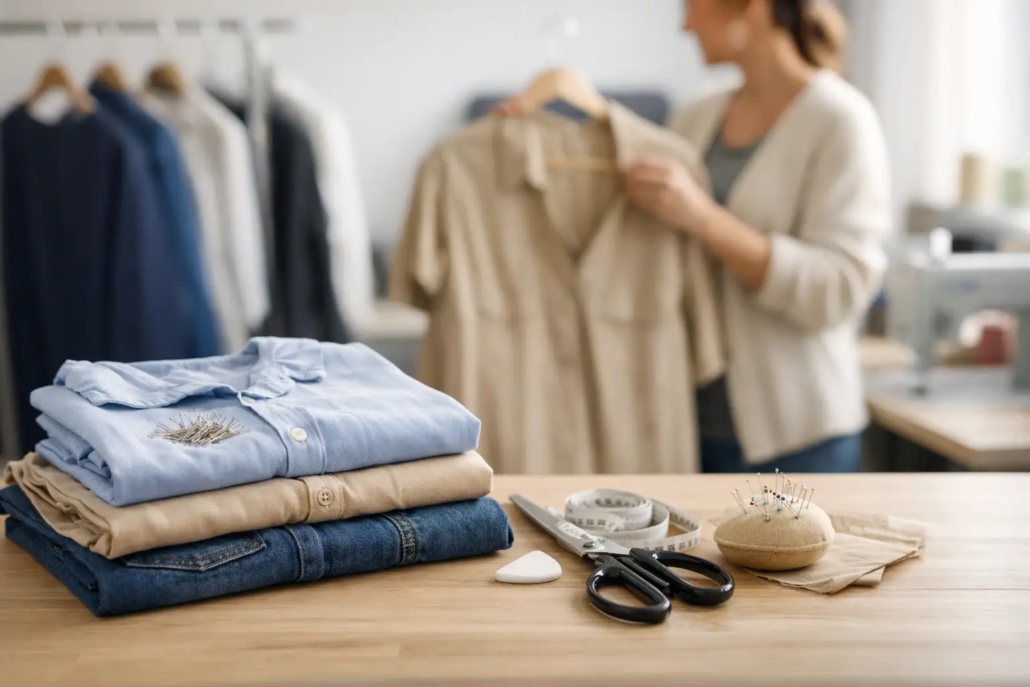
How to Properly Prepare Clothes for Alterations
A hem that looks fine in your bedroom can feel completely different after a long commute, a workday at your desk, or an evening event. That is why knowing how to prepare clothes for alterations matters. A few simple steps before your fitting help your tailor see how the garment truly fits, avoid guesswork, and make adjustments that work in real life.
Whether you are bringing in suit pants, a favorite dress, a school uniform, or formalwear for a special occasion, preparation helps protect your clothing and makes the appointment more productive. The goal is not to arrive with all the answers. It is to give your tailor a clear, honest picture of how you wear the item.
Wear the Garment the Way You Normally Would
The most useful fitting happens when your clothing reflects its intended use. If you are altering work pants, wear the shoes you regularly wear to the office. If you need a dress hemmed for a wedding, bring the exact heels or flats you plan to wear. Shoe height can change the right hem length by several inches, especially for wide-leg pants, gowns, and long dresses.
The same idea applies to what you wear underneath. Bring or wear the bra, shapewear, camisole, belt, or undershirt that you expect to use with the finished garment. A structured jacket may sit differently over a thick sweater than it does over a lightweight blouse. A fitted dress can change shape with different undergarments. These details allow the tailor to make the adjustment for your actual outfit, not an approximation.
If you are having more than one piece altered, label or separate them before you leave home. This is especially helpful for family laundry, uniforms, and similar-looking garments. It reduces mix-ups and makes it easier to explain what each item needs.
Clean Clothes Before Alterations When Needed
In many cases, clothes should be clean before alteration work begins. Freshly cleaned garments let the tailor inspect the fabric, seams, and fit without stains, odors, or buildup getting in the way. Cleaning is particularly helpful for pants that need a hem, shirts that need sleeve adjustments, and garments that have been worn repeatedly since their last fitting.
There are exceptions. If a stain needs special attention, if a fabric is delicate, or if the garment has a care label that requires professional cleaning, do not try an aggressive at-home treatment first. Heat, bleach, and harsh spot removers can permanently set stains or damage fibers. Bring the item in and point out the problem so the cleaning and alteration plan can be handled in the right order.
For special occasion clothing, do not wait until after the event if something feels wrong. A formal dress with a loose strap, a tuxedo trouser with a failing hem, or a blazer with a damaged lining may need both repair and cleaning. Addressing it early gives the garment the best chance of being ready on time.
Check the Fit at Home Before Your Appointment
You do not need tailoring vocabulary to communicate clearly. Put the garment on in front of a mirror and pay attention to where it feels uncomfortable or looks uneven. Walk, sit, raise your arms, bend slightly, and fasten every button or zipper. A garment that looks good standing still may pull across the back when you drive or feel too tight when you sit at work.
Notice whether the issue is length, looseness, tightness, or construction. For example, you might say that the pants bunch at the ankle, the sleeves cover your hands, the waistband gaps when you sit, or the dress pulls at the zipper. Plain descriptions are useful because they explain how the clothing behaves on your body.
It also helps to think about what you want to preserve. Maybe you like the relaxed fit of a shirt but want shorter sleeves. Perhaps a jacket fits well in the shoulders but needs the waist taken in. Good alterations are not always about making an item tighter. They are about improving proportion, comfort, and how confidently you can wear it.
Bring the Right Shoes and Accessories
A fitting is more accurate when the full outfit is present. The following items are worth bringing when they apply to your alteration:
- The shoes you will wear most often with the garment
- A belt for pants, skirts, or dresses with belt loops
- Shapewear, hosiery, or the bra planned for a fitted outfit
- The shirt or blouse that will be worn under a suit jacket or blazer
- Any detachable straps, sashes, pins, or accessories that affect the fit
This is especially important for wedding attire and eveningwear. A gown may need different hemming with a petticoat, and a suit jacket may need a different sleeve length depending on the shirt cuff underneath. Bringing these pieces avoids a second round of adjustments caused by an incomplete fitting.
Point Out Damage, Prior Repairs, and Fabric Concerns
Before an alteration begins, mention anything unusual about the garment. Look for loose buttons, thinning fabric, broken zippers, moth holes, tears, missing hooks, or previous repair work. A tailor can often address several issues at once, but only if they know what to inspect.
Older garments deserve extra care. Fabric can weaken at the elbows, seat, underarms, and along fold lines even when the item still looks good from a distance. Vintage pieces, heirloom dresses, and garments with beading, lace, leather trim, or delicate linings may require a more conservative approach. Sometimes the best choice is a small repair that preserves the garment rather than a major reshape that puts stress on fragile material.
Be honest about how long you want to keep the item and how often you will wear it. A one-time event outfit may call for a different solution than a suit you wear twice a week. Your tailor can help weigh the cost of the work against the garment’s condition and future use.
Speak Up About Your Timeline
Alterations take time, and the right timing depends on the garment and the work involved. A straightforward hem may be simpler than resizing a lined jacket, adjusting a formal gown, or repairing a damaged zipper. Do not assume that an item can be completed overnight, especially during busy seasons for weddings, proms, graduations, and holidays.
Bring your clothing in as early as possible before an event. Ideally, schedule a fitting once you have the shoes and undergarments you plan to use and after major weight changes are unlikely. For a wedding or other major occasion, leave room for a final fitting after the initial work is completed.
If you have a firm deadline, say so at drop-off. Clear timing helps the tailor advise you on what is realistic and prioritize the work appropriately. It is better to have an honest conversation early than to discover too late that a complex alteration needs more time.
Avoid Pinning or Cutting the Garment Yourself
It can be tempting to fold up a hem, use safety pins, or trim extra fabric before bringing clothing in. Unless you are making a temporary emergency fix, leave the garment as it is. Pins can shift, homemade marks may not account for body position, and cutting fabric cannot be undone.
If you have tried a temporary solution, explain what you did and why. A pinned cuff may show that you want a shorter sleeve, but the tailor still needs to measure the correct finished length while you are wearing the garment. Photos can also help for inspiration, particularly when you want a specific trouser break, a cropped jacket shape, or a dress silhouette.
Know When an Alteration May Not Be the Best Choice
Most clothing can be improved, but not every garment should be extensively altered. Taking in or hemming is often more straightforward than letting out, because extra fabric may not be available in the seams. Shoulder changes, major jacket resizing, and complicated work on heavily embellished garments can be more involved and may not be cost-effective.
Fit also depends on the garment’s original proportions. A dress that is several sizes too large may not retain its intended shape after major changes. In those cases, a professional can explain the options and help you decide whether a repair, a modest adjustment, or a replacement makes the most sense.
For busy households, combining cleaning, pressing, repairs, and alterations can keep wardrobe tasks from piling up. Joe’s Organic Dry Cleaning & Tailoring can help coordinate those needs so work clothes, uniforms, and occasion garments are returned ready to wear.
The best preparation is simple: bring the garment early, wear the right shoes and layers, describe how it feels, and let the tailor examine the details. That small amount of planning can turn an almost-right item into one you reach for with confidence.

