
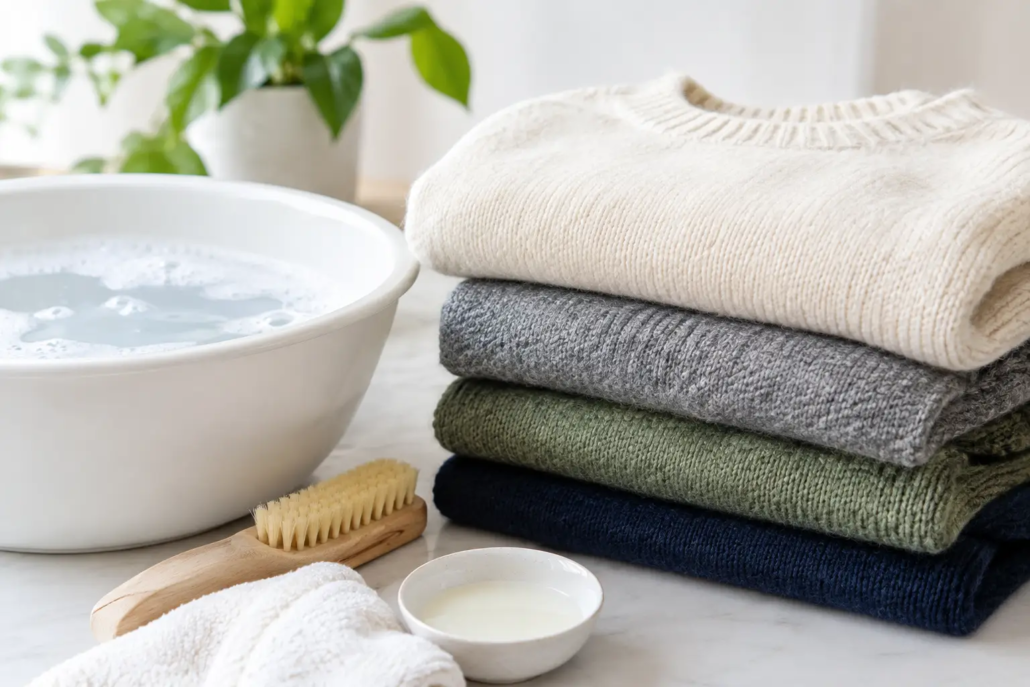
How to Clean Wool Sweaters Without Shrinking Them
A wool sweater can look perfectly fine when it goes into the wash and come out a size too small, stiff, or misshapen. That is why knowing how to clean wool sweaters starts with one rule: treat the fiber gently from the first spot treatment through drying.
Wool is naturally resilient, warm, and odor-resistant, which means it usually needs less washing than cotton or synthetic fabrics. The trade-off is that heat, rubbing, and harsh detergents can cause the tiny scales on wool fibers to lock together. That process, called felting, is what makes a sweater shrink and lose its soft shape.
Check the Care Label Before Cleaning
Before filling the sink, read the garment’s care label. A sweater marked “hand wash” can usually be cleaned safely at home with the right method. A label that says “machine washable” may tolerate a gentle wool cycle. If it says “dry clean only,” follow that instruction, especially for a tailored wool garment, a lined piece, a sweater with leather trim, or an item with detailed beading or embellishments.
Not every wool sweater is made the same way. Merino wool is often finer and more flexible, while lambswool, cashmere blends, and chunky knits may need more careful handling. If the sweater is sentimental, expensive, or difficult to replace, professional care is often the lower-risk choice.
How to Clean Wool Sweaters by Hand
Hand washing is the safest at-home approach for most wool sweaters. It is not complicated, but patience matters more than scrubbing power.
1. Treat marks before the full wash
For a small food or makeup mark, blot rather than rub. Use a clean white cloth dampened with cool water and a very small amount of wool-safe detergent. Work from the outside of the mark toward the center so it does not spread. Avoid bleach, stain sticks made for heavy-duty laundry, and hot water, all of which can damage or discolor wool.
Oil-based stains can be stubborn. If the mark does not lift easily, do not keep working at it until the fibers look fuzzy or thin. Set the sweater aside for professional cleaning instead.
2. Use cool water and a wool-friendly detergent
Fill a clean sink or basin with cool water. Add a small amount of detergent designed for wool or delicate fabrics, following the product directions. Regular detergent can be too alkaline for wool, and fabric softener is unnecessary.
Turn the sweater inside out before putting it in the water. This helps protect the outer surface from friction and can reduce visible pilling over time. Submerge the sweater and gently press it into the water. Let it soak for about 10 minutes, then gently move it through the water with your hands.
Do not scrub, twist, or wring. Wool does not respond well to agitation, even when the water is cool.
3. Rinse without changing the water temperature
Drain the soapy water and refill the basin with cool water that feels close to the same temperature. Sudden temperature changes can stress wool fibers. Press the sweater lightly in the clean water until the detergent is rinsed away. You may need to repeat this once or twice.
Lift the sweater with both hands, supporting its full weight. A wet wool sweater is heavier than it looks, and pulling it up by the shoulders can stretch the neckline and body.
4. Remove water gently
Lay the sweater flat on a clean, absorbent towel. Roll the towel and sweater together into a loose cylinder, then press down gently to transfer moisture into the towel. Unroll it and repeat with a second dry towel if needed.
Never wring a wool sweater. Wringing can stretch the knit, leave permanent distortion, and encourage pilling.
Can You Machine Wash Wool Sweaters?
Some sweaters can go in the washing machine, but only if the label specifically says machine washable or washable wool. Use the wool or delicate cycle, cool water, and a wool-safe detergent. Wash the sweater inside out and place it in a mesh laundry bag when possible.
Keep the load small and avoid washing wool with jeans, towels, items with zippers, or anything rough enough to create friction. Even on a gentle cycle, those fabrics can catch delicate yarns or leave the sweater looking worn.
Skip the dryer unless the label clearly permits it. A machine dryer is the most common reason a favorite sweater becomes a child-sized version of itself. Heat and tumbling are a risky combination for wool.
Dry Wool Sweaters Flat to Keep Their Shape
After washing, reshape the sweater while it is damp. Lay it flat on a dry towel, drying rack, or clean mesh surface. Smooth the sleeves, align the side seams, and gently bring the body back to its original measurements. If you are unsure of the shape, compare it with a similar sweater or take a quick photo before washing next time.
Keep the sweater away from direct sunlight, radiators, heat vents, and hanging racks. Hanging a wet sweater can stretch the shoulders and lengthen the body. Direct heat can cause shrinkage or make the fiber feel rough.
Drying may take a full day or longer, depending on the thickness of the knit and indoor humidity. Turning the sweater over once it is mostly dry can help both sides dry evenly.
Freshen Wool Between Washes
Because wool naturally resists odors, frequent washing is rarely necessary. Airing a sweater out after wearing it can make a real difference. Lay it flat in a clean, dry area for several hours before folding it away.
For a small spill, spot clean only the affected area. For light wrinkles, hang the sweater in a steamy bathroom briefly or use a garment steamer from a short distance without pressing the steamer directly into the knit. Too much moisture in one area can leave water marks, so use a light hand.
If your sweater has picked up a strong odor from smoke, food, or storage, home freshening may not be enough. Professional garment care can remove odors while protecting the sweater’s shape and finish.
Prevent Pilling and Storage Damage
Pilling is normal on wool, particularly where there is rubbing under the arms, along the sides, or where a seat belt or bag strap contacts the fabric. A sweater comb or fabric shaver can remove pills, but use it gently on a flat surface. Aggressive shaving can cut yarns and create thin spots.
Store wool sweaters folded rather than hung. Hangers can leave shoulder bumps and distort the knit over time. Make sure sweaters are fully dry before storing them, since moisture can create odors and attract pests. For seasonal storage, clean the sweater first and keep it in a breathable container or garment storage bag.
Avoid storing wool in plastic for long periods if the garment is not completely dry. Wool benefits from air circulation, while trapped moisture can lead to a stale smell or mildew concerns.
When Professional Cleaning Makes More Sense
At-home cleaning is a good fit for many washable everyday sweaters. It is less suitable when a sweater is dry-clean-only, heavily stained, lined, embellished, or already stretched out of shape. The same is true for wool coats, structured blazers, vintage knits, and sweaters with delicate trims.
Professional cleaning is also useful when a sweater needs more than cleaning. A loose seam, missing button, snag, or sleeve length issue can often be addressed before it turns into a larger repair. For busy households, having delicate garments cleaned, pressed, and ready to wear can take one more task off the weekly list.
At Joe’s Organic Dry Cleaning & Tailoring, wool garments can be evaluated for the cleaning method and finishing they need, rather than treated like ordinary laundry. The right care helps a good sweater stay comfortable, polished, and ready for the next cool Long Island morning.
