
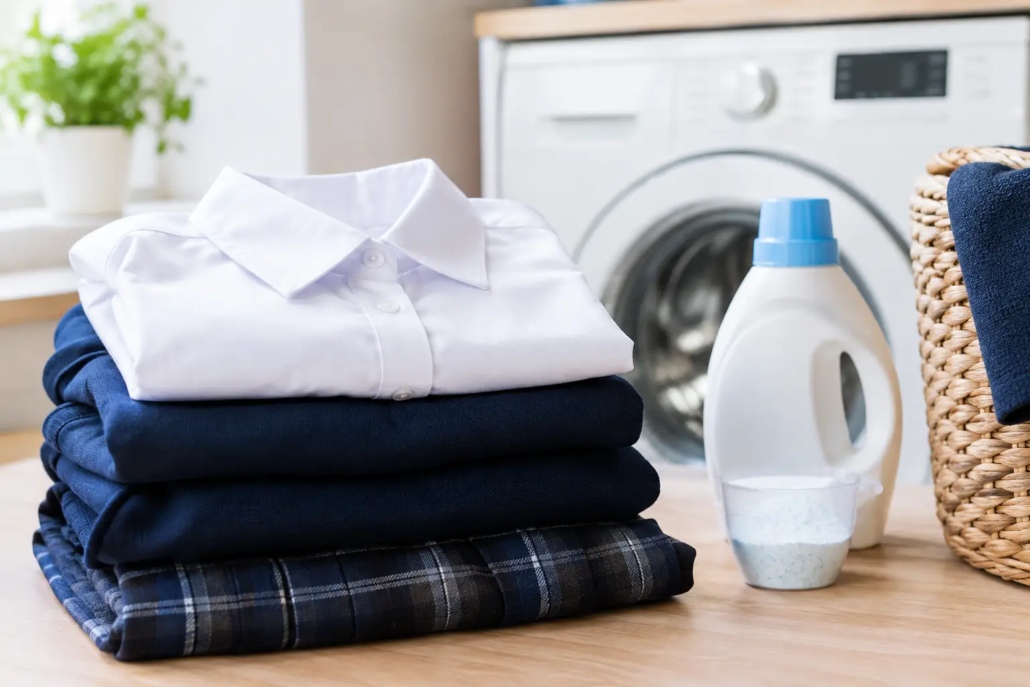
How to Wash School Uniforms Without Fading Them
A white polo with a mystery lunch stain and navy pants that look dull by October are familiar parts of the school-year routine. Knowing how to wash school uniforms correctly helps them last through busy weeks, repeated wear, playground dirt, and frequent laundering without looking worn out too soon.
The best approach is not always the hottest wash or the strongest detergent. Uniforms are often made from cotton blends, polyester, rayon, or wool blends, and each fabric responds differently to heat, agitation, and stain treatment. A few consistent habits can keep shirts brighter, colors deeper, and structured pieces ready for Monday morning.
Start With the Care Label and Sort by Color
Before washing anything, check the care label. It tells you the safest water temperature, whether bleach is permitted, and whether an item should be machine washed, hand washed, professionally cleaned, or pressed at a particular heat setting. This matters especially for uniform blazers, pleated skirts, sweaters, ties, and garments with embroidered school logos.
Sort uniforms into whites, light colors, dark colors, and heavily soiled items. A navy cardigan or black school pants can transfer dye onto a white blouse, particularly during the first few washes. Turning dark polos, pants, skirts, and sweatshirts inside out also reduces surface friction, which helps prevent fading and pilling.
It is tempting to throw all the week’s uniforms into one load when time is short. That can work for similarly colored, washable basics, but separating whites from darks is usually worth the extra few minutes. It keeps white collars and socks from taking on a gray or blue cast over time.
How to Wash School Uniforms by Fabric Type
For most cotton-polyester uniform shirts, polos, socks, and basic pants, use cold or warm water and a regular cycle. Cold water is often enough for routine cleaning and is the better choice for dark colors, embroidery, and garments likely to shrink. Warm water may be helpful for white cotton shirts or heavily soiled athletic items if the label allows it.
Use a quality detergent according to the package directions and the size of the load. Too much detergent does not make uniforms cleaner. Instead, it can leave residue that makes fabric feel stiff, traps odor, and causes dark colors to look dull. Do not overload the machine, either. Clothes need room to move through the water so soil can release properly.
White shirts may need a little extra attention. Choose an oxygen-based bleach or color-safe whitening product when the label permits it rather than reaching immediately for chlorine bleach. Chlorine bleach can weaken fibers, yellow certain finishes, and damage colored trim or embroidered logos. It has a place for specific washable white items, but it should be used carefully and only as directed.
Wool sweaters, tailored blazers, structured skirts, and pieces marked dry clean only should not be treated like everyday polos. Water, heat, and machine agitation can change their shape, shrink fibers, or affect lining and interfacing. These are the items for professional care, especially when they are part of a required school uniform and need to retain a neat fit.
Treat Stains Before They Set
The sooner a stain is treated, the easier it is to remove. Do not rub a fresh stain aggressively, since that can push it deeper into the fabric or roughen the surface. Blot off excess food or liquid, then apply a small amount of stain remover or liquid detergent to the affected area. Let it sit for the recommended time before washing.
For grass and dirt, brush away dried soil first, then treat the area before laundering. For food, grease, and sauce stains, a pre-treatment designed for oily stains is often useful. Ink, paint, and adhesive stains can be more complicated, so test any treatment in a hidden area and avoid putting the garment in the dryer until the stain is gone.
Heat can permanently set many stains. If a mark remains after washing, air dry the item and treat it again rather than using high heat. This is one of the simplest ways to save a uniform shirt that might otherwise be written off after one accident at lunch.
Keep Collars, Cuffs, and Underarms Looking Fresh
Collars and cuffs collect body oils, sweat, sunscreen, and everyday grime. Before washing, apply a small amount of detergent or a fabric-safe pre-treatment to these areas and gently work it in with your fingers or a soft brush. This small step can make a noticeable difference on white button-down shirts and light-colored polos.
For underarm odor, make sure uniforms are washed soon after wear rather than left damp in a sports bag or laundry hamper. Odor becomes harder to remove when bacteria and sweat sit in the fabric. If recurring odor is a problem, use a detergent formulated for active or odor-prone clothing and avoid fabric softener, which can leave a coating behind.
Fabric softener is not necessary for most school uniforms. It may reduce absorbency in socks and athletic clothing, and it can make moisture-wicking fabrics less effective. A properly measured detergent and a good rinse are usually all that everyday uniform pieces need.
Dry Uniforms Gently to Prevent Shrinkage and Fading
The dryer is often where uniforms lose their shape fastest. High heat can shrink cotton, weaken elastic waistbands, set remaining stains, and fade dark colors. When possible, remove uniforms promptly after washing and hang them to dry, especially polos, sweaters, pleated skirts, and garments with printed or embroidered designs.
If you need to use a dryer, select low heat or a permanent-press setting. Take items out while they are still slightly damp, then hang or lay them flat to finish drying. This reduces wrinkles and can make ironing much easier.
Avoid drying dark uniforms in direct sunlight for extended periods. Fresh air is helpful, but intense sun can fade navy, black, maroon, and green fabrics over time. For sweaters, lay them flat on a clean towel or drying rack so they do not stretch at the shoulders.
Press for a Polished School-Day Finish
A clean uniform does not always look ready to wear until it is pressed. Iron cotton shirts while they are slightly damp, using the heat level listed on the care label. Start with the collar and cuffs, then move to sleeves, front panels, and the back. Turning a dark garment inside out before ironing can help prevent unwanted shine.
Pleated skirts deserve extra care. Follow existing pleat lines rather than pressing across them, and use a pressing cloth if the fabric is delicate or synthetic. Blazers are another case where professional pressing may be the safer choice. Excessive home ironing can create shine, flatten lapels, or disturb the garment’s structure.
For busy families, setting aside a short uniform-prep window on Sunday can prevent rushed mornings. Check buttons, hems, loose threads, and missing name labels while items are being folded or pressed. Small repairs are easier to handle before they become a missing button on the way out the door.
When Professional Care Makes More Sense
At-home washing is practical for most basic uniform pieces, but some garments need more than a standard laundry cycle. A wool sweater that has lost its shape, a blazer with stains, a pleated skirt with stubborn wrinkles, or pants that need hemming deserve specialized attention.
Professional garment care is also useful when a uniform needs cleaning, pressing, and repair at the same time. Joe’s Organic Dry Cleaning & Tailoring can handle structured or delicate uniform items while helping with alterations such as hems, waist adjustments, button replacement, and basic fit corrections. That can be especially helpful when a child has grown between school terms but the uniform still has plenty of life left.
A simple routine of sorting, treating stains promptly, washing with the right temperature, and drying gently will protect the uniforms your family relies on every week. Keep a small stain remover near the laundry area, read labels before trying a new method, and give special pieces the care they need so each school day starts with clothes that look clean, comfortable, and ready to go.
