
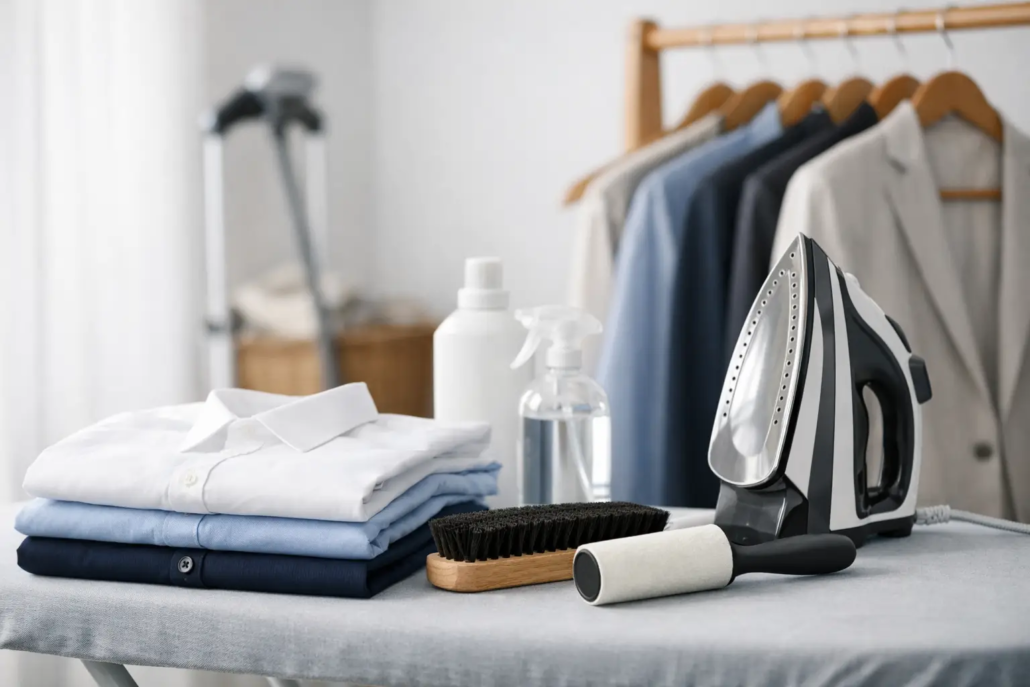
Garment Care Guide for Professionals
Monday morning usually tells the truth about a wardrobe. If a shirt collar is yellowing, a blazer has lost its shape, or a hem is coming loose right before work, the problem is rarely the garment itself. More often, it is a care routine that has not kept up with a professional schedule. This garment care guide for professionals is built for people who need clothes to look ready without spending their weekends managing stains, steam, and repair piles.
Professional clothing works harder than casual wear. Dress shirts sit under jackets, absorb body oils, and show wear fastest at the collar and cuffs. Trousers stretch at the knees and collect dust at the hem. Suits carry structure in the chest, lapels, and shoulders that can break down with poor cleaning or careless storage. Even business-casual pieces like knit tops, performance polos, and unstructured blazers need the right handling if you want them to hold color, shape, and finish.
Why a garment care guide for professionals matters
Looking polished is not only about appearance. It is also about consistency. When your work clothes are clean, pressed, and properly fitted, getting dressed is easier and your wardrobe lasts longer. That matters whether you commute daily, rotate uniforms, attend client meetings, or keep formal pieces ready for events.
The biggest mistake professionals make is treating every item the same. A cotton dress shirt can often handle regular laundering and pressing. A lined wool blazer usually should not. A washable blouse may still lose its drape if dried on high heat. Care gets expensive when the wrong method shortens the life of a good garment.
There is also a convenience issue. Most people do not struggle because they lack effort. They struggle because they are trying to care for workwear at 9:30 at night with limited time, a basic iron, and a crowded closet. Good garment care is less about perfection and more about having a dependable system.
Build your routine around garment type
A practical garment care guide for professionals starts with separating clothes by what they need, not by what laundry basket they landed in.
Shirts and everyday office wear
Dress shirts, blouses, polos, and many office-friendly cotton pieces need frequent cleaning because they sit closest to the skin. These garments benefit from regular laundering, stain spotting, and proper pressing. The goal is not just cleanliness. It is crisp collars, smooth plackets, and cuffs that still look sharp after repeated wear.
This is where over-washing and under-finishing often happen at home. People either wash shirts too aggressively or hang them up still wrinkled and call it done. For professional wear, the finish matters almost as much as the cleaning.
Suits, blazers, skirts, and structured pieces
These garments need a lighter touch. They do not always require full cleaning after every wear, but they do need inspection, brushing, airing out, and correct hanging. If you clean them too often, the fibers and internal structure can wear down. If you wait too long, oils, odors, and unseen dirt build up and become harder to remove.
A good rule is to clean structured garments when there is visible soiling, odor, or enough repeated wear that the fabric no longer looks fresh. Between cleanings, give them breathing room in the closet and use shaped hangers that support the shoulders.
Formalwear, uniforms, and specialty items
These pieces usually have less margin for error. Beaded garments, formal dresses, dress uniforms, and items with trims or special linings should be handled according to fabric and construction, not guesswork. Comforters, curtains, and ceremonial clothing fall into the same category. They may not be part of a weekly rotation, but when they need care, they need the right process the first time.
The habits that make clothes last longer
A few simple habits do more for wardrobe life than constant replacement ever will. The first is reading the care label before a stain or wrinkle turns into a rushed decision. The second is treating spills early. The third is avoiding heat unless you are sure the fabric can take it.
High heat is hard on many professional garments. It can fade dark colors, shrink natural fibers, flatten texture, and bake stains into fabric. This is one reason fabric-conscious methods matter. Different garments respond differently to water, solvent, agitation, and pressing pressure.
Storage matters too. Wire hangers can distort shoulders and necklines. Packed closets trap wrinkles and moisture. Pants folded over a hanger bar too long can crease in the wrong place. If a piece is worth wearing to work or an event, it is worth storing in a way that supports its shape.
Rotation is another overlooked part of care. Wearing the same two shirts or one favorite pair of slacks every week creates fast, uneven wear. If you give garments a day or two to rest between uses, fibers recover better and pieces keep their appearance longer.
When home care is enough and when professional care makes sense
Some clothing can absolutely be maintained at home, especially simpler washable pieces. But there is a point where home care costs more in time, risk, and reduced garment life than it saves.
If you are spending part of every weekend washing shirts, fighting iron marks, or trying to remove stains from collars and underarms, that is usually a sign the process is not efficient anymore. The same goes for lined jackets, pleated skirts, wool trousers, silk blouses, formalwear, and anything tailored. These are garments where professional cleaning and pressing can protect fit and finish in a way home methods often cannot.
It also depends on how you use your wardrobe. Someone in scrubs or uniforms may need high-volume weekly cleaning. Someone in office attire may need shirt service plus occasional care for jackets and pants. Someone attending frequent weddings, fundraisers, or business events may need both cleaning and alterations to keep special pieces ready. The right solution is not one-size-fits-all. It should match the reality of your schedule.
Tailoring is part of garment care
People often think of garment care as cleaning only, but fit correction is part of the same picture. A garment that drags, pulls, twists, or gaps will wear out faster in all the wrong places. Friction at the hem, strain at the seat, and stress at buttons or seams all add up.
Small alterations can make clothing easier to wear and easier to maintain. Hemming pants to the right break helps keep cuffs cleaner. Taking in or letting out a waistband can reduce seam stress. Adjusting sleeves or tapering a shirt can improve comfort and reduce excess fabric that wrinkles throughout the day.
This is especially helpful for professionals who need a wardrobe to perform without thought. When clothes fit correctly, they look neater, press better, and are less likely to sit unworn because something feels off.
Eco-friendly care is not just a preference
For many households, eco-friendly garment care starts as a values decision but becomes a practical one. Fabric-conscious cleaning methods can be gentler on certain garments, and that often translates to better color retention, less harsh odor, and longer wearable life.
That does not mean every item should be treated the same way under an eco-friendly label. The real benefit comes from matching the method to the fabric and construction. Organic K4 dry cleaning, professional wet cleaning, shirt laundry, and careful pressing each have their place. The best results come from choosing the approach that protects the garment while still delivering a clean, finished look.
For busy professionals and families, this matters because replacing damaged workwear is expensive. Good care is not just about appearance. It is also about getting more useful life out of the clothing you already own.
A simple system for staying ready
The easiest wardrobes to manage are not the biggest. They are the ones with a routine. Keep a section of your closet for pieces that need attention, whether that means cleaning, pressing, or repair. Do not put off loose buttons, open seams, or minor stains until they become bigger problems. Group weekly items like shirts and work pants separately from occasional pieces like suits, dresses, and formalwear.
If your schedule is packed, convenience is part of the care plan. Pickup and delivery, recurring shirt service, and combining cleaning with alterations can remove a lot of friction from the week. For households balancing work, school, events, and commuting, one dependable process usually works better than several half-finished ones.
That is why many local customers rely on a neighborhood cleaner that can handle regular laundry and pressing, specialty garments, tailoring, and pickup and delivery in one place. It saves time, reduces guesswork, and keeps clothing in rotation instead of sitting in a chair waiting for attention.
A professional wardrobe does not need to be large or expensive to look sharp. It needs care that matches how real people live and work. When your clothes are cleaned properly, pressed well, stored correctly, and adjusted when needed, they stop feeling like one more task on the list and start doing what they are supposed to do – helping you show up ready.
