
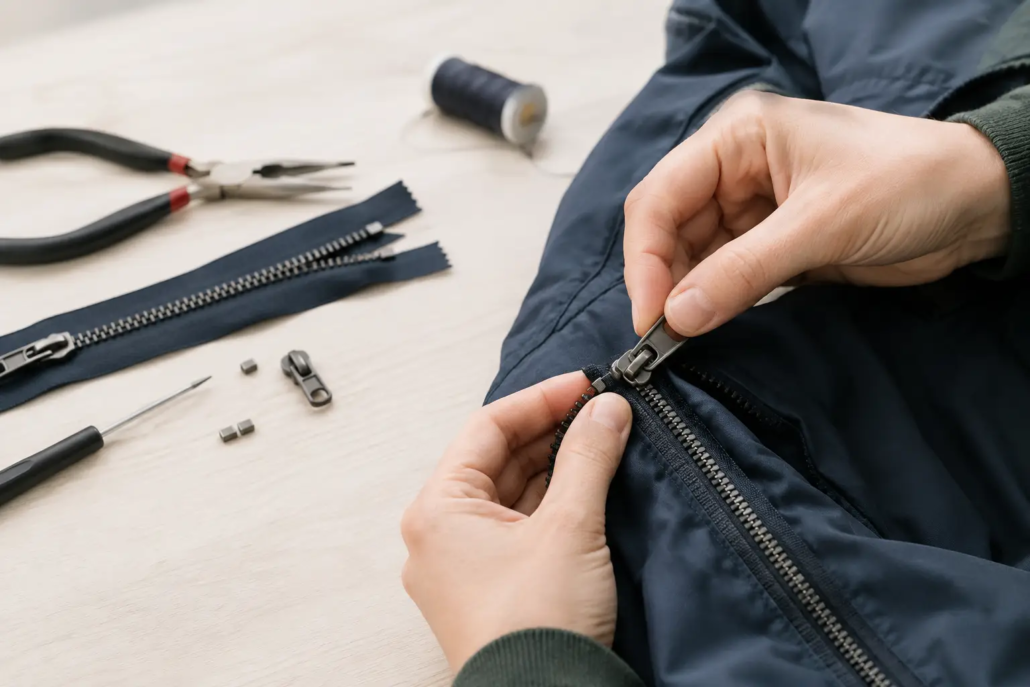
Your Practical Guide to Zipper Replacement
A coat zipper that splits on the way to work, a dress zipper that catches before an event, or a favorite pair of jeans that will not stay closed can make an otherwise good garment feel unusable. This guide to zipper replacement helps you recognize what has actually failed, what may be repairable, and when professional tailoring is the sensible choice.
A zipper is a small part of a garment, but it does a demanding job. It has to align precisely, hold tension, move through fabric without snagging, and suit the weight and purpose of the item. Replacing it correctly is less about sewing in any available zipper and more about restoring the garment’s fit, function, and finish.
When Does a Zipper Need Replacement?
Not every zipper problem calls for a new zipper. A slider that has loosened over time may no longer press the teeth together firmly. In some cases, a tailor can tighten or replace the slider, which is often a simpler repair. A stuck zipper may be caused by fabric caught in the track, lint buildup, or a bent tooth rather than a complete failure.
Replacement becomes the better option when the zipper teeth are missing, warped, or repeatedly separating after the slider passes. It is also usually needed when the zipper tape is torn, the pull has broken away from a damaged slider, or the bottom stop on a jacket zipper has failed. On dresses and skirts, a zipper that has pulled away from the seam may be repairable if the zipper itself is still in good shape. If it is old, stiff, or unreliable, replacing it while the seam is open can save another repair later.
These signs usually point to a zipper that has reached the end of its useful life:
- The zipper opens behind the slider after being zipped.
- Teeth are missing, bent, or no longer line up evenly.
- The zipper tape is frayed, torn, or separating from the garment.
- A jacket zipper will not connect securely at the bottom.
The age and value of the garment matter, too. Replacing a zipper on a well-made winter coat, tailored dress, leather item, or formal garment is often worthwhile. For a low-cost item with extensive fabric damage, a tailor can help you decide whether the repair makes practical sense.
A Guide to Zipper Replacement by Garment Type
The right replacement zipper depends on where it is used. Zippers vary in length, tooth size, material, color, flexibility, and construction. Choosing the wrong one can affect how the garment hangs, closes, and wears over time.
Dresses, Skirts, and Dress Pants
Many dresses and skirts use a concealed zipper, also called an invisible zipper. The zipper coil is designed to sit behind the seam so it is barely visible when closed. Replacing one requires careful stitching and matching the zipper placement to the original seam line. Even a slight shift can make the back of a dress pull unevenly or leave the waistband misaligned.
Dress pants may use a fly zipper that is attached to several layers of fabric, including the fly shield and waistband. The work must preserve a smooth front and maintain the original shape of the pants. This is one reason a zipper repair that looks simple from the outside can require detailed construction work inside the garment.
Jeans and Casual Pants
Jeans need a durable metal or heavy-duty coil zipper that can handle regular use and tension at the front closure. Length is especially important. A zipper that is too short can restrict the opening, while one that is too long can create bulk near the waistband or crotch seam.
A professional replacement also includes checking the button, hook, or snap above the zipper. If the top closure is loose, the zipper may be carrying more strain than it should. Addressing both issues helps the repair last.
Coats, Jackets, and Outerwear
Outerwear zippers take more wear than most. They are exposed to cold weather, pockets, bags, seat belts, and repeated pulling. A jacket may have a separating zipper that opens completely at the bottom, a two-way zipper for comfort while sitting or driving, or a heavy molded zipper designed for a raincoat or insulated coat.
The replacement has to match the garment’s function. A lightweight zipper may not hold up in a heavy parka, while an overly bulky zipper can distort a wool coat or tailored jacket. For lined coats, the lining often must be opened and resewn neatly so the finished repair looks clean inside and out.
Formalwear, Delicate Fabrics, and Special Occasion Pieces
Silk, lace, beading, chiffon, satin, and structured formalwear require extra care. Heat, pressure, needle marks, and pulling on fragile seams can cause damage that is harder to correct than the original zipper issue. Wedding dresses and evening gowns may also have boning, multiple linings, hand-finished details, or hidden hooks near the zipper.
A tailor will assess the full closure area before removing anything. Sometimes the best solution is a new zipper. Other times, reinforcing the seam, replacing a hook, or repairing a slider protects the original construction better. The answer depends on the fabric and the condition of the existing closure.
Why Zipper Replacement Is More Than a Quick Stitch
At-home repairs can work for a loose pull tab or a small snag, but full replacement has a few common risks. Removing the old zipper without stretching the fabric is the first challenge. The new zipper must then be positioned evenly, sewn with the appropriate stitch and tension, and finished so the garment still lays flat.
Color matching also matters more than people expect. On a black jacket, black is usually straightforward. On a navy dress, camel skirt, or vintage garment, the closest zipper color may still show at the seam. A tailor considers whether the zipper will be visible, concealed, covered by a placket, or framed by contrasting fabric.
The zipper itself should match the garment’s use. Metal teeth are strong and common in jeans and some outerwear, but they may be too heavy for a lightweight dress. Nylon coil zippers are flexible and widely used, while molded plastic zippers are often appropriate for casual jackets and sportswear. The best choice is not always an exact visual match to the old zipper. It is the one that will function well without changing the garment’s appearance or feel.
What to Do Before Bringing in a Garment
Avoid forcing a zipper that is stuck or partly separated. Pulling harder can tear the zipper tape, damage the surrounding fabric, or break a tooth that might otherwise have been manageable. If fabric is caught, gently ease it away from the zipper rather than yanking the pull.
Bring the garment in clean when possible, especially if it is a coat, pair of jeans, or item that has been worn regularly. Clean fabric allows a tailor to inspect the zipper area accurately and complete the repair more effectively. If the garment needs cleaning as well as tailoring, handling both services together can keep your wardrobe ready without an extra errand.
It also helps to mention how the zipper failed. Did it split at the bottom? Does it work only when pulled slowly? Did it catch after a particular seam came loose? Those details can reveal whether the problem is the slider, teeth, tape, or the garment construction around it.
Getting the Best Result From a Professional Repair
A good zipper replacement should feel natural when you wear the garment. The closure should move smoothly, the surrounding seams should lie flat, and the garment should retain its intended shape. On a lined coat or formal dress, the inside finish matters as much as the outside because loose lining or bulky stitching can affect comfort and durability.
Turnaround time depends on the garment and zipper type. A straightforward pants zipper may require less work than a lined coat, leather item, or beaded gown. If you need an item for travel, a wedding, work, or a school event, bring it in as early as possible. That gives the tailor time to source an appropriate zipper and complete the work carefully rather than rushing a repair.
For Westbury-area households balancing work, family schedules, and special events, Joe’s Organic Dry Cleaning & Tailoring can coordinate professional garment care and alterations in one place, including convenient pickup and delivery on scheduled service days.
A failed zipper does not have to send a well-loved garment to the back of the closet. Set it aside before further pulling causes damage, have the closure assessed, and give a garment that still fits and serves you well a fair chance to be worn again.
