
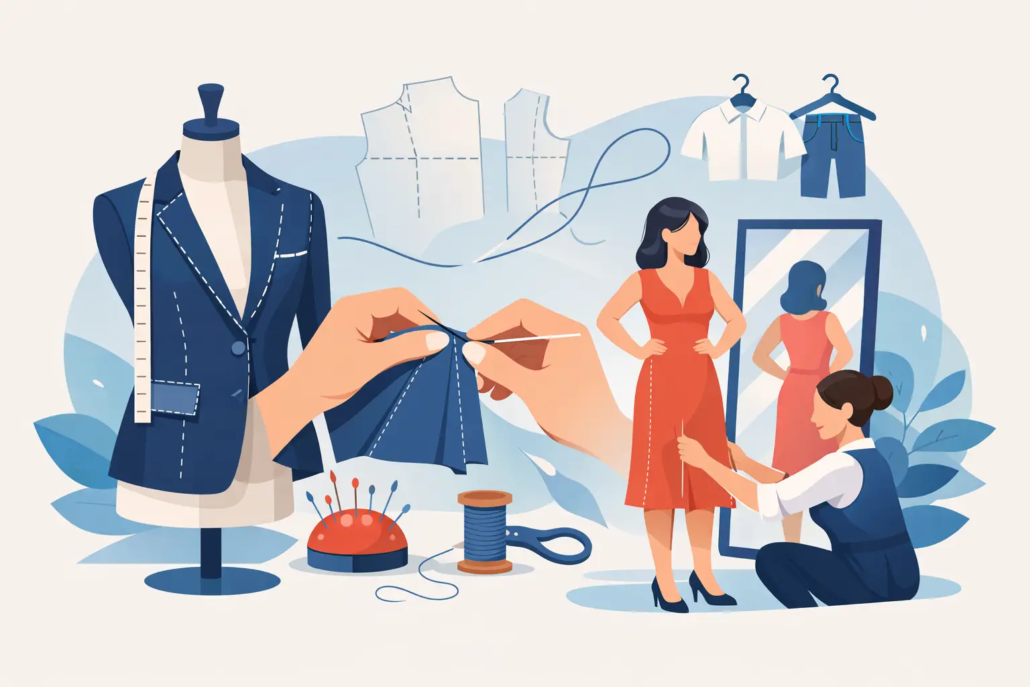
Clothing Alterations That Make Clothes Fit Right
A jacket that bunches at the shoulders or pants that drag at the hem can make good clothing feel wrong fast. Clothing alterations fix those everyday fit problems so the pieces you already own look cleaner, feel more comfortable, and work better for your life.
For many people in Westbury and nearby Long Island communities, alterations are not about fashion for fashion’s sake. They are about getting to work looking polished, making a special event outfit feel secure, or keeping school, church, and uniform clothing in rotation without replacing it too soon. A better fit saves time in the morning and helps you get more use from the clothes you rely on.
Why clothing alterations are worth it
Most off-the-rack clothing is made to fit a general size range, not a real person’s exact shape. Even quality garments often need a small adjustment to look finished. Hemming pants, taking in a waist, shortening sleeves, or adjusting a dress through the bodice can change how a garment hangs and moves.
That matters more than people think. A properly altered garment tends to look more expensive because it sits where it should. Trousers break correctly over shoes. Shirt sleeves stop at a cleaner point on the wrist. A blazer follows the body instead of pulling or sagging. These are subtle details, but they affect how put together you look.
There is also the practical side. Alterations can extend the life of clothing you already like. If your weight shifts a little, if a hem comes loose, or if a zipper fails, repair and fit correction can often save the item. That is usually easier on your budget than replacing multiple pieces, especially with suits, formalwear, uniforms, and structured garments.
The most common alterations people ask for
Some alterations are routine, and they solve the majority of fit complaints. Pants hemming is one of the most common because length affects both appearance and safety. Pants that are too long wear out faster at the bottom and can look sloppy. Too short, and they lose balance.
Sleeve shortening is another frequent request, especially for dress shirts, suit jackets, and blazers. The right sleeve length helps the whole garment look intentional. Waist adjustments are also common for slacks, skirts, and dresses, particularly when the fit is close in some places but loose in others.
Dress alterations often focus on straps, bust, waist, and hem. For formalwear, those details matter because the garment is being worn for photos, events, and long hours. Uniform alterations are popular too, since work and school clothes need to fit comfortably enough for repeated wear while still looking neat.
Repairs often overlap with alterations. Replacing a zipper, reattaching lining, fixing a torn seam, or reinforcing stress points can return a garment to regular use. In a busy household, that can be the difference between one more errand and one less thing to worry about.
What can and cannot be altered
A lot can be improved, but not every garment can be remade into anything you want. Length changes, waist adjustments, tapering, sleeve work, and many basic repairs are usually straightforward when the garment has enough fabric and a sensible construction. Structured pieces like suits and dresses often respond well to skilled tailoring because they were designed with shape in mind.
The harder jobs are usually the ones that fight the garment’s original design. Taking a piece down several sizes, changing shoulder width dramatically, or altering heavily embellished fabric can be possible, but it depends on seam allowance, lining, pattern placement, and cost. Sometimes the issue is not whether it can be done. It is whether the result will be worth the labor.
That is why honest guidance matters. A good tailor will tell you when a simple alteration can make a big difference and when a replacement may make more sense. For everyday customers, that kind of practical advice is just as valuable as the sewing itself.
Clothing alterations for work, events, and daily wear
Different wardrobes call for different priorities. For work clothing, the goal is usually polish and consistency. Dress pants should sit properly. Jackets should close comfortably without strain. Shirts should look crisp after cleaning and pressing, not oversized or uneven. If you wear business attire several days a week, even small fit issues become more noticeable over time.
For special occasion clothing, comfort becomes just as important as appearance. A wedding guest dress, a suit for a formal event, or a child’s outfit for a family celebration may only be worn a few times, but those few times matter. You do not want to spend an entire event adjusting straps, tugging at a waistband, or worrying about a hem.
Everyday clothing deserves attention too. Jeans, casual pants, skirts, and simple dresses often become favorites because the fabric and style already work for you. A small alteration can turn something you wear occasionally into something you reach for every week.
Why cleaning and tailoring work well together
One of the easiest ways to manage clothing care is to handle cleaning, pressing, and alterations in one place. If a suit needs dry cleaning and the sleeve length fixed, or a dress needs pressing and a hem adjustment before an event, combining services cuts down on extra trips and delays.
This approach also helps the garment get better overall handling. A cleaner who sees the item’s fabric, structure, and condition can help flag issues before they become bigger problems. A loose hem, weakened seam, missing button, or slight lining damage often gets noticed during regular garment care. That kind of attention is helpful when you are trying to keep clothing ready to wear rather than dealing with last-minute surprises.
For busy professionals and families, convenience is not a small benefit. It is often the reason clothing care actually gets done on time. A neighborhood provider that can clean, press, repair, alter, and coordinate pickup and delivery makes wardrobe maintenance much more manageable.
How to know when it is time for alterations
Sometimes the signs are obvious. Your pants pool at the ankle, your jacket sleeves cover too much of your hand, or your dress shifts out of place every time you move. Other signs are easier to miss. You may stop wearing a garment because it feels awkward without realizing the problem is fixable.
A good rule is to pay attention to the pieces you avoid. If you like the color, fabric, and overall style but never choose it, fit is often the reason. Another clue is when a garment looks fine on the hanger but not on your body. That usually points to proportion issues, not poor quality.
It is smart to bring in seasonal pieces before you need them urgently. Suits before interview season, dresses before wedding weekends, uniforms before the school or work rush, and coats before cold weather all give you more flexibility. Rush situations happen, but planning ahead usually gives better options.
What to expect from a professional fitting
A professional fitting should feel straightforward. You try on the garment, explain what feels off, and get practical feedback on what can be adjusted. In many cases, the best solution is less dramatic than customers expect. A cleaner hem, a narrower leg, or a small waist correction may be enough.
Bring the shoes and undergarments you plan to wear with formal or specialty items when possible. Hem length and overall balance can change depending on footwear, and event garments often fit differently with the right foundation pieces. For workwear, it helps to mention how you use the garment day to day. Office wear, uniforms, and special occasion outfits all have different fit priorities.
At Joe’s Organic Dry Cleaning & Tailoring, that practical, all-in-one approach is what many local customers appreciate most. When cleaning, pressing, and fit correction are handled together, it becomes easier to keep your wardrobe in regular rotation without adding more errands to the week.
Clothing should not sit in the closet because it is almost right. When a few careful adjustments can make a garment easier to wear, sharper looking, and more comfortable, alterations become one of the simplest ways to get more value from the clothes you already own.
