
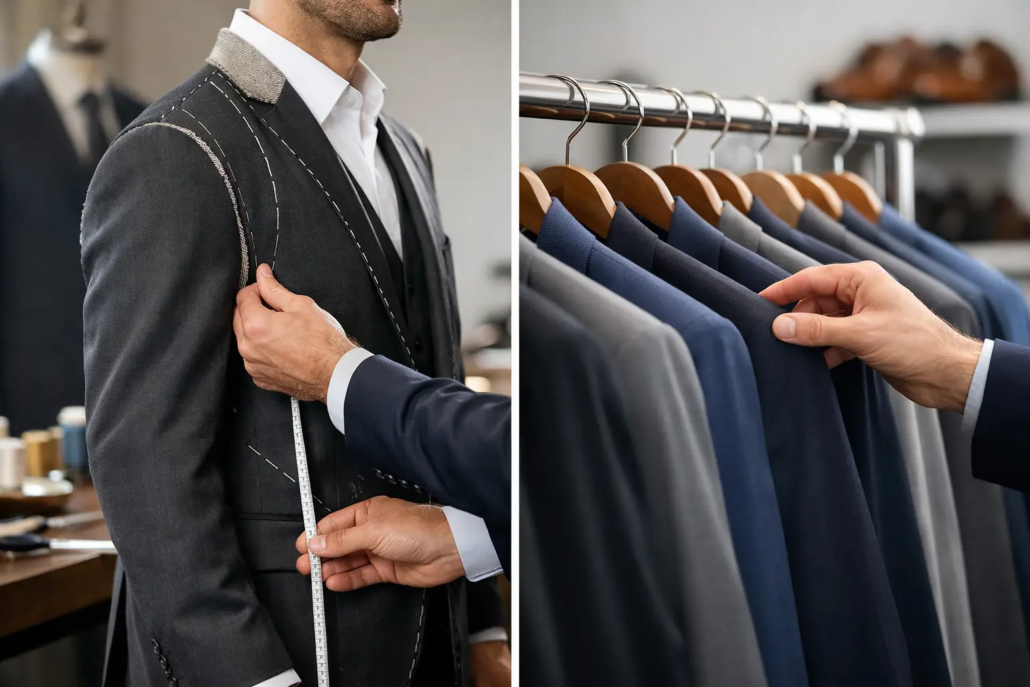
Tailoring vs Off the Rack for Your Wardrobe
A jacket can be the right size and still feel wrong. The shoulders may sit too wide, the sleeves may cover your hands, or the waist may hang straight instead of giving you a clean shape. That is why the choice between tailoring vs off the rack is not simply about spending more or less. It is about deciding how much fit, flexibility, time, and long-term wear matter for a particular garment.
For a busy professional, a parent getting ready for a wedding, or anyone rebuilding a dependable work wardrobe, both options have a place. Off-the-rack clothing offers speed and selection. Tailoring turns a promising garment into one that feels made for you. Knowing when to choose each can help you shop more wisely and keep more of the clothes you already own.
Tailoring vs Off the Rack: The Core Difference
Off-the-rack clothing is produced in standard sizes and sold ready to wear. It is designed to fit a broad range of body types, which makes it convenient but rarely perfect. A size 10, 40 regular, or medium is a starting point, not a personal blueprint.
Tailoring adjusts a garment to your proportions. Depending on the item, this can mean shortening sleeves, hemming pants or dresses, taking in a waist, repairing a lining, replacing a zipper, or reshaping the fit through the torso. More involved work may include altering a suit jacket, formal gown, uniform, or heirloom garment.
There is also a difference between custom-made clothing and tailoring. Custom clothing is created from the beginning for your measurements. Tailoring typically improves a garment that already exists, whether it came from a department store, boutique, online retailer, or your own closet. For many people, buying off the rack and having key adjustments made is the most practical middle ground.
When Off-the-Rack Clothing Makes Sense
Off-the-rack is often the right answer when you need something quickly. If you have a last-minute dinner, an unexpected business trip, or a growing child who will soon need another size, ready-to-wear clothing gives you immediate options.
It also works well for casual items where an exact fit is less critical. T-shirts, relaxed sweaters, weekend jeans, basic athletic wear, and loose summer clothing do not always need alterations. A little ease can be part of the intended look.
Price matters too. A well-priced off-the-rack item can be a smart purchase, especially when it fits properly in the areas that are hardest to change. For blazers, dresses, and structured tops, pay closest attention to the shoulders and upper chest. For pants, make sure the waist, rise, and seat are reasonably comfortable. Hem length and sleeve length are commonly adjusted, but a poor shoulder fit can be difficult or not worthwhile to correct.
Off-the-rack shopping is best when you know your reliable brands, understand your basic size, and are willing to leave a little room in the budget for simple alterations. The lowest sticker price is not always the final cost, but it can still be excellent value.
Why Tailoring Can Change the Way Clothes Look
Good tailoring is often subtle. People may not be able to identify what changed, but they notice that you look more polished. A pant hem that breaks correctly over your shoes, a dress that follows your natural waist, or sleeves that end at the right point can make an ordinary garment look intentional.
Fit is especially valuable for clothes you wear when appearance carries weight. Business suits, blazers, dress shirts, uniforms, formalwear, and mother-of-the-bride dresses all benefit from careful adjustments. These garments have structure, and that structure shows when proportions are off.
Tailoring also helps people whose bodies do not match standard size charts, which is most people. You may have broad shoulders and a narrow waist, longer arms, a shorter torso, athletic thighs, or one hip that sits slightly differently from the other. Standard sizing cannot account for every variation. Alterations can make a garment more comfortable without sacrificing its intended shape.
There is a practical confidence factor as well. When clothing stays in place, does not pull across the back, and does not drag on the floor, you can focus on your meeting, celebration, or daily routine instead of adjusting your outfit.
The Alterations That Offer the Best Return
Some adjustments deliver a noticeable improvement for a reasonable investment. Pant and jean hemming, sleeve shortening, waist adjustments, skirt and dress hemming, zipper replacement, and minor repairs often extend the useful life of a garment.
For suits and blazers, sleeve length, jacket waist suppression, trouser hems, and minor waist adjustments can make a major difference. Dress shirts may benefit from sleeve shortening or taking in the body if excess fabric makes them look bulky. With formal dresses, hems, straps, bust adjustments, and side seams are common areas to evaluate.
The best alteration is the one that makes you wear the garment more often. A dress that has sat unworn for two years because it is too long may only need a hem to become a regular favorite again.
Cost: Think Beyond the Purchase Price
The cost question in tailoring vs off the rack depends on the garment and the alteration. A basic hem is very different from rebuilding the shoulders of a lined jacket. Before buying a sale item that is several sizes too large, consider whether the changes needed will outweigh the savings.
A useful rule is to buy for the fit of the most difficult area and tailor the simpler areas. If a blazer fits well through the shoulders but needs sleeve and waist work, it may be a strong candidate. If the shoulders are oversized, the armholes are too low, and the chest is loose, it may be better to keep shopping.
Tailoring is often most cost-effective for quality garments that you expect to wear repeatedly. A good wool suit, a favorite coat, a well-made evening dress, or professional uniforms can justify the investment because the garment has enough life left to enjoy the improvement.
For low-cost, lightly constructed clothing, major alterations may not make financial sense. Thin fabrics, poorly finished seams, and garments with limited seam allowance can restrict what can be done. A professional tailor can help set realistic expectations before work begins.
Timing Matters More Than Many Shoppers Expect
Tailoring requires planning. Do not wait until the day before an interview, wedding, cruise, or holiday gathering to check the fit of an important outfit. Even a straightforward alteration takes time, and special occasion garments may need more than one fitting.
Try on event clothing with the shoes, undergarments, and accessories you plan to wear. The right heel height affects a dress hem. A different bra can change the fit of a bodice. For suits, bring the shirt and shoes you expect to wear so trouser length and sleeve proportions can be assessed accurately.
If you are building a work wardrobe, spread alterations out over time. Start with the pieces you wear most: one dependable suit, a blazer, several pairs of trousers, or a few dress shirts. Small corrections to high-use items can improve your daily appearance without requiring a complete wardrobe overhaul.
Care Protects the Fit You Paid For
Altered clothing still needs proper care. Heat, harsh washing, and improper storage can shrink fibers, distort shape, weaken seams, or damage delicate details. Structured garments such as suits, blazers, gowns, and lined coats should be cleaned according to their fabric and construction, not treated like ordinary laundry.
Professional garment care and alterations work well together. A cleaner who understands the garment can spot loose hems, damaged zippers, missing buttons, and areas needing repair before a small problem grows. At Joe’s Organic Dry Cleaning & Tailoring, this one-stop approach helps customers keep workwear, formalwear, and everyday favorites clean, pressed, repaired, and ready to wear.
How to Choose for Your Next Purchase
Start by asking how often you will wear the item and how important the fit is. For a casual top you need this weekend, off-the-rack may be all you need. For a suit you wear to work every week or a dress for a family milestone, leave room for tailoring in the decision.
When trying on clothing, move around. Sit down, lift your arms, bend slightly, and notice where the fabric pulls or bunches. Check the garment from the side and back, not only in the fitting-room mirror from the front. If it fits well in the shoulders, chest, waist, and seat, smaller adjustments may be worthwhile.
The goal is not for every item in your closet to be altered. The goal is to own clothing that serves your life well. Choose ready-to-wear for convenience, choose tailoring when fit changes the value of the garment, and give your best pieces the care that keeps them looking right for the next occasion.

