
Wedding Gown Preservation Review: 7 Things to Check
A wedding gown preservation review is most useful when it looks beyond a pretty storage box. Your dress may have spent a full day around makeup, food, champagne, outdoor photos, dancing, and a busy reception floor. Even when it looks clean at first glance, invisible sugar, body oils, and clear beverage residue can settle into the fabric and become yellow or brown stains over time.
Preservation is not a one-size-fits-all service. The right approach depends on your gown’s fabric, trim, construction, stains, and future plans for the dress. Whether you hope to save it as a family keepsake, wear it again, alter it into another garment, or simply protect an important memory, a professional should be able to explain exactly how the gown will be handled.
What Wedding Gown Preservation Should Include
Wedding gown preservation begins with careful inspection and cleaning. The goal is to remove stains and soil safely, then package the gown in materials designed for long-term storage. It is different from a standard formalwear cleaning because wedding dresses often combine delicate fabrics, multiple layers, structured bodices, boning, beads, lace, embroidery, or hand-finished details.
A good service does not promise the same treatment for every gown. Silk satin, polyester tulle, vintage lace, and heavily beaded fabric respond differently to moisture, cleaning solutions, heat, and pressing. The cleaner should identify the fabric and evaluate areas that receive the most wear, including the hem, train, underarms, neckline, bustle points, and interior lining.
Wedding Gown Preservation Review: 7 Things to Check
1. A detailed inspection before cleaning
A gown should be inspected before any cleaning begins. This is when the cleaner notes visible stains, loose beads, weakened seams, missing buttons, damaged hooks, or delicate areas that need special attention. If your gown has a long train or was worn outdoors, ask how the hem and underside will be evaluated.
A careful inspection also sets realistic expectations. Some older stains, fabric discoloration, or damage caused by spilled dyes may not come out completely. A trustworthy professional will explain the possibilities rather than make a blanket promise that every mark will disappear.
2. Fabric-conscious cleaning methods
The best method depends on the dress. Some gowns are appropriate for professional dry cleaning, while others benefit from controlled wet cleaning or spot treatment in selected areas. The concern is not choosing the trendiest method. It is choosing the method that protects the specific fibers, trims, dyes, and structure of your dress.
Ask whether the cleaner handles wedding gowns individually or processes them like routine garments. A gown with appliques, sequins, silk, or fragile lace deserves a measured approach. At Joe’s Organic Dry Cleaning & Tailoring, fabric-conscious care is especially valuable for customers who want their gown cleaned by a local professional who also understands delicate and structured garments.
3. Stain treatment that accounts for the full wedding day
Not all stains look alike, and not all show up right away. Makeup at the neckline, perspiration under the arms, grass at the hem, cake frosting, wine, and clear drinks can each require different treatment. A preservation review should explain whether the service includes targeted stain treatment, not just general cleaning.
Be honest about what happened during the celebration. Tell the cleaner if you had outdoor portraits, walked on a beach or lawn, used self-tanner, wore body makeup, or noticed a spill. That information helps the garment care team focus on areas that may develop delayed discoloration.
4. Repair options before packaging
Cleaning can reveal a loose thread, detached bead, torn bustle loop, or stressed seam that was easy to miss on the wedding day. Minor repairs before preservation can help prevent a small issue from becoming worse while the gown is stored.
Not every preservation service includes repairs, so ask whether they are available and how they are approved. A clear process matters. You should know what work is recommended, what it will cost, and whether the repair will be done before the dress is placed in storage materials.
5. Proper archival packaging materials
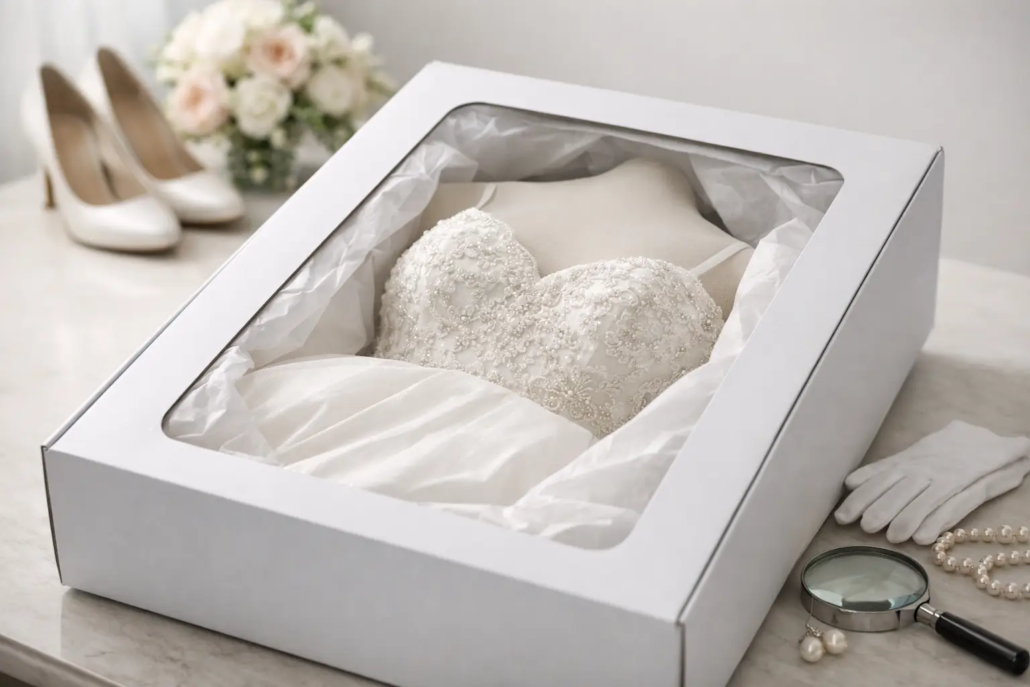
The packaging is a major part of preservation. Your gown should not be sealed in ordinary plastic or packed in a box that can transfer acids into the fabric over time. Look for acid-free tissue and an archival-quality storage box designed to reduce yellowing and creasing.
The gown should be folded thoughtfully, with tissue placed between layers to cushion delicate areas and reduce sharp creases. Some dresses are better stored flat in a box, while others require a different arrangement because of their volume or embellishments. The cleaner should be able to explain how your particular dress will be packed.
6. Clear timing and handling expectations
Preservation is best arranged soon after the wedding, especially if the gown has visible stains or was worn in warm weather. Waiting a few weeks may be manageable for a clean-looking dress kept in a cool, dry place, but waiting months gives unseen residue more time to set.
A professional should provide a realistic turnaround time and tell you when to bring in the gown. If you are leaving for a honeymoon, have a trusted family member drop it off promptly or arrange service when you return. Do not leave it in a plastic garment bag in a hot car, damp basement, or attic while deciding what to do.
7. Straight answers about storage after preservation
Even an expertly preserved gown needs the right home environment. Keep the box in a climate-controlled area inside your living space, such as a closet shelf. Avoid garages, attics, basements, and storage units where heat, humidity, pests, or moisture can create problems.
Ask whether the box should be opened periodically and how to handle the gown if you do. In most cases, clean hands and gentle handling are essential. If you plan to inspect the dress, avoid pulling on the bodice, train, or embellishments. Support the garment fully and refold it carefully with the tissue in place.
Questions Worth Asking Before You Commit
A quick conversation can tell you a great deal about the level of care you will receive. Ask how the gown will be inspected, which cleaning method is recommended and why, whether stains and repairs are evaluated separately, and what preservation materials are used. You can also ask whether the gown is handled on-site or sent elsewhere, especially if local accountability matters to you.
Price matters, but it should not be the only deciding factor. A lower quote may not include stain treatment, repairs, archival packaging, or careful work with beading and lace. On the other hand, an expensive package is not automatically better if the provider cannot explain the cleaning and storage process in plain language.
Photograph your gown before handing it over, including close-ups of any existing stains, damaged areas, or special details. Keep your receipt and any written care information with your wedding records. These simple steps make it easier to communicate your expectations and maintain a record of the garment’s condition.
Preservation Is Not Always the Right Choice
Preserving a wedding gown makes sense for many brides, but it is not the only meaningful option. If you know you want to shorten the dress into a cocktail gown, use lace in a christening outfit, donate it, or pass it to another bride, cleaning and alteration may be more practical than boxing it for long-term storage.
The condition of the dress also matters. A vintage gown with fragile fabric may need conservation-minded care rather than conventional preservation. A dress with extensive damage may benefit from a repair consultation before anyone recommends cleaning or packaging. The best choice is the one that protects both the garment and your plans for it.
Your wedding dress carries the evidence of a once-in-a-lifetime day. Give it the same thoughtful attention after the celebration that you gave it before walking down the aisle: prompt professional care, clear answers, and storage that lets the memory stay beautiful for years to come.

