
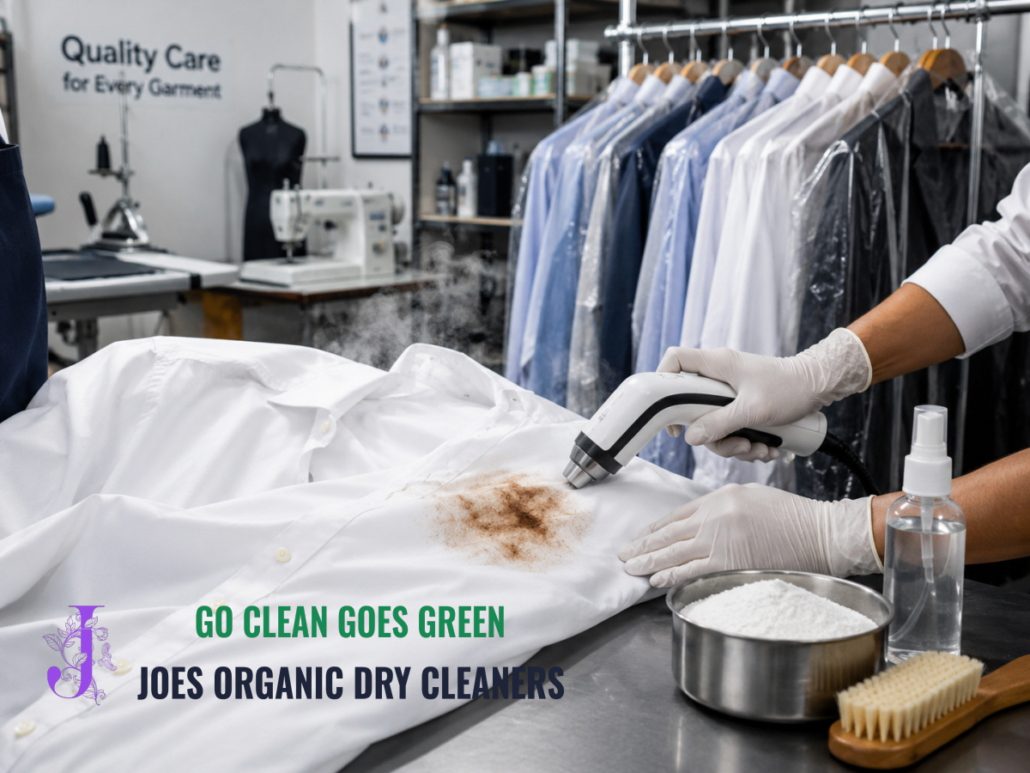
Can Dry Cleaning Remove Stains? 5 Smart Answers for Westbury
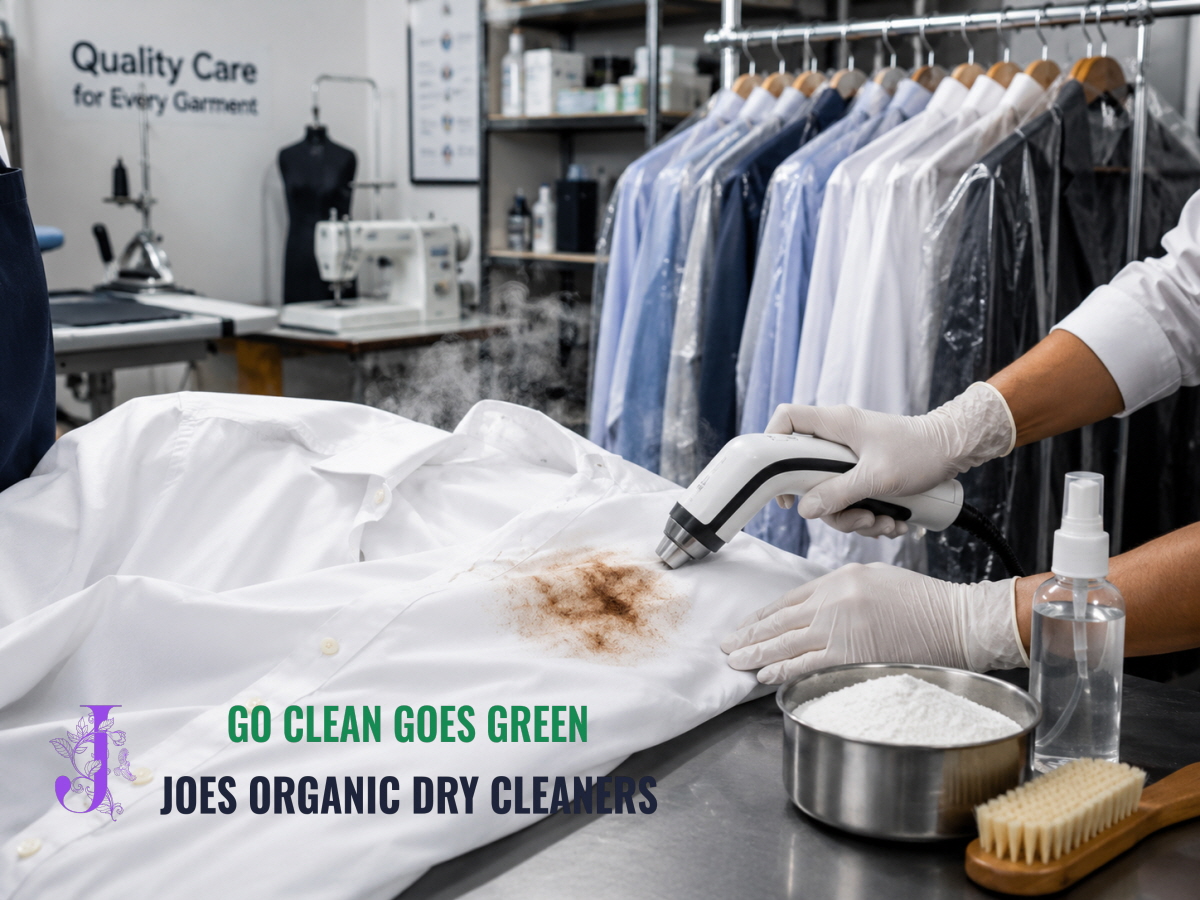
The right stain treatment can help protect fabric while improving cleaning results.
Can Dry Cleaning Remove Stains? 5 Smart Answers for Westbury
I hear this question all the time at Joe’s in Westbury: can dry cleaning really remove stains? The honest answer is yes, many stains can come out, but the results depend on the fabric, the stain type, and how quickly the garment gets treated. That is why I never promise that every spot will disappear the same way. Instead, I focus on safer, eco-friendly garment care that helps improve stain removal while protecting the shirt, dress, blazer, uniform, or household item you still want to wear.
Snippet Introduction
A stain rarely shows up when it is convenient. It lands on a work shirt before a meeting, on a dress before dinner, or on a suit jacket you only wear for important occasions. That is usually when people ask the same question: can dry cleaning remove stains? The honest answer is yes, often it can – but not every stain comes out completely, and timing, fabric, and stain type make a big difference.
Dry cleaning is very effective for many stains, especially oily or greasy ones that do not respond well to regular washing. But stain removal is not one-size-fits-all. A coffee splash on a blouse, ink on a uniform, and makeup on a blazer may all need different treatment methods. The best results come when the cleaner identifies both the fabric and the substance that caused the spot before the stain has time to set.
Can dry cleaning remove stains on all fabrics?
Not in every case, and that is where professional judgment matters. Some fabrics handle stain treatment well, while others are more sensitive to heat, moisture, or agitation. Wool, silk, structured jackets, lined garments, formalwear, and decorated pieces often need a cautious approach because aggressive treatment can do more harm than the stain itself.
That is one reason people bring stained items to a professional cleaner instead of trying a strong store-bought remover at home. A good cleaner is not just trying to erase the spot. They are trying to remove it while keeping the fabric color, shape, and finish intact.
For washable everyday clothes, home methods may work for light stains if you act quickly. But for garments that are tailored, delicate, expensive, or important to your weekly routine, professional care usually gives you a better chance of saving both the item and its appearance.
What kinds of stains dry cleaning removes best
Dry cleaning works particularly well on oil-based stains. Think salad dressing, body oils, butter, makeup, lotion, grease, or some sauces. The solvents used in dry cleaning are designed to break down substances that water alone often struggles to lift.
That is why a stained suit coat or dress shirt may come back cleaner from a dry cleaner than it would after spot-scrubbing at home. Water can spread certain oily stains or leave rings, especially on fabrics that do not absorb moisture evenly.
Protein-based stains like sweat, dairy, blood, or egg can sometimes be removed too, but they often need special pre-treatment. The same goes for tannin stains such as coffee, tea, wine, or juice. These are not always solved by dry cleaning solvent alone. Professional cleaners usually treat the stain before cleaning, and the exact method depends on what caused it.
Ink, paint, and dye transfer are trickier. Sometimes they can be improved significantly. Sometimes they can only be lightened. If the dye from one material has bonded with another, full removal may not be possible without affecting the original fabric color.
Why some stains do not come out completely
This is the part most people do not hear until after the garment is picked up. A stain can become permanent before it ever reaches the cleaner.
Heat is a common reason. If a stained item has already been washed in hot water or put in the dryer, the stain may be set into the fibers. Time matters too. A fresh spill is one problem. A week-old stain that has oxidized is another.
Fabric finish also plays a role. Some garments have coatings, dyes, or construction details that limit how aggressively a cleaner can treat them. If removing the stain risks color loss, shine marks, fabric distortion, or damage to trim, the cleaner may have to stop short of complete removal.
Then there is the issue of unknown stains. If a customer says, “I am not sure what it is,” the cleaner can still work on it, but stain removal is easier when the source is identified. Coffee, red wine, lipstick, and motor oil do not get treated the same way.
What you should do before taking a stained item in
The best first step is simple: do not rub it. Rubbing can push the stain deeper into the fibers and wear down the fabric surface, especially on wool, silk, and blends used in business and formal clothing.
If the spill is fresh, blot gently with a clean white cloth or paper towel. Avoid colored towels, since they can transfer dye. If there are solids, lift them off carefully instead of smearing them around. Then bring the item in as soon as possible.
If you know what caused the stain, mention it at drop-off. That small detail helps more than most people realize. A cleaner can choose the right pre-treatment faster when they know whether the spot came from oil, wine, cosmetics, food, or something else.
It is also smart to point out stains even if they seem obvious. Under counter lighting, on dark fabric, or along seams and lapels, a spot can be easy to miss before cleaning. A quick note gives the garment the best chance.
Can dry cleaning remove old stains?
Sometimes yes, but older stains are less predictable. Once a stain has dried, aged, or gone through a home wash-and-dry cycle, it becomes harder to remove cleanly. Oxidation can change the chemistry of the stain, and repeated heat exposure can bind it to the fibers.
That does not mean an old stain is hopeless. Professional cleaners can often reduce its appearance or remove it more than you would expect. But older stains usually carry more risk of a faint shadow, color change, or permanent trace.
This is especially true with white garments, light silks, dress shirts, and special occasion wear. What looks like a stain may also leave behind fabric wear, bleaching, or dye loss from the original spill or from an attempted home remedy.
When wet cleaning may be the better option
Despite the name, not every professionally cleaned stain is handled best by traditional dry cleaning alone. Professional wet cleaning can be a better choice for certain water-based stains and fabric types, especially when done with fabric-safe controls and finishing.
That matters because stain removal is not about choosing one method and forcing every garment through it. It is about using the right process for the right item. An experienced cleaner may decide that a shirt, blouse, knit, or lightly structured garment will respond better to wet cleaning, while a suit, blazer, lined dress, or formal item may be better suited to dry cleaning and targeted spotting.
For customers, the practical takeaway is this: the most effective cleaners do not treat every stain the same. They match the method to the garment.
Special garments need a more careful approach
Wedding dresses, formalwear, uniforms, comforters, curtains, and tailored clothing all come with extra considerations. Beading, linings, shoulder structure, pleats, trims, and hidden stains from perspiration or spills can complicate the process.
On these items, stain removal is only part of the job. The garment also has to keep its shape, drape, and finish. That is why professional pressing and handling matter just as much as the cleaning itself.
For households juggling workwear, school uniforms, church clothes, and event pieces, it helps to have one cleaner who can manage stain removal and garment finishing in the same place. That convenience is not just about saving time. It reduces the chance of a garment being mishandled between separate services.
How to set realistic expectations
A trustworthy cleaner should be honest with you. Some stains come out completely. Some improve but leave a faint mark. Some reveal hidden damage after the staining substance is removed.
The goal is always the best safe result, not a reckless one. If a stain can only be removed by risking fabric damage, a professional should tell you that. Most customers would rather keep a wearable garment with a light trace than lose the item entirely to over-treatment.
At Joe’s Organic Dry Cleaning & Tailoring, that kind of judgment is part of good garment care. People are not bringing in disposable clothing. They are bringing in work staples, special occasion pieces, and items they need ready to wear again.
So, can dry cleaning remove stains? Very often, yes. The sooner you act and the less you experiment at home, the better your chances. If a garment matters to your routine or your appearance, getting it professionally assessed early is usually the smartest move.
Frequently Asked Questions
Can dry cleaning remove all stains?
Some stains lift very well, but not every stain comes out the same way.
Dry cleaning can remove many stains, especially oily or grease-related marks, but some stains become harder once they set, react to heat, or have already been treated incorrectly at home. A professional inspection gives the most realistic answer.
What kinds of stains does dry cleaning usually remove best?
Oily and greasy stains often respond especially well.
Common examples include body oil on collars, makeup, lotion, food grease, and some oily food spills. These are often difficult to remove fully with ordinary home washing.
Are old stains harder to remove?
Yes, older stains usually become more difficult.
Time gives the stain more opportunity to settle into the fibers. If the item has already been washed, dried, or ironed, the stain may be more set than it first appeared.
Should I try to treat a stain at home before bringing it in?
Only gently, and only if you know the fabric can handle it.
A light blot is often safer than aggressive treatment. Strong stain sprays, bleach, rubbing, heat, and random home methods can make professional stain removal harder later.
Can dry cleaning remove stains from delicate fabrics?
Sometimes yes, but delicate fabrics need extra caution.
Silk, rayon, velvet, lined garments, and formalwear often need a more careful approach. The stain-removal plan has to consider fabric protection, not just the stain itself.
What if the stain does not come out completely?
Improvement can still be valuable.
Even when full removal is not possible, professional treatment may still fade the stain enough to make the garment wearable again or much less noticeable.
Does Joe’s handle stain removal on shirts, dresses, and uniforms?
Yes.
Joe’s helps with everyday garments, workwear, uniforms, shirts, dresses, jackets, and other items that need professional cleaning, pressing, and garment care.
Can I send stained items with pickup and delivery?
Yes.
Pickup and delivery make it easier to act sooner, which can improve stain-removal chances. It is especially useful for busy homes with several garments to manage.
💚It’s a wonderful day here at Joe’s Dry Cleaners, located at 263 Post Ave in Westbury. Our branch is busy serving the community with top-tier dry cleaning, clothing repair, tailoring alterations, and convenient pickup and delivery to your home. Your cherished garments deserve the highest level of care, which is why Joe’s proudly offers eco-friendly, organic dry cleaning designed to protect both your clothing and your health.
🌎 Visit Contact : https://joescleaner.blogspot.com/
📸 External Service: https://www.instagram.com/dry.cleans
✨ Looking for a dry cleaner you can truly trust? Joe’s Organic Dry Cleaners & Tailoring Alterations, a proud member of the New York State Fabric Association delivers expert garment care and tailoring services that meet New York State standards — keeping your clothes safe, clean, and perfectly fitted.

