Eco-Friendly Wet Cleaning at Westbury Cleaners offers a healthier and more sustainable alternative to traditional dry cleaning methods, keeping your clothes safe, soft, and eco-friendly.
🧺 What is Eco-Friendly Wet Cleaning?
Traditional dry cleaning typically involves chemicals such as perchloroethylene (Perc), which can harm both your garments and the environment. Wet cleaning, on the other hand, uses biodegradable detergents and water-based techniques that are gentle on fabrics and completely eco-friendly.
At Joe’s Organic Dry Cleaners, we utilize advanced SYSTEM-K4 wet cleaning technology, ensuring superior cleaning results while protecting your health and the planet.
💡 Why Choose Joe’s Organic Dry Cleaners?
Here are some top reasons why our customers trust us:
SYSTEM-K4 Non-Toxic Solution: Our advanced cleaning solutions effectively clean clothes without harmful chemicals, ensuring your clothes stay vibrant and fresh.
Over 20 Years of Experience: Our expert team provides professional care for delicate garments, ensuring top-quality service.
Convenient Free Pickup & Delivery: We offer complimentary pickup and delivery throughout Long Island, making garment care effortless for our customers.
❓ Frequently Asked Questions (FAQ)
Q1: Is wet cleaning suitable for all garments? A1: Yes, wet cleaning safely cleans almost all types of garments, including delicate fabrics labeled as “dry-clean only.”
Q2: What makes wet cleaning environmentally friendly? A2: Wet cleaning eliminates toxic chemicals, reducing air and water pollution, and ensuring safer handling for customers and employees.
Q3: What locations does Westbury Cleaners service? A3: We primarily service Westbury and the broader Long Island area with convenient pickup and delivery.
Discover the future of garment care with wet cleaning. Perfect for a wide range of fabrics, including many items that say “dry clean only,” wet cleaning offers a sustainable and effective solution.
Wet cleaning is definitely making waves in the garment care industry! It’s a sustainable alternative to traditional dry cleaning, utilizing water-based technologies and biodegradable detergents to effectively clean a wide range of fabrics, even those labeled as “dry clean only.”
One of the significant advantages of wet cleaning is its eco-friendliness. By eliminating the use of harsh chemicals like perchloroethylene (PERC) typically found in dry cleaning, wet cleaning reduces environmental impact and minimizes health risks for both workers and consumers. Plus, since wet cleaning relies on water as the main solvent, it significantly reduces carbon emissions associated with transportation and waste disposal.
Moreover, wet cleaning is gentle on fabrics, helping to extend the lifespan of clothing items. It’s particularly beneficial for delicate materials like wool, silk, and cashmere, which can shrink or become damaged with traditional dry cleaning methods. By using specialized equipment and techniques, wet cleaning ensures that garments come out clean, fresh, and free from chemical residues.
As more consumers become environmentally conscious and demand sustainable solutions, the wet cleaning movement is gaining momentum in textile care. Professional garment care businesses are increasingly adopting wet cleaning technologies, offering customers a safer, greener, and more effective alternative to traditional dry cleaning.
Joining the wet cleaning movement isn’t just about embracing a new technology—it’s about making a positive impact on the environment and promoting sustainability in the fashion industry. So, let’s all dive into the future of garment care with wet cleaning and contribute to a cleaner, greener planet!
https://www.joescleaner.com/wp-content/uploads/2024/04/@Best-dry-cleaner-wedding-couple.jpg10801080Alex Kimhttps://www.joescleaner.com/wp-content/uploads/2023/04/Original-Logo-Pink-1-300x121.pngAlex Kim2024-04-18 02:10:172024-04-18 02:10:17wet cleaning offers a sustainable and effective solution
Dry cleaning uses chemical solvents that are gentle on delicate fabrics like silk, wool, and cashmere, preventing damage and preserving their quality.
Effective Stain Removal:
Stubborn stains that resist regular washing can often be effectively removed through the dry cleaning process.
No Shrinkage or Color Fading:
Unlike water-based washing, dry cleaning minimizes the risk of shrinkage or color fading, keeping your garments in their original condition.
Suitable for Special Garments:
Fabrics with intricate designs, delicate embellishments, and leather or suede materials are best entrusted to dry cleaners to maintain their appearance.
Convenience with Home Dry Cleaning Machines:
Home dry cleaning machines offer the convenience of professional cleaning at home, saving time and effort.
Odor and Bacteria Removal:
Dry cleaning eliminates odors and bacteria, leaving your clothes fresh and hygienic.
Professional Pressing and Finishing:
Dry cleaners provide expert pressing and finishing, ensuring your clothes look impeccable and are ready to wear.
Preservation of Garment Longevity:
Regular dry cleaning can extend the life of your garments, making them last longer and reducing the need for frequent replacements.
Dry cleaning involves the use of chemical solvents, such as perchloroethylene (perc), which can be harmful to the environment and human health if not handled properly.
Professional dry cleaning services can be more expensive than regular washing methods, making them a less budget-friendly option, especially for frequent use.
While home dry cleaning machines offer convenience, some delicate fabrics and heavily stained garments still require professional expertise, limiting the scope of DIY cleaning.
Despite its gentleness on certain fabrics, dry cleaning can still cause damage if not done properly, leading to color fading, fabric weakening, or even misshaping of garments.
Dry cleaning may take longer than regular washing as it involves inspection, spot treatment, and the actual cleaning process, leading to delays in getting your clothes back.
Some dry-cleaned clothes may have a lingering chemical odor after the cleaning process, which can be bothersome for sensitive individuals.
In conclusion, while dry cleaning offers benefits for specific fabrics and stain removal, it also has its drawbacks, including potential chemical exposure and higher costs. Weighing the pros and cons will help you make an informed decision on whether dry cleaning is the right choice for your garments.
https://www.joescleaner.com/wp-content/uploads/2023/04/Wet_Cleaning_Shirt-Laundry_You_Need_to_Get_Started-Joes-Organic-Dry-Cleaners-Tailor-Alterations.jpg7681024Alex Kimhttps://www.joescleaner.com/wp-content/uploads/2023/04/Original-Logo-Pink-1-300x121.pngAlex Kim2023-08-18 18:20:472023-08-18 20:27:46Advantages of dry cleaning?
Summer, which is humid and hot, is a difficult season to care for clothes. If you don’t take good care of sweaty clothes, you can suffer from odors and stains.
The heat this summer is unusual. , My body starts to get wet like laundry that is already wet. The first heat wave warning of the year has been issued in some areas. It was hot all over the place. The Korea Meteorological Administration predicted that this year’s temperature would be higher than average. It looks like it will rain a lot. In this hot and humid season, how should I take care of my clothes?
Q: How to care for short-sleeved cotton t-shirts? After a few washes, it gets thicker, and the more you wash, the smaller the size of the clothes seems to be.
A: Due to the nature of the material, cotton inevitably shrinks during washing. Knitted fabrics, such as cotton T-shirt fabric, have threads connected to each other in the form of rings. When washing, when friction is applied to these loops, the loops are pulled together and the space is reduced. Clothes made of cotton will inevitably shrink little by little even if they are washed in cold water, unless they have been washed to prevent further shrinkage from the time of manufacture. If you do not want the fabric to shrink, you should wash it by hand as much as possible to reduce friction or iron the clothes while pulling them to stretch them again.
Also, the reason why clothes look sloppy after washing can be because the loosening on new clothes is missing. If clothes made of thin materials that are often worn in summer, such as linen and hemp, as well as cotton products, seem too loose, buy spray-type household ironing glue, lightly spray it on, and then iron it. It will make you feel like new clothes.
Q: The rainy season is coming. No matter how well you dry your clothes, they still smell. How do I get rid of it?
A: It’s common sense, but it’s a good idea to wash your clothes as often as possible during the summer months. If you leave laundry contaminated with sweat or sebum in a laundry tub that is not well-ventilated, you create a good environment for bacteria to live on their own. When contaminated laundry meets germs and molds, the contaminants will rot and the stench will get worse. In this case, the odor may remain even after washing and drying.
So, if possible, it is good to spend the season with the principle of washing the clothes worn on that day. However, doing laundry every day is not easy. When collecting for several days, if possible, dry it outdoors in a place with sunlight and wind, or if it is a fabric that can be boiled, boil it in hot water often to eradicate germs.
Or, before washing, you can hang wet laundry on a drying rack or dry it in a dryer first, then wash and dry it again. One way to get rid of odors is to add fabric softener or the like when washing clothes. An official from P&G’s R&D center, which recently launched “Downy Spring Garden,” explained, “If the wet laundry is dried in an unventilated room or if human secretions are not properly removed, odors can arise.” If you simply try to cover up the odor with the scent of fabric softener, the odor may come back over time. It is recommended to use a product that neutralizes and removes odors, such as laundry detergent for indoor drying, or to remove bacteria that cause odors.
Laundry experts recommend washing as often as possible and using a detergent appropriate for the situation in order to remove human body secretions as quickly as possible during the summer.
Q: How should I manage summer clothing materials such as linen and silk?
A: Plant-derived materials such as linen, artificial silk, and cotton are often worn in the summer because they wick sweat well and are breathable. However, the biggest disadvantage of this vegetable cloth is that it has problems such as shrinkage and wrinkles after washing. In order to care for clothes made of these materials, wash them in a way that reduces friction as much as possible, such as setting a wool course when using a washing machine. In the case of artificial silk and cotton, it is also recommended to use a fabric softener. It makes fabrics softer and has a pleasant scent. An official from P&G’s R&D center said, “Consumers prefer long-lasting, subtle scents.” “In the case of linen, depending on the type of fabric softener, it may cause powdery fiber by-products, so be careful.”
Q I took out the clothes I wore last summer and there are yellow stains on them. I must have washed it well before storing it, but why?
A: Sweat stains left on summer clothes will oxidize over time. If these contaminants are left on clothing and stored, they can change color over time as they come into contact with the air. Sweat is better removed by washing with water. Even if you leave it to the dry cleaner for the next year after spending one season well, ask for wet cleaning (special water washing at the dry cleaner) rather than dry cleaning. Since dry cleaning is done with oil, sweat does not completely disappear even after 100 times. In addition, discoloration may occur if clothes are stored in a place exposed to light, such as by a window, or if the laundry is stored without removing the vinyl.
Sweat remaining on clothes can oxidize and become difficult to remove stains, so be careful.
Q: I heard you need to know how to sweat to master summer clothing care. Does understanding perspiration make laundry easier?
A: There are two types of sweat in humans. Sweat glands include eccrine and apocrine glands. Eccrine glands are distributed throughout most parts of the body, while apocrine glands are found in the armpits, eyelids, and around the anus.
Sweat from the eccrine glands is over 99% water and has little to no odor. However, as moisture evaporates, ammonia remains and can cause odors in the laundry. Apocrine glands secrete high-viscosity sweat mixed with fat and protein. When this sweat meets bacteria on the skin or hair and decays, it can cause a bad odor. Sweat with a lot of fat is acidic, so it is recommended to neutralize it with an alkali. Adding something like baking soda to your detergent can help. Being alkaline, baking soda neutralizes odors and is an adjuvant to detergents to increase cleaning power.
Q: Is there a way to wear a white T-shirt that I often wear in summer?
A: It is good to use percarbonate of soda or commercially available oxygen-based bleach to make white clothes whiter. Oxygen-based bleach contains sodium percarbonate and an ingredient that activates it. When sodium percarbonate is put into water, it decomposes into sodium carbonate and hydrogen peroxide, and alkaline sodium carbonate maximizes washing power. For the ultimate white color, add bicarbonate of soda and dry your washed clothes in the sun. Hydrogen peroxide left on clothes after washing reacts with UV rays and bleaches them more strongly.
Excerpt from https://www.hani.co.kr/
https://www.joescleaner.com/wp-content/uploads/2023/07/Were-adding-wet-cleaning-Westbury-Cleaners-System-K4-Dry-Cleaning.jpg10801080Alex Kimhttps://www.joescleaner.com/wp-content/uploads/2023/04/Original-Logo-Pink-1-300x121.pngAlex Kim2023-07-25 21:12:372023-07-25 21:12:37Dry Cleaning Tips for Taking Care of Your Summer Clothes – Second Blog
The choice between wet cleaning and dry cleaning depends on the type of fabric or material being cleaned and the specific cleaning needs. Both methods have their advantages and considerations:
Wet Cleaning:
Gentle on fabrics: Wet cleaning uses water-based solutions and specialized detergents that are milder and less harsh on delicate fabrics compared to dry cleaning solvents.
Environmentally friendly: Wet cleaning avoids the use of toxic chemicals commonly used in dry cleaning, making it a more environmentally friendly option.
Versatility: Wet cleaning can be used for a wide range of garments and materials, including wool, silk, and other sensitive fabrics.
Water-based stain removal: Wet cleaning is effective for water-based stains, such as sweat, dirt, or food spills.
Dry Cleaning:
Effective for oil-based stains: Dry cleaning solvents are efficient at removing oil-based stains, such as grease or oil, which can be challenging to remove with water-based methods.
Convenience: Dry cleaning offers convenience as it typically involves dropping off and picking up garments at a dry cleaner, saving time and effort.
Preservation of shape and color: Some fabrics may shrink or lose their shape when exposed to water, making dry cleaning a preferred method to maintain the garment’s original form.
Specialized care: Dry cleaning is suitable for garments with intricate detailing, beading, or sequins that may be damaged by water.
It’s important to note that not all fabrics require dry cleaning or wet cleaning. Always check the care instructions on the garment’s label or consult a professional cleaner to determine the appropriate cleaning method for a specific item.
Green Business Certifications are voluntary programs that assess and recognize businesses for their commitment to environmental sustainability and responsible practices. These certifications evaluate various aspects of a business’s operations, products, and services to determine their environmental impact and sustainability efforts. Here’s a further explanation of how these certifications work:
Assessment Criteria: Green Business Certifications typically have a set of criteria or guidelines that businesses must meet to be certified. These criteria cover a wide range of areas, including energy efficiency, waste management, water conservation, pollution prevention, sustainable sourcing, and employee engagement. The specific criteria can vary depending on the certifying organization or program.
Auditing and Verification: To achieve certification, businesses often undergo an auditing or verification process. This can involve an assessment by a third-party organization or an internal evaluation based on established standards. The purpose of the audit is to ensure that the business complies with the specified criteria and demonstrates a commitment to sustainable practices.
Environmental Impact Evaluation: The certification process typically involves evaluating a business’s environmental impact across its operations. This evaluation may include assessing energy usage, greenhouse gas emissions, water consumption, waste generation, and recycling practices. The aim is to identify areas where improvements can be made to minimize the business’s environmental footprint.
Sustainability Practices: Green Business Certifications also assess a business’s sustainability practices. This includes evaluating initiatives and strategies implemented to promote sustainable operations, such as the use of renewable energy, the adoption of eco-friendly technologies, the implementation of green procurement policies, and the promotion of environmental awareness among employees and customers.
Certification Levels and Recognition: Green Business Certifications often have different levels or tiers, such as silver, gold, or platinum, to indicate the extent of a business’s sustainability efforts. Achieving higher levels of certification requires meeting more rigorous criteria and demonstrating a deeper commitment to sustainability. Once certified, businesses are typically granted the right to display a certification logo or label, which helps communicate their environmental commitment to customers and stakeholders.
Benefits of Certification: Green Business Certifications offer several benefits to businesses. They can enhance a company’s reputation and credibility, attract environmentally conscious customers, differentiate the business from competitors, and potentially access incentives or grants available for sustainable businesses. Additionally, certifications provide guidance and frameworks for businesses to improve their environmental practices and make a positive impact on the planet.
Examples of well-known Green Business Certifications include:
Green Business Certification Inc. (GBCI): Offers the LEED (Leadership in Energy and Environmental Design) certification for buildings and sustainable construction projects.
Green Seal: Focuses on certifying products, services, and hotels that meet rigorous environmental standards.
B Corp: Certifies businesses that meet social and environmental performance, transparency, and accountability criteria.
These certifications vary in scope and focus, but they all aim to promote and recognize businesses that prioritize environmental sustainability and responsible practices.
https://www.joescleaner.com/wp-content/uploads/2023/06/Green-Business-Member-Store-Joes-Organic-Dry-Cleaners-Tailor-Alterations.jpg450800Alex Kimhttps://www.joescleaner.com/wp-content/uploads/2023/04/Original-Logo-Pink-1-300x121.pngAlex Kim2023-06-04 02:47:142023-06-04 02:50:15Green Business Certifications
Washing a wedding dress is a delicate process that requires great care and attention to detail. The wedding dress-washing process is as follows.
Fabric Identification: The first step in cleaning a wedding dress is determining the type of fabric. Different fabrics require different cleaning methods, so it’s important to know what you’re working with.
Stain pre-treatment: Stains or stains on the dress should be pre-treated before washing. Stains can be removed by dabbing the area with a solution of water and mild detergent, or by using a fabric-safe stain remover.
Spot Wash: After pre-treating the stain, use a soft brush or clean white cloth to gently scrub the stained area. Be careful not to rub too hard as this can damage the fabric.
Hand wash or dry clean: Depending on the fabric and degree of soiling, the dress can be hand washed or dry cleaned. For hand washing, use mild detergent and lukewarm water, and do not wring or twist the fabric.
Rinse and Repeat: After washing, rinse the dress thoroughly in cold water until all soap is gone. If necessary, repeat the washing process until the dress is clean.
Drying: Once the dress is clean, it should be dried flat with a clean towel out of direct sunlight or heat. Do not hang the dress to dry as this may stretch the fabric.
Iron or steam: Once the dress is dry, you can iron it on low heat or steam it to remove wrinkles.
It is important to note that wedding dresses can be very delicate and may require expert cleaning skills. If you are unsure of how to wash your dress, it is best to consult a professional wedding dress cleaner.
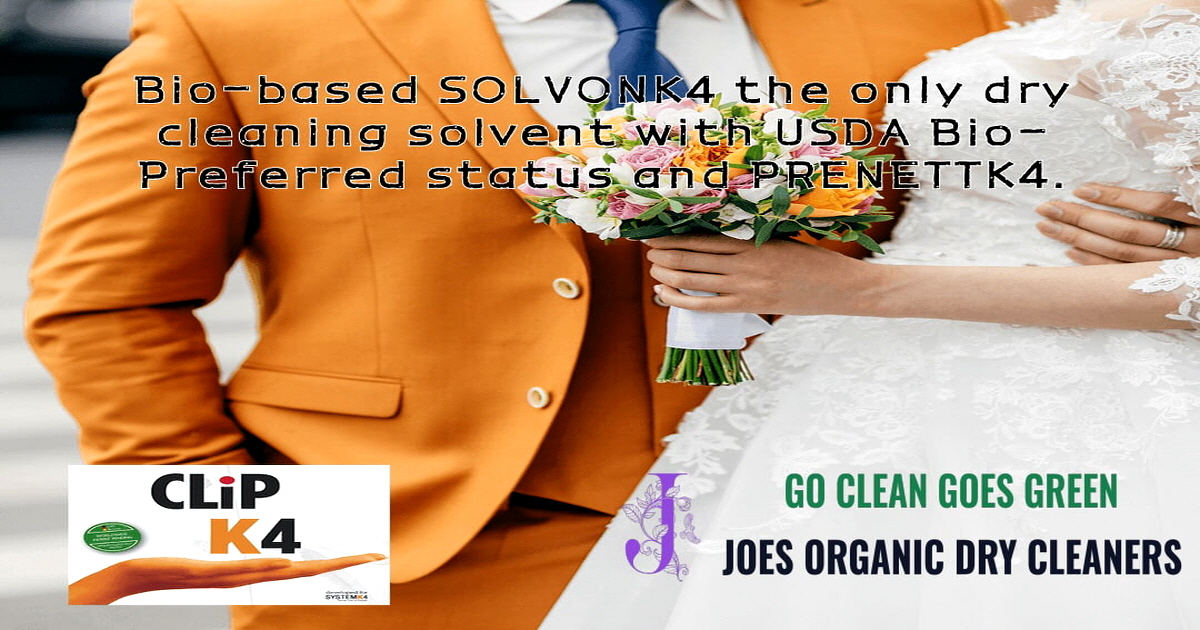
System K4 is a halogen-free dry-cleaning solvent that is made from organic compounds. It is non-toxic and biodegradable, and it has excellent cleaning properties that are comparable to those of traditional solvents such as perchloroethylene (perc). System K4 is also gentle on fabrics and does not cause them to fade or shrink.
System K4 is a newer dry cleaning solvent that has been gaining popularity in recent years. It is a good choice for dry cleaners who are looking for a more environmentally friendly option, and it can also be a good choice for customers who are concerned about the health effects of traditional dry cleaning solvents.
Here are some of the benefits of using System K4 dry cleaning:
It is non-toxic and biodegradable.
It has excellent cleaning properties that are comparable to those of traditional solvents.
It is gentle on fabrics and does not cause them to fade or shrink.
It is a good choice for dry cleaners who are looking for a more environmentally friendly option.
It can also be a good choice for customers who are concerned about the health effects of traditional dry-cleaning solvents.
If you are looking for a dry cleaning System K4 is a good option to consider.
https://www.joescleaner.com/wp-content/uploads/2023/04/Westbury-Dry-CleaningA-Organic-Dry-Clean-Systems-2.jpg6801080Alex Kimhttps://www.joescleaner.com/wp-content/uploads/2023/04/Original-Logo-Pink-1-300x121.pngAlex Kim2023-04-20 17:40:452023-04-20 17:41:31I Asked Google Bard “Explain System K4 Dry Cleaning?
🧵 Introduction (Voice Search Dry Cleaner near me )
“Is there a safer way to dry clean my clothes without harsh chemicals?”
That’s one of the most common questions people ask today—especially here in Westbury.
The good news? There is.
At Joe’s Organic Dry Cleaning & Tailoring Alterations, we use eco-friendly solutions that clean your clothes deeply while protecting your health and the environment.
And once you understand how it works, you’ll never go back.
🔍 Google & Bing Snippet (70–120 words)
Looking for eco-friendly dry cleaning solutions in Westbury, NY? Joe’s Organic Dry Cleaning & Tailoring Alterations uses advanced SYSTEMK4 technology, a bio-based cleaning method derived from corn, to deliver safe, soft, and damage-free garment care. This environmentally responsible process protects delicate fabrics while reducing exposure to harsh chemicals. Located on Post Ave, Joe’s offers expert tailoring, free pickup and delivery, and trusted service throughout Long Island. Discover how eco-friendly dry cleaning keeps your clothes cleaner, safer, and longer-lasting.
🌿 What Does Eco-Friendly Dry Cleaning Really Mean?
Eco-friendly dry cleaning is about more than “green” labels.
https://www.joescleaner.com/wp-content/uploads/2023/04/Eco-Friendly-Dry-Cleaning-Westbury.jpg1024824Alex Kimhttps://www.joescleaner.com/wp-content/uploads/2023/04/Original-Logo-Pink-1-300x121.pngAlex Kim2023-04-20 02:08:372026-04-03 02:32:44How to use eco-friendly solution’s dry cleaning your clothes
In Westbury, Long Island, many customers ask: what’s the real difference between a dry-cleaned shirt and a regular washed shirt? At Joe’s Organic Dry Cleaners, we help local residents make smart choices for their wardrobe. Dry cleaning uses eco-friendly solvents to protect delicate fabrics, while washing relies on water and detergents for everyday care.
Understanding the difference can extend the life of your clothes and keep them looking sharp. In this guide, we explain both methods in simple terms and show why eco-friendly dry cleaning is a trusted choice in the Westbury community.
Understanding Shirt Cleaning Methods in Westbury
👔 What Is a Dry-Cleaned Shirt?
Dry cleaning does not use water. Instead, it uses a safe, eco-friendly solvent.
At Joe’s Organic Dry Cleaners, we use SYSTEMK4 bio-based solvent, which is gentle and environmentally responsible. This method works best for:
Dress shirts
Silk or wool garments
Structured fabrics
👉 Result:
Crisp finish
Long-lasting fabric quality
Professional appearance
💧 What Is a Regular Washed Shirt?
A washed shirt uses water and detergent. This is similar to home laundry.
It works well for:
Casual shirts
Cotton garments
Everyday wear
👉 Result:
Softer feel
Less structured finish
Faster cleaning process
Key Differences Between Dry Cleaning and Washing
🔍 Fabric Care
Dry cleaning protects delicate fibers
Washing may cause shrinking over time
🌿 Eco Impact
Joe’s uses eco-friendly solvents approved by NYSDEC
In Westbury, customers care about both quality and sustainability. That’s why many trust Joe’s Organic Dry Cleaners.
🌱 Benefits:
Non-toxic cleaning solutions
Safe for sensitive skin
Better for the environment
Extends garment life
We proudly follow standards from:
Drycleaning & Laundry Institute (DLI)
National Cleaners Association (NCA)
When Should You Choose Each Option?
✔️ Choose Dry Cleaning When:
You need a professional look
The fabric is delicate
The garment is expensive
✔️ Choose Washing When:
The shirt is casual
You want a softer feel
The fabric is durable
Local Service You Can Trust in Westbury
Joe’s Organic Dry Cleaners is proud to serve the Westbury community and nearby areas.
🚚 Free Pickup & Delivery Available:
Westbury, Mineola, Garden City
Roslyn, East Meadow, Uniondale
🧵 Additional Services:
Shirt laundry & pressing
Alterations & tailoring
Same-day service
Practical Tips for Shirt Care
🧼 Easy Tips:
Always check care labels
Rotate shirts to reduce wear
Use professional cleaning for formal wear
💡 Pro Tip:
Alternate between washing and dry cleaning to balance cost and longevity.
Frequently Asked Questions (FAQ)
❓ Is dry cleaning better than washing?
Dry cleaning is better for delicate fabrics and formal shirts. It protects fibers and keeps garments looking new longer.
❓ Are eco-friendly dry cleaning methods safe?
Yes. Joe’s uses USDA-certified bio-based solvents. These are safe for both clothing and the environment.
❓ How often should I dry clean shirts?
For dress shirts, every 3–5 wears is ideal. This keeps them crisp without over-cleaning.
❓ Does washing damage shirts?
Frequent washing can weaken fibers and cause fading. However, it is fine for casual wear.
Why Choose Joe’s Organic Dry Cleaners?
At Joe’s, we combine modern eco-friendly technology with local expertise.
⭐ What Sets Us Apart:
Organic wet cleaning options
Professional finishing
Local community focus
Pickup & delivery convenience
Conclusion
Understanding the difference between dry-cleaned and washed shirts helps you make smarter decisions. In Westbury, Joe’s Organic Dry Cleaners provides both options with care and expertise. Whether you need a crisp business shirt or a comfortable everyday look, we’re here to help.
🚚 Free Drop PickUp & Local Delivery in Westbury Mon & Thur & Saturday Westbury, Old Westbury, New Cassel, Carle Place, Salisbury, Mineola,East Meadow, Uniondale Tues & Fri & Saturday East Hills, Brookville, Garden City,Garden City Park, Roslyn, Roslyn Estates,Roslyn Heights, Manhasset
“Looking for a dry cleaner you can truly trust? Joe’s Organic Dry Cleaners & Tailoring Alterations, a proud member of the New York State Fabric Association delivers expert garment care and tailoring services that meet New York State standards — keeping your clothes safe, clean, and perfectly fitted”
https://www.joescleaner.com/wp-content/uploads/2023/04/포맷변환Joes-Organic-Dry-Cleaners-In-Westbury-scaled.jpg7201080Alex Kimhttps://www.joescleaner.com/wp-content/uploads/2023/04/Original-Logo-Pink-1-300x121.pngAlex Kim2023-04-18 22:18:562026-04-02 01:14:02What’s the Difference Between Dry Cleaned and Washed Shirts?
Gentle, eco-friendly wet cleaning for delicate garments in Westbury
🧾 Blog Content Introduction
Wet cleaning is the process of cleaning garments using water-based methods instead of harsh chemicals. However, it is not the same as home washing. Instead, it uses special equipment and controlled techniques. Therefore, clothes stay clean, soft, and protected.
At Joe’s Organic Dry Cleaners in Westbury, NY, wet cleaning works alongside eco-friendly dry cleaning. As a result, customers get safer garment care and better long-term fabric protection.
What Is Wet Cleaning?
Wet cleaning uses water and gentle detergents. However, trained professionals control the process. Therefore, delicate fabrics like wool, silk, and linen stay safe.
For example:
temperature is carefully managed
moisture levels are controlled
drying is precise and gentle
As a result, garments keep their shape and texture.
Why Wet Cleaning Is Eco-Friendly
Wet cleaning avoids traditional chemical solvents. Therefore, it reduces environmental impact. Moreover, it supports healthier indoor air quality.
At Joe’s Organic Dry Cleaners, wet cleaning works together with SystemK4, a modern eco-friendly solution. Consequently, customers enjoy a safer and greener cleaning option.
In addition:
fabrics last longer
colors stay brighter
residues are minimized
Benefits for Westbury Customers
Gentle on Fabrics
Wet cleaning protects delicate fibers. Therefore, garments feel softer and last longer.
Better for Everyday Wear
Shirts, dresses, and casual wear respond well to wet cleaning. In addition, the process removes odors effectively.
Safe for Skin
Because fewer chemicals are used, wet cleaning is ideal for sensitive skin. As a result, families in Westbury often prefer it.
Wet Cleaning + Full-Service Care
At Joe’s, wet cleaning is not a standalone service. Instead, it works together with:
expert tailoring and alterations
shirt laundry and pressing
eco-friendly dry cleaning (SystemK4)
free pickup and delivery
Therefore, customers can clean, repair, and refresh garments in one place.
Local Pickup & Delivery Convenience
Meanwhile, busy schedules make convenience essential. Joe’s offers FREE pickup and delivery across Westbury and nearby areas.
As a result, customers save time while still getting professional care.
Why Choose Joe’s Organic Dry Cleaners?
Joe’s Organic Dry Cleaners combines modern cleaning with local service. Moreover, the business follows NYSFA standards for garment care.
Therefore, customers trust Joe’s for:
eco-friendly cleaning
expert alterations
reliable turnaround
local service experience
Consequently, garments come back clean, fresh, and ready to wear.
Frequently Asked Questions
💧 What makes wet cleaning different from regular washing?
Wet cleaning uses water like home washing. However, professionals control every step. Therefore, delicate fabrics stay protected while still getting deep cleaning.
🌿 Is wet cleaning really eco-friendly?
Yes, it is. Because it avoids harsh chemicals, it reduces environmental impact. Moreover, it supports safer garment care for both people and fabrics.
👕 What clothes are best for wet cleaning?
Many garments work well, including shirts, dresses, and light fabrics. In addition, some delicate items benefit from this gentle process.
🚚 Can I combine wet cleaning with pickup service?
Yes. Joe’s offers pickup and delivery. Therefore, you can schedule cleaning without visiting the store.
📍 Why choose wet cleaning in Westbury?
Local service ensures faster turnaround and trusted care. As a result, Westbury customers enjoy both convenience and quality.
Stay Connected With Joe’s Organic Dry Cleaners
Joe’s Organic Dry Cleaners & Tailoring Alterations in Westbury, NY comes in Local Tips Blog post
https://www.joescleaner.com/wp-content/uploads/2023/04/Organic-Dry-Cleaners-in-Westbury.jpg6801080Alex Kimhttps://www.joescleaner.com/wp-content/uploads/2023/04/Original-Logo-Pink-1-300x121.pngAlex Kim2023-04-18 21:52:492026-04-01 02:26:43What Is Wet Cleaning of Eco-Friendly Care in Joe’s Cleaners