
Can Silk Be Wet Cleaned? When Professional Care Helps
A silk blouse can look perfectly fine after one careless wash, then reveal water rings, faded color, or a changed texture once it dries. So, can silk be wet cleaned? Sometimes, yes. But professional wet cleaning is not the same thing as putting silk in a home washing machine, and the right method depends on the fabric, dye, construction, stains, and care label.
Silk is valued for its smooth hand, natural luster, and graceful drape. Those qualities also make it less forgiving than everyday cotton or polyester. The safest choice is not always dry cleaning, but it should always be a method selected for the particular garment rather than a guess made at the laundry basket.
Can Silk Be Wet Cleaned Safely?
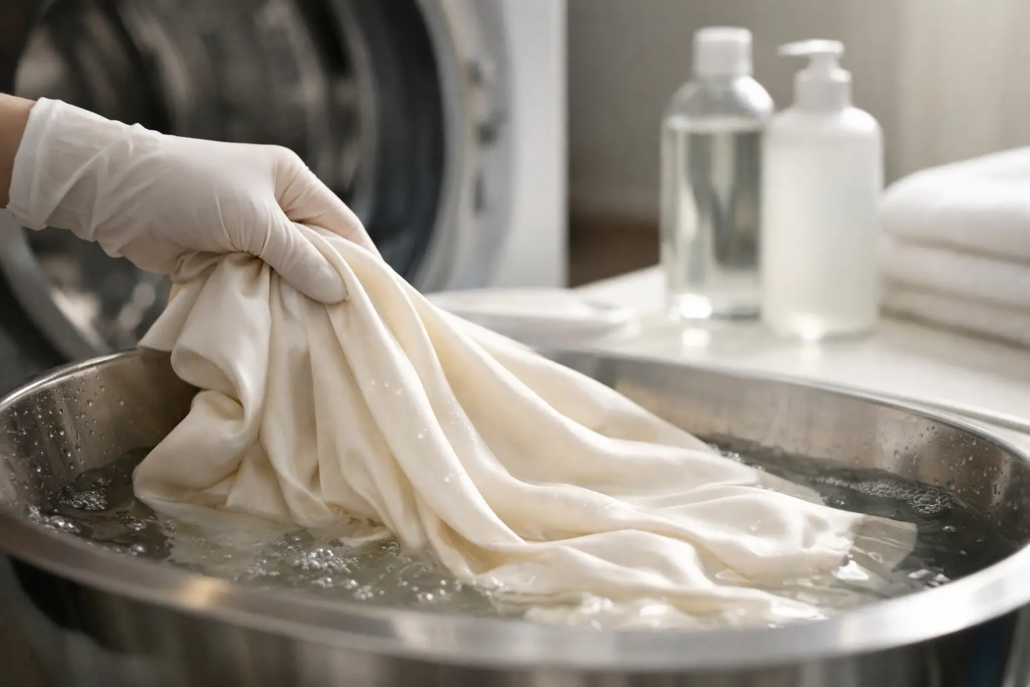
Professional wet cleaning can be safe for many silk garments when it is carefully controlled. It uses water, specialized detergents, limited mechanical action, measured drying, and skilled finishing to clean garments that may not respond well to traditional dry cleaning alone.
The key word is controlled. A professional cleaner evaluates whether the silk is washable, tests for colorfastness when needed, treats stains carefully, and chooses a cleaning cycle based on the garment. Temperature, agitation, detergent chemistry, drying time, and pressing all matter. Silk fibers can weaken or lose their smooth finish when handled roughly, even if the water itself is not the problem.
At home, a label that says “dry clean only” should be taken seriously. It may refer not only to the silk fabric but also to the garment’s lining, interfacing, trim, embellishments, or dye. A silk dress with beading, a tailored silk blazer, or a lined skirt can react very differently from a simple, unlined silk scarf.
Why Water Can Be Risky for Silk
Silk is a protein fiber, similar in broad terms to wool. It does not respond well to harsh alkaline cleaners, bleach, high heat, twisting, or aggressive rubbing. Those conditions can leave the fabric feeling stiff, dull, shrunken, or uneven.
Color is another concern. Dark, saturated, hand-dyed, or brightly colored silk may bleed when wet. Even if the body of the garment survives washing, trim or lining may release dye and create discoloration. Water can also leave noticeable rings on some silk weaves, particularly when only one area is spot-treated without proper blending and finishing.
Then there is shape. Silk charmeuse, chiffon, georgette, crepe, and satin each have distinct surfaces and drape differently. A structured silk garment may contain hidden support materials that wrinkle, bubble, or distort with moisture. The same is true for neckties, pleated pieces, tailored jackets, and garments with shoulder pads or bonded components.
When Wet Cleaning May Be the Better Option
Professional wet cleaning is often considered when a silk garment has water-based soils that do not respond as well to solvent cleaning. Perspiration, beverage spills, food residue, and certain odors may benefit from a carefully managed wet-cleaning process.
It can also be a thoughtful option for washable silk items that need a fresh, soft finish rather than heavy stain removal. Some modern silk garments are specifically made to tolerate water-based care, especially simpler blouses, sleepwear, scarves, and unstructured dresses. The care label remains the starting point, but a trained cleaner can assess the item beyond the label when appropriate.
Wet cleaning may also be selected as part of an eco-conscious garment-care approach. It uses water-based methods and biodegradable detergents, but “eco-friendly” should never mean taking a risk with an expensive garment. The goal is to use the gentlest effective process, whether that is wet cleaning, organic dry cleaning, or a combination of careful spotting and finishing.
When Dry Cleaning Is Usually Safer
Dry cleaning is generally the more cautious choice for silk garments with structure, delicate detailing, or unstable dyes. Think silk suits, blazers, eveningwear, formal dresses, neckties, pleated skirts, and garments with leather trim, beading, sequins, or glued decorations.
It is also often preferred for vintage silk. Older fabrics can be fragile from age, sunlight, previous wear, or earlier cleaning attempts. What looks like a small stain may be sitting on fibers that no longer have their original strength. Cleaning vintage silk calls for inspection and a conservative approach.
Professional dry cleaning is not a single, identical process for every item. At Joe’s Organic Dry Cleaning & Tailoring, garment care begins with the fabric and construction, not a one-size-fits-all cleaning routine. Organic K4 dry cleaning can be a suitable option for many delicate garments that need solvent-based care and polished finishing.
The Care Label Is Helpful, Not the Whole Story
A care label provides useful instructions, but it cannot always explain the full condition of a garment. Two silk blouses with the same “dry clean only” label may need different treatment if one has deodorant buildup, one has an oil stain, or one has started to fade from sun exposure.
Likewise, “hand wash” does not automatically mean a garment is safe to wash at home. Manufacturers may assume a gentle hand, cool water, mild detergent, no wringing, and careful flat or hanging drying. Many home wash failures happen during drying or pressing rather than the wash itself.
If a silk item has a visible stain, avoid rubbing it with water, soap, stain sticks, or household sprays before bringing it in. Rubbing can roughen the surface and spread the stain. Heat from an iron or dryer can set stains and make professional removal more difficult. If possible, point out the stain and mention what caused it and when it happened.
What Professional Silk Cleaning Includes
Good silk care involves more than cleaning. It includes inspection, stain treatment, method selection, drying, and finishing that restores the garment’s intended appearance.
A cleaner may first identify the fiber content, inspect seams and trim, and check for weak areas or color concerns. Stains are treated with solutions chosen for the stain type and fabric. The garment is then wet cleaned or dry cleaned according to its needs, followed by controlled drying.
Finishing is where experience becomes especially visible. Silk needs appropriate steam and temperature to bring back its smooth appearance without scorching, glazing, or creating press marks. A blouse may need light shaping at the collar and cuffs. A dress may need careful work along seams and pleats. This attention helps the garment return ready to wear, not merely clean.
Can You Wash Silk at Home?
For a simple garment with a label that specifically permits hand washing, home care can be possible. Use cool water, a small amount of detergent made for delicate fabrics, and minimal movement. Do not soak it for a long time, scrub it, twist it, or wring it out.
After rinsing, press out excess moisture by rolling the item in a clean towel. Reshape it while damp and keep it away from direct sunlight, radiators, and high heat. If pressing is needed, use a low silk setting with a pressing cloth and avoid leaving the iron in one place.
That said, home washing is best reserved for low-risk pieces you are prepared to manage carefully. It is not the right experiment for a favorite work blouse, a special-event dress, a silk tie, a vintage item, or anything with stains, lining, embellishment, or tailoring.
A Better Rule for Your Silk Wardrobe
The question is not simply whether silk can get wet. It can. The better question is whether this specific silk garment can be cleaned with water and still keep its color, shape, texture, and finish.
For routine washable silk, gentle handling may be enough. For investment pieces, structured garments, special occasion clothing, or stained silk, professional evaluation offers more protection than trial and error. Bringing the item in promptly and sharing what happened gives your cleaner the best chance to preserve the silk you chose because it feels and looks special.

