
How Often to Clean Suit Jackets for a Sharp Look
A suit jacket can look perfectly presentable long after it has picked up the body oils, dust, and light perspiration that shorten its life. The question of how often to clean suit jackets is less about a fixed calendar date and more about how the jacket is worn, where it is worn, and what happens between wears.
Cleaning too rarely can leave stains to set and odors to build. Cleaning too often can gradually affect the fabric, shape, and finish, particularly on fine wool, silk blends, and structured jackets. A practical routine keeps your suit ready for work, weddings, interviews, and evenings out without sending it in unnecessarily.
How Often to Clean Suit Jackets
For most people, a suit jacket worn in a typical office setting should be professionally cleaned after about three to five wears. That is a useful baseline, not a hard rule. If you only wear your jacket for a few clean, climate-controlled hours at a desk, you may get more wears from it. If you commute on a crowded train, wear it all day, or attend a dinner or event afterward, it may need attention sooner.
A jacket worn only occasionally, such as for church, a dinner party, or a special meeting, can often be cleaned after five to ten wears. Before putting it away for a season, however, it is wise to have it cleaned if it has been worn regularly. Invisible oils and food particles can attract insects and become harder to remove over time.
For a jacket that sees heavy use, such as daily professional wear, uniforms, hospitality work, or frequent events, cleaning every one to three wears may be appropriate. The same is true after a spill, visible soil, strong odor, or exposure to smoke. In those cases, waiting for a usual cleaning interval can do more harm than bringing the garment in promptly.
The Jacket and Pants Do Not Always Need the Same Schedule
Suit pants usually need cleaning more often than the jacket. They come into closer contact with skin, chair seats, car interiors, sidewalks, and everyday spills. A jacket may be worn several times while the matching pants need professional care after one or two wears.
There is one important exception: when you own a matching suit, avoid repeatedly cleaning only one piece for long stretches. Over time, even careful cleaning can cause a slight difference in color or finish between the jacket and pants. If one piece needs immediate stain treatment, it should be handled right away. For routine care, having both pieces cleaned together periodically helps them age at a similar pace.
If you rotate several suits during the workweek, this is easier to manage. Rotation gives each garment time to air out and reduces the need for frequent cleaning.
Signs Your Jacket Needs Cleaning Now
The number of wears matters, but your senses matter more. Bring in a suit jacket when you notice a visible stain, a lingering odor, makeup or sunscreen around the collar, or shine at the cuffs and elbows. Check the lapels, chest, inside collar, and front panels, especially after meals or long travel days.
You should also arrange professional cleaning after exposure to rainwater that dries with marks, smoke, heavy city grime, or a crowded celebration where food and drinks were involved. A small clear spill is not always harmless. Sparkling water, white wine, and soda can dry quietly but still leave a ring or attract dirt later.
Do not rub a stain aggressively with water, soap, or a household stain remover unless the care label specifically permits it and you know the fabric can handle it. Many suit jackets contain interfacing, linings, shoulder padding, and delicate fibers that do not respond well to spot treatment at home. Blot gently with a clean white cloth, note what caused the stain, and bring the jacket in as soon as possible.
Why Overcleaning Can Be Hard on a Suit
A tailored jacket is not just a piece of fabric. Its clean shape comes from layers of canvas or interfacing, lining, stitching, padding, and pressing. Repeated cleaning, especially when it is not needed, can eventually reduce the natural feel of wool, soften crisp details, or contribute to wear at edges and seams.
That does not mean you should avoid cleaning a soiled jacket. Professional care is designed to remove the oils and contaminants that can damage fibers. The goal is simply to clean for a reason, rather than automatically after every short wear.
The best method depends on the garment. Many structured wool and wool-blend jackets call for dry cleaning. Some washable, unstructured jackets may be suitable for professional wet cleaning, which uses controlled water, specialized detergents, and careful finishing. The label is a starting point, but fabric construction and stain type also guide the safest process.
At Joe’s Organic Dry Cleaning & Tailoring, garment care is matched to the fabric and the condition of the piece, with professional finishing to help jackets return ready to wear. This is particularly helpful for suits with delicate blends, formal jackets, vintage pieces, and garments that need both cleaning and a small repair or fit correction.
Make Each Cleaning Last Longer
A few minutes of care after wearing a jacket can make a noticeable difference. When you get home, take the jacket off rather than wearing it while cooking, relaxing on the sofa, or doing errands. Empty the pockets and hang it on a broad, shaped hanger that supports the shoulders. Wire hangers can distort the jacket over time.
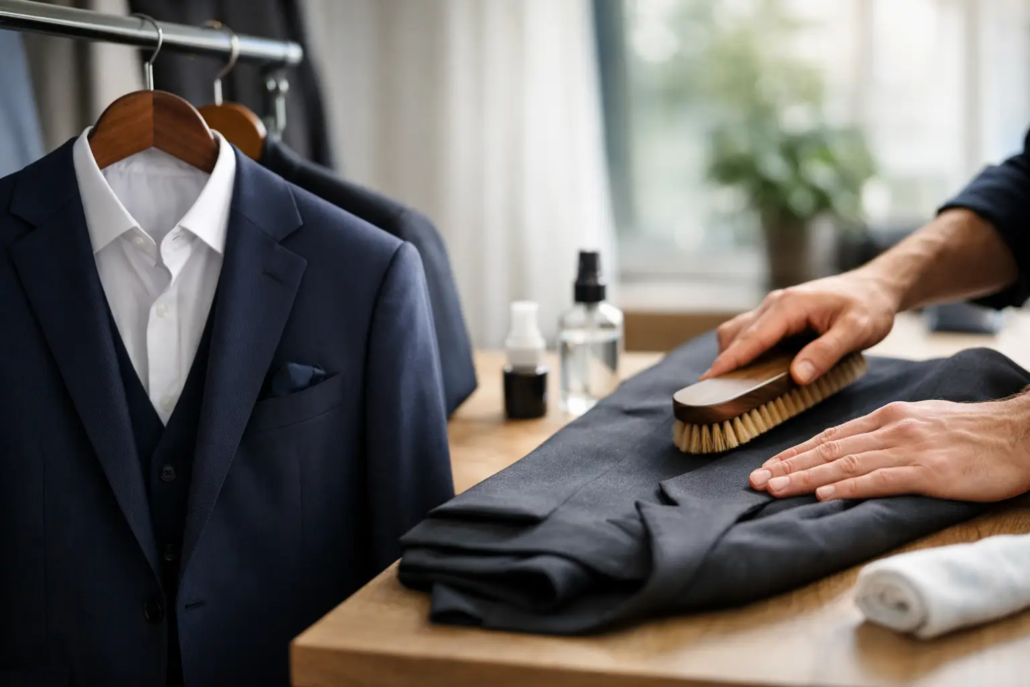
Let the jacket air out overnight before returning it to the closet. This gives moisture from normal wear time to dissipate. A gentle clothes brush can remove surface dust, lint, and dry debris, moving from the shoulders downward. For light wrinkles, steam from a proper garment steamer can help, but keep the heat controlled and avoid pressing directly on delicate fabric.
Give the jacket room in the closet. Tight packing traps odors and creates wrinkles that are harder to release. Use a breathable garment bag for longer storage, not a sealed plastic bag that can hold moisture against the fabric.
These habits do not replace professional cleaning after a stain or heavy wear. They simply prevent a clean jacket from becoming dirty again before its next outing.
Adjust the Schedule for Season, Fabric, and Lifestyle
Summer jackets usually need more frequent care. Humidity, sweat, sunscreen, outdoor events, and longer commutes all add to the workload. Linen and cotton jackets can show soil quickly and wrinkle easily, though their cleaning instructions may differ from a traditional wool suit. Dark wool may hide marks longer than light-colored fabric, but hidden dirt still counts.
Winter wool jackets may be worn over shirts and sweaters, so they sometimes need less frequent cleaning. Still, snow residue, road salt, and restaurant odors can create problems. Treat salt marks and drink spills quickly rather than waiting until spring.
Your personal routine matters just as much. A commuter who wears one navy jacket four days a week has different needs from someone who wears a suit only for monthly presentations. Busy households may find it useful to inspect suits at the end of each week and set aside anything that needs cleaning, pressing, button repair, or alteration before it becomes a last-minute problem.
A Simple Suit Care Rhythm
Think of professional cleaning as part of maintaining your wardrobe, not an emergency task. Clean after three to five standard wears, sooner after visible soil or odor, and before putting a frequently worn jacket into long-term storage. Air it out, brush it lightly, and use a proper hanger between wears.
When a suit jacket fits well and is cared for at the right intervals, it keeps doing its job quietly: helping you arrive looking prepared, polished, and comfortable.

